

Best Home Defense Shotgun: Expert Guide for 2026
When it comes to protecting your home and family, selecting the right firearm is one of the most critical decisions you'll make. The best home defense shotgun combines reliability, stopping power, and ease of use in high-stress situations. With countless models available in 2026, understanding the key features, configurations, and practical considerations will help you make an informed choice that suits your specific needs and experience level.
Understanding Home Defense Shotgun Fundamentals
Shotguns have long been regarded as one of the most effective firearms for home protection. Their distinctive advantages include formidable stopping power, intuitive point-and-shoot operation, and versatility with ammunition selection. When evaluating options for the best home defense shotgun, you need to consider how these weapons function under pressure.
Gauge Selection and Performance
The gauge of a shotgun determines the bore diameter and significantly impacts recoil, ammunition capacity, and stopping power. The two most popular choices for home defense are 12-gauge and 20-gauge shotguns.
12-gauge shotguns represent the industry standard for home defense applications:
- Maximum stopping power with diverse ammunition options
- Widely available ammunition at competitive prices
- Greater variety of compatible accessories and modifications
- Heavier recoil that may challenge smaller or recoil-sensitive shooters
20-gauge shotguns offer compelling advantages for specific users:
- Reduced recoil makes follow-up shots faster and more accurate
- Lighter overall weight improves maneuverability in confined spaces
- Adequate stopping power for home defense scenarios
- Ideal for shooters with less upper body strength
Choosing the best home defense shotgun gauge depends on your physical capabilities, training level, and comfort with recoil management.
Action Types: Pump vs. Semi-Automatic
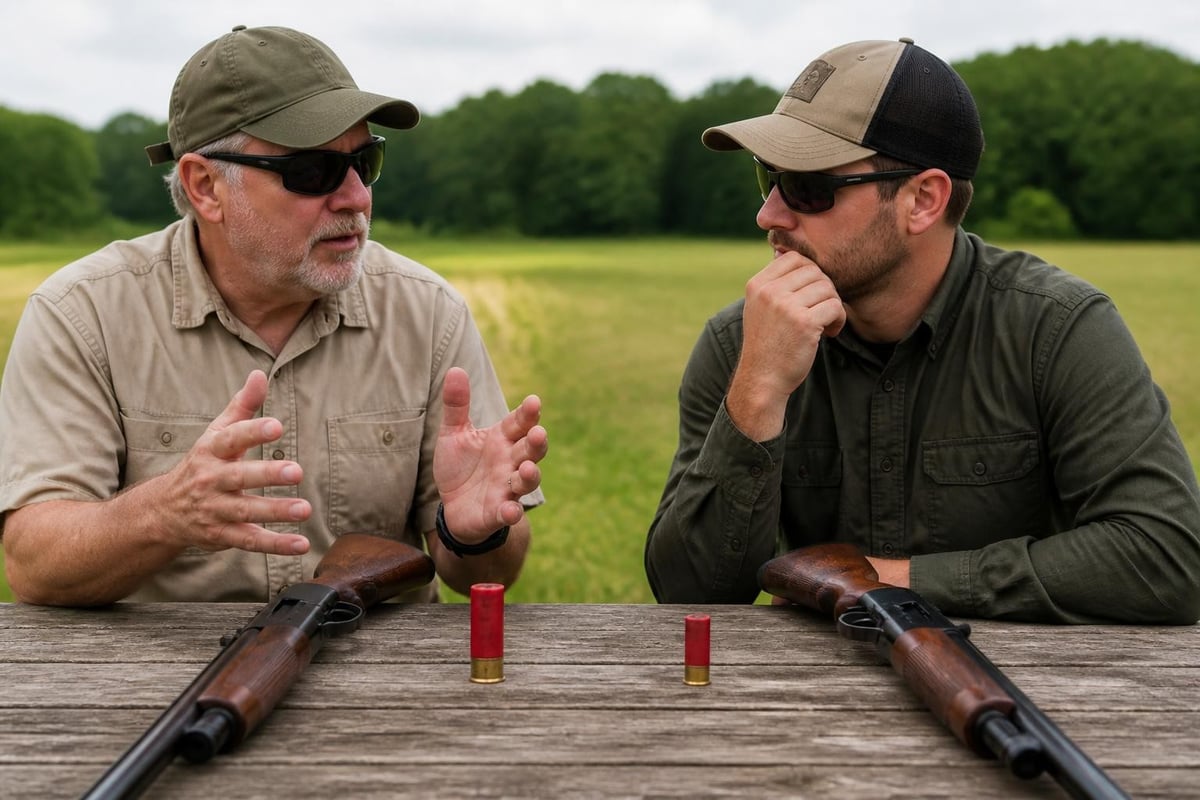
The mechanism that chambers rounds and cycles the action fundamentally affects reliability, speed, and cost. Both pump-action and semi-automatic shotguns excel in home defense roles, but each offers distinct advantages.
Pump-Action Shotguns
Pump-action models remain the most popular choice for home defense due to their proven track record. These manually operated firearms require the shooter to cycle the fore-end after each shot.
| Feature | Advantage | Consideration |
|---|---|---|
| Reliability | Functions with any ammunition type | Requires manual operation under stress |
| Cost | Significantly more affordable | No cost advantage |
| Maintenance | Simple design with fewer parts | Easier to maintain |
| Intimidation | Distinctive racking sound | May reveal position |
The Mossberg 500 and Remington 870 have dominated this category for decades, offering exceptional value and dependability. These models feature interchangeable barrels, extensive aftermarket support, and proven reliability across millions of rounds.
Semi-Automatic Shotguns
Semi-automatic shotguns chamber the next round automatically using gas or inertia operation. This technology provides faster follow-up shots and reduced perceived recoil.
Key benefits of semi-automatic operation:
- Faster rate of fire without manual cycling
- Reduced felt recoil through gas system absorption
- Maintains shooting position and sight picture between shots
- One less manual operation to remember under extreme stress
Important considerations:
- Higher initial purchase price compared to pump-action models
- Potential reliability issues with low-powered ammunition
- More complex mechanisms requiring regular maintenance
- Slightly heavier overall weight in most configurations
The comparison between pump-action and semi-automatic shotguns highlights how each action type serves different shooter preferences and skill levels.
Critical Specifications for Home Defense
Beyond action type and gauge, several specifications directly impact how effectively a shotgun performs in close-quarters defensive situations. Understanding these factors helps narrow your selection to models that match your home's layout and your defensive strategy.
Barrel Length Optimization
Barrel length affects maneuverability, legal classification, and ballistic performance. For home defense applications, shorter barrels provide significant advantages in confined spaces.
18 to 20-inch barrels represent the optimal range:
- Meet federal minimum length requirements without NFA registration
- Provide excellent maneuverability through doorways and hallways
- Maintain adequate velocity for defensive ammunition
- Reduce overall weapon length for storage and deployment
Barrels shorter than 18 inches require ATF registration as short-barreled shotguns (SBS), adding complexity and cost to ownership. Conversely, longer barrels designed for hunting offer no advantages in home defense scenarios and significantly hamper movement in tight spaces.
Magazine Capacity Considerations
Capacity directly impacts your ability to address multiple threats or compensate for misses under stress. Most defensive shotguns offer between 4 and 8 rounds in the magazine tube.
Standard capacity models (4-5 rounds):
- Lighter and more balanced for extended holding
- Adequate for most realistic home defense scenarios
- Easier to manipulate and less front-heavy
Extended capacity models (7-8 rounds):
- Provides additional rounds without reloading
- Increases front-end weight affecting balance
- May extend beyond barrel length in some configurations
Top Models for 2026
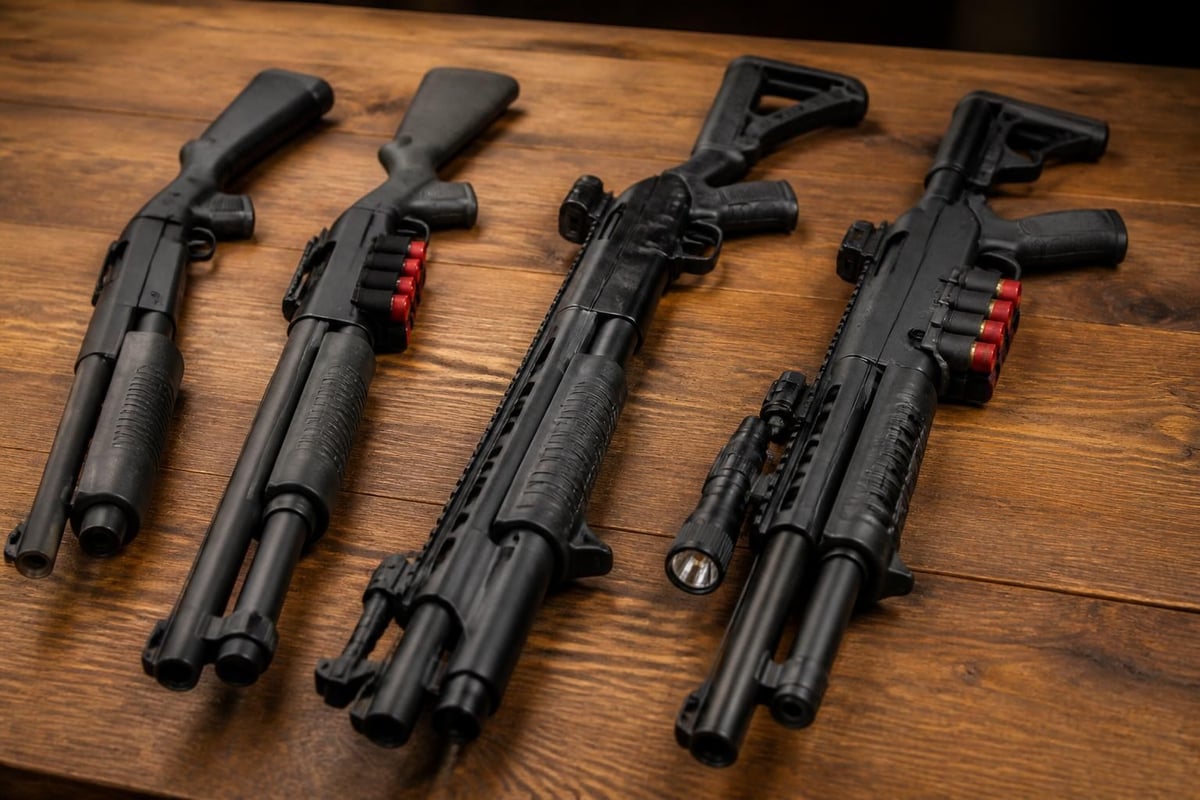
The firearms market in 2026 continues to offer proven designs alongside innovative new options. These models represent the best home defense shotgun choices across different price points and feature sets.
Budget-Friendly Champions
Mossberg 500/590 Series remains the gold standard for affordable reliability. With interchangeable barrels, ambidextrous safety, and dual extractors, these pumps deliver exceptional value. The 590 variant adds a heavier barrel and increased capacity for those prioritizing durability.
Maverick 88 provides Mossberg quality at an even lower price point. While it sacrifices the interchangeable barrel feature, it maintains the proven action and reliability that shooters depend on.
Mid-Range Excellence
Remington 870 Express Tactical combines time-tested reliability with modern features. The extensive aftermarket support means you can customize nearly every component to match your specific needs and preferences.
Benelli Nova Tactical brings innovative polymer receiver technology to pump-action shotguns. The self-cleaning rotary bolt and comfortable recoil-reducing features make it an excellent choice for shooters seeking modern materials and design.
Premium Performance
Beretta 1301 Tactical represents the pinnacle of semi-automatic home defense shotguns. Its gas-operated system cycles rapidly while managing recoil effectively, and the proven reliability rivals pump-action models. At RCS Outdoors, customers frequently choose this model for its competition-proven action and oversized controls.
Benelli M4 serves military and law enforcement worldwide, proving its reliability in the harshest conditions. While expensive, it offers uncompromising performance through its unique ARGO gas system and exceptional build quality.
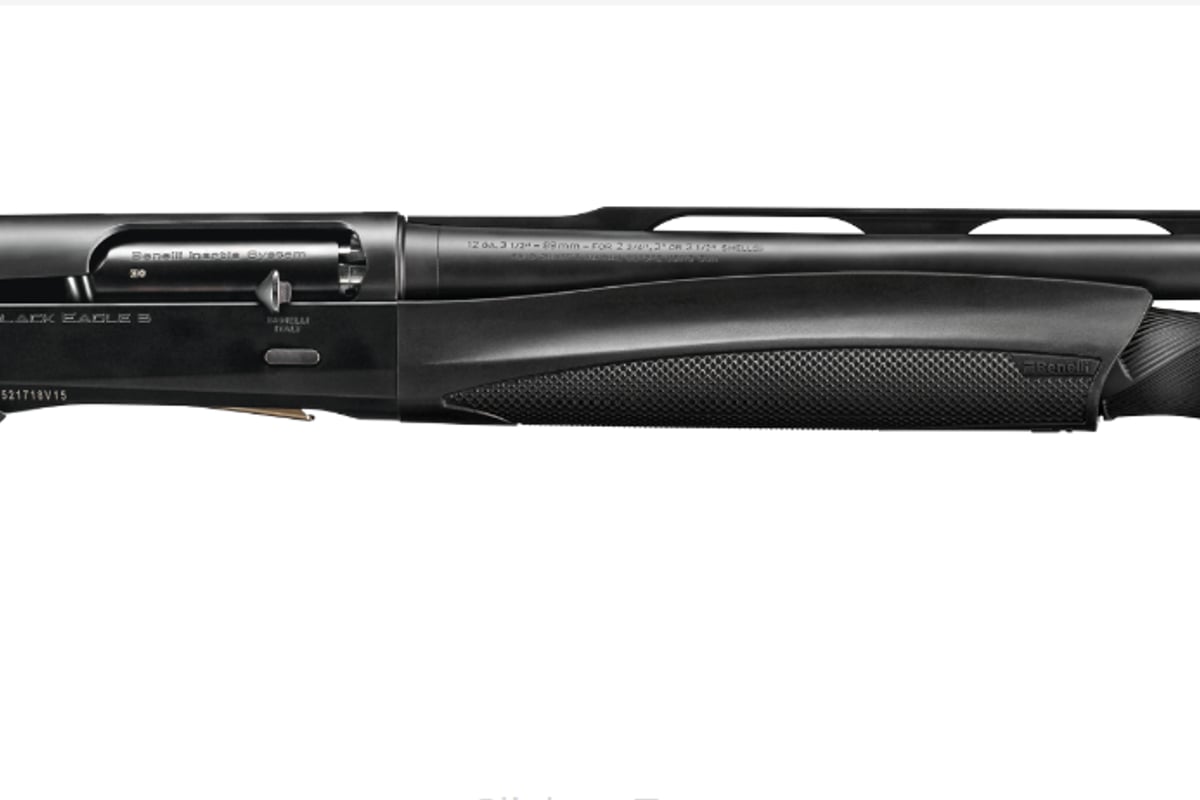
For those interested in Benelli's shotgun craftsmanship, The Upland Escape Giveaway currently features a Benelli Super Black Eagle 3, showcasing the brand's commitment to quality across hunting and defensive platforms.
| Model | Action | Gauge | Capacity | Price Range |
|---|---|---|---|---|
| Mossberg 500 | Pump | 12/20 | 5+1 | $300-$450 |
| Remington 870 | Pump | 12/20 | 4+1 | $350-$500 |
| Benelli Nova | Pump | 12/20 | 4+1 | $400-$500 |
| Mossberg 590A1 | Pump | 12 | 8+1 | $500-$650 |
| Beretta 1301 | Semi-Auto | 12 | 5+1 | $1,100-$1,400 |
| Benelli M4 | Semi-Auto | 12 | 5+1 | $1,800-$2,100 |
Ammunition Selection for Home Defense
Choosing the right ammunition is as important as selecting the best home defense shotgun itself. Different loads offer varying patterns, penetration characteristics, and stopping power.
Buckshot Considerations
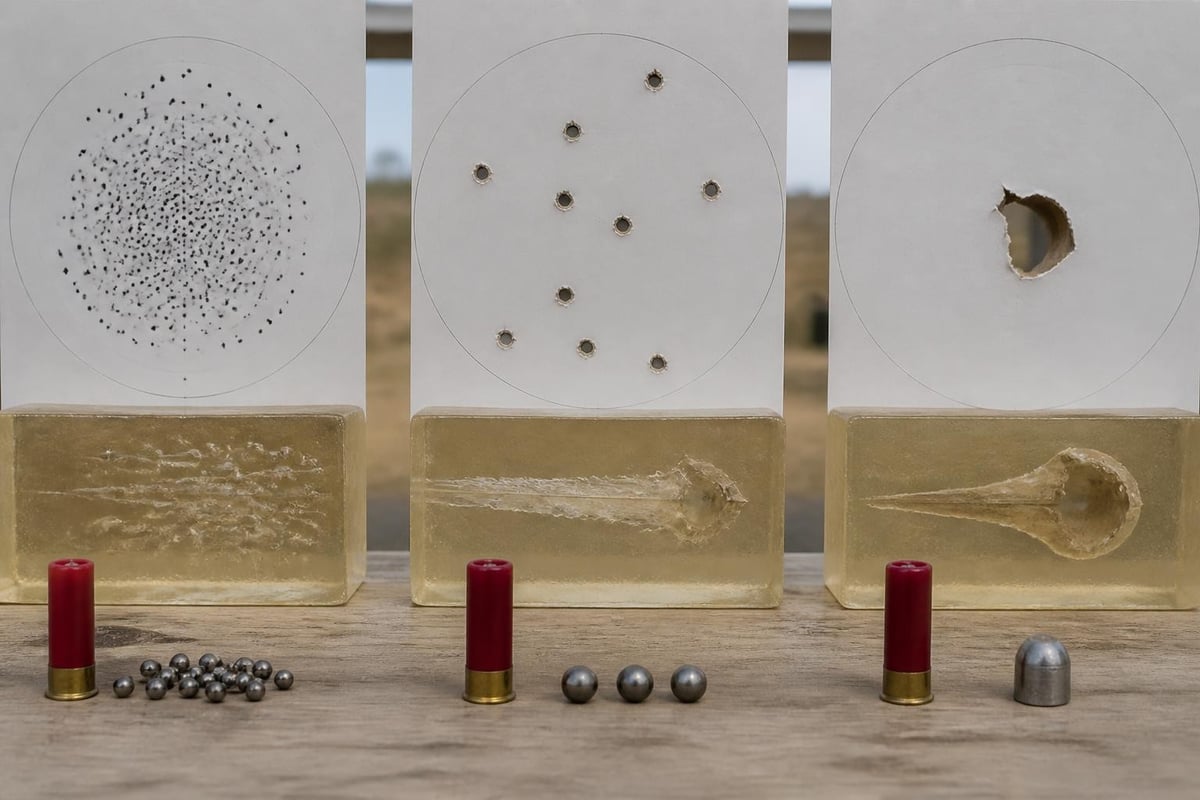
00 buckshot remains the most popular home defense load, delivering nine .33-caliber pellets per shell. This combination provides excellent stopping power while maintaining manageable recoil in 12-gauge platforms. Each pellet carries sufficient energy to stop threats effectively at home defense distances.
#1 buckshot offers a middle ground with more pellets (typically 16) at a smaller diameter. This creates a denser pattern that may be advantageous in close quarters, though individual pellet energy decreases slightly.
Specialized Defense Loads
Modern defensive shotgun ammunition has evolved significantly. Federal Premium, Hornady, and Winchester all produce specialized home defense loads featuring:
- Reduced recoil formulations for faster follow-up shots
- Wad designs that minimize over-penetration risks
- Copper-plated pellets for improved pattern consistency
- Low-flash powder to preserve night vision
Birdshot Limitations
Despite popular myths, birdshot generally lacks sufficient penetration for reliable threat stopping. While it reduces over-penetration concerns, the trade-off in stopping power makes it unsuitable for defensive purposes. The key features of effective home defense shotguns include appropriate ammunition selection that balances stopping power with safety.
Essential Accessories and Modifications
Optimizing your shotgun for home defense requires careful consideration of accessories that enhance usability without adding unnecessary complexity. Focus on proven additions that improve performance under stress.
Lighting Solutions
Weapon-mounted lights are essential for positive target identification in low-light conditions. Quality options from Streamlight, SureFire, and Arisaka mount securely to shotgun fore-ends or magazine tubes.
Choose lights offering:
- Minimum 500 lumens output for adequate illumination
- Momentary-on activation for tactical control
- Durable construction to withstand shotgun recoil
- Simple controls accessible under stress
Sight Upgrades
Factory bead sights work adequately, but upgrades improve target acquisition speed. Ghost ring sights provide excellent close-range accuracy while maintaining both-eyes-open shooting. Red dot optics offer the fastest target acquisition, though they require battery maintenance and add height to the firearm.
Stock Modifications
Adjustable stocks allow customization to different shooters and accommodate varied clothing thickness. Pistol grip stocks reduce overall length and improve retention but may increase felt recoil and complicate traditional shotgun mounting techniques.
Ammunition Management
Side saddle shell carriers attach to the receiver, providing immediate access to additional rounds. Consider models from TacStar, Mesa Tactical, or Esstac that maintain a low profile while securing shells reliably during movement.
Training and Deployment Strategies
Owning the best home defense shotgun means nothing without proper training and a sound defensive plan. Regular practice and realistic scenario training build the skills necessary to use your firearm effectively under stress.
Fundamental Skills Development
Patterning your shotgun at realistic home defense distances (5-15 yards) reveals actual spread at various ranges. Many shooters overestimate shotgun pattern size, discovering that precise aim remains critical even at close range.
Recoil management becomes crucial when firing multiple rounds rapidly. Proper stance, grip, and mounting technique reduce fatigue and improve accuracy during extended strings of fire.
Malfunction clearance drills ensure you can address feeding issues, stuck shells, or other mechanical problems quickly. Pump-action users must practice smooth, complete cycling strokes to prevent short-stroking.
Home Defense Planning
Develop a comprehensive plan that includes:
- Designated safe room or defensive position
- Communication plan with household members
- Clear rules of engagement based on local laws
- Secure storage that balances accessibility with safety
- Regular review and practice of response procedures
Understanding North Carolina gun laws or your specific state's regulations ensures your defensive actions remain legally justified and properly documented.
Maintenance and Storage
Proper maintenance ensures your defensive shotgun functions reliably when needed. Shotguns require less intensive cleaning than semi-automatic handguns, but regular attention prevents malfunctions.
Routine Maintenance Schedule
After each range session:
- Remove all ammunition and verify the chamber is empty
- Clean the barrel using appropriate solvents and brushes
- Wipe down all metal surfaces to remove powder residue
- Inspect action components for wear or damage
- Apply light lubrication to moving parts
Monthly inspection (even without firing):
- Verify action cycles smoothly
- Check magazine spring tension
- Examine stock for cracks or loose mounting
- Ensure all accessories remain securely attached
- Cycle dummy rounds to confirm feeding
Storage Considerations
Balance accessibility with security through options like dedicated gun safes with quick-access features, biometric lockboxes mounted near defensive positions, or trigger locks on unloaded firearms stored separately from ammunition. Performance and ideal applications vary based on your household situation and local regulations.
Legal and Ethical Responsibilities
Ownership of defensive firearms carries significant legal and moral obligations. Understanding the laws governing defensive use, storage requirements, and documentation needs protects you legally and ethically.
Use of Force Principles
Most jurisdictions require reasonable belief of imminent serious harm before deadly force becomes justified. The best home defense shotgun means nothing if its deployment lands you in legal jeopardy. Consult local attorneys specializing in firearms law to understand:
- Castle doctrine provisions in your state
- Duty to retreat requirements
- Justifiable use standards
- Post-incident reporting obligations
Documentation and Aftermath
Following any defensive use of firearms:
- Ensure scene safety and render aid if appropriate
- Contact law enforcement immediately
- Provide basic facts without detailed statements
- Request legal counsel before extensive interviews
- Document incident details privately for attorney review
Comparing Top Shotgun Manufacturers
Different manufacturers bring distinct philosophies to shotgun design. Understanding these approaches helps identify which brands align with your priorities regarding reliability, features, and value.
Mossberg prioritizes affordability and practicality. Their shotguns feature ambidextrous safeties, lightweight construction, and extensive parts availability. The company maintains strong American manufacturing traditions while keeping prices accessible.
Remington (now under new ownership) built a legendary reputation through the 870 platform. While recent production quality varied, properly maintained older 870s remain exceptionally reliable. The extensive aftermarket support allows comprehensive customization.
Benelli represents premium performance through innovative engineering. Their inertia and gas systems provide exceptional reliability with reduced maintenance needs. The higher price reflects superior materials, precision manufacturing, and proven durability.
Beretta combines Italian craftsmanship with tactical functionality. The 1301 series showcases how competition-proven designs translate to defensive roles, offering rapid cycling and intuitive controls at premium prices. Detailed reviews of trusted shotgun brands help identify models matching specific requirements.
Real-World Considerations
Beyond specifications and features, practical factors influence how well a shotgun serves defensive needs. Consider these often-overlooked aspects when making your final decision.
Physical Fit and Comfort
The best home defense shotgun fits your body dimensions and strength level. Test potential purchases for:
- Length of pull matching your arm length
- Weight distribution during extended holding
- Recoil compatibility with your build
- Reach to controls and trigger
- Ease of mounting to shoulder
Household Dynamics
Multiple family members may need access to your defensive firearm. Consider whether different users can operate the chosen model effectively. Adjustable stocks and ambidextrous controls accommodate varied shooters better than fixed configurations.
Budget Realities
Allocating your defensive firearm budget requires balancing initial purchase price against ammunition, training, accessories, and storage needs. A $400 shotgun with $300 spent on ammunition and training outperforms a $1,500 shotgun that never gets practiced. Additional guidance on factors for choosing home defense shotguns emphasizes the importance of total system cost.
Selecting the best home defense shotgun requires balancing action type, gauge, capacity, and features against your specific needs, budget, and training commitment. Whether you choose a proven pump-action model or invest in a premium semi-automatic, regular training and proper maintenance ensure your shotgun performs when it matters most. RCS Outdoors offers a comprehensive selection of defensive shotguns, ammunition, and accessories to help you build a complete home defense system backed by expert guidance and competitive pricing.


