

Keywords for Mineral Sites for Deer Hunters Guide
Successful deer management requires understanding the critical elements that attract and sustain healthy whitetail populations on your property. Among the most effective tools in a hunter's arsenal are properly placed and maintained mineral sites, but finding the right information to establish them effectively can be challenging. Knowing the essential keywords for mineral sites for deer hunters helps you research best practices, identify quality products, and develop strategies that genuinely improve herd health and antler development. This comprehensive guide explores the terminology, concepts, and practical applications that every serious deer hunter should master when creating mineral sites that deliver measurable results throughout the year.
Understanding the Foundation of Mineral Site Terminology
When researching keywords for mineral sites for deer hunters, you'll encounter specific terms that define both the products and practices involved in successful mineral site management. The most fundamental concept is bioavailability, which refers to how readily deer can absorb and utilize the minerals you provide. Calcium, phosphorus, and trace minerals form the trinity of nutritional supplementation that supports skeletal development and antler growth during critical spring and summer months.
The term mineral lick often appears in searches, though it's technically distinct from a mineral site. While a lick typically describes natural rock formations or salt deposits, a mineral site represents an intentionally created location where hunters provide supplemental minerals to support deer health. Understanding this distinction helps hunters communicate more precisely about their management goals.
Essential Mineral Components and Their Functions
Different minerals serve specific physiological functions that impact deer development throughout the year:
- Calcium and phosphorus support bone growth, antler development, and lactation in does
- Sodium chloride (salt) drives initial attraction and encourages consistent site visitation
- Magnesium aids in protein synthesis and skeletal development
- Zinc enhances immune function and wound healing
- Copper supports proper nervous system function and coat quality
Hunters searching for information about these components should understand that commercial mineral products often balance these elements specifically for whitetail nutritional requirements. Creating effective mineral sites involves selecting products that provide appropriate ratios rather than simply offering pure salt blocks, which only address one aspect of deer nutritional needs.

Strategic Placement Keywords and Site Selection
Location terminology represents a critical category when exploring keywords for mineral sites for deer hunters. Bedding areas, travel corridors, staging areas, and feeding zones all describe distinct habitat features that influence mineral site effectiveness. Research from wildlife management experts emphasizes that optimal mineral site placement requires understanding deer movement patterns and seasonal habitat preferences.
The concept of edge habitat frequently appears in discussions about mineral site placement. These transitional zones between different cover types create natural funnels where deer feel secure while moving between bedding and feeding areas. Positioning mineral sites along these edges increases visitation rates while providing opportunities for trail camera monitoring and pattern documentation.
Proximity Considerations for Maximum Effectiveness
Distance-related keywords help hunters understand spatial relationships that impact mineral site success:
| Location Factor | Recommended Distance | Strategic Benefit |
|---|---|---|
| From bedding areas | 100-200 yards | Increases daytime activity |
| From water sources | Within 300 yards | Encourages routine visits |
| Between multiple sites | 400-600 yards | Prevents overcrowding |
| From property lines | 150+ yards | Keeps deer on your land |
Security cover represents another essential placement keyword. Deer prefer mineral sites where they can approach and utilize the area while maintaining visual or escape routes to thick cover. Young bucks and does with fawns particularly favor locations that balance nutritional access with safety, making cover proximity a critical factor in site selection.
Hunters should also research prevailing wind patterns when selecting mineral site locations. Deer approach feeding and mineral areas from downwind positions to detect predators, so positioning sites where thermals and wind currents work in your favor increases usage patterns among mature bucks.
Seasonal Management and Timing Keywords
Understanding temporal keywords helps hunters maximize mineral site effectiveness throughout the year. Spring mineral sites receive significant attention because this period coincides with antler development initiation and lactation demands for does. Springtime mineral supplementation provides the greatest impact on antler growth and fawn development, though year-round access delivers cumulative benefits to overall herd health.
The phrase antler growth timeline connects directly to mineral site management strategies. Bucks begin growing antlers in late March or April, with maximum growth rates occurring through June and July. Establishing mineral sites before this growth period begins ensures deer have already discovered and begun utilizing your supplementation efforts when nutritional demands peak.
Year-Round Management Strategies
Post-rut recovery represents an often-overlooked keyword category for mineral site management. Mature bucks experience significant nutritional stress during the breeding season, losing 20-30% of their body weight. Providing accessible mineral sites during late winter and early spring supports recovery and positions bucks for successful antler development in the coming year.
Summer maintenance requires understanding recharge or refresh terminology. Mineral sites need periodic renewal as deer consume the provided supplements and rainfall washes minerals deeper into the soil. Monitoring site activity through trail cameras helps determine when recharging becomes necessary, typically every 3-4 weeks during peak usage periods.
- Pre-season preparation (late winter): Initial site establishment or reactivation
- Peak usage monitoring (spring/summer): Regular recharging and documentation
- Transition period (fall): Reduced activity as natural food sources peak
- Maintenance visits (winter): Site assessment and planning for next season

Product Types and Application Methods
Keywords for mineral sites for deer hunters must include product-specific terminology that distinguishes between delivery methods and formulations. Granular minerals, powder formulations, compressed blocks, and liquid attractants each offer distinct advantages depending on soil conditions, rainfall patterns, and management goals.
The term attractant versus supplement creates important distinctions in product marketing and application. True mineral supplements focus on nutritional value and bioavailability, while attractants prioritize immediate deer visitation through enhanced scent or flavor profiles. Serious deer managers typically prioritize supplements that deliver genuine health benefits over products designed primarily for attraction.
Commercial Product Categories and Applications
Understanding product category keywords helps hunters make informed purchasing decisions:
Trophy minerals or antler-specific formulations contain elevated calcium and phosphorus ratios designed to support maximum antler growth. These products typically cost more per pound but target the specific nutritional demands of growing antlers during spring and summer months.
Year-round minerals provide balanced nutrition across all seasons, supporting does during pregnancy and lactation while maintaining buck health during post-rut recovery and pre-rut conditioning. These formulations often include trace minerals and vitamins that support immune function and overall health rather than focusing exclusively on antler development.
Weatherproof or rain-resistant formulations address the challenge of mineral migration through soil profiles during wet periods. Some products incorporate binding agents or molasses-based carriers that help minerals remain accessible even after significant rainfall events.
For hunters seeking comprehensive guidance on establishing effective sites, this step-by-step mineral site guide covers location selection, product application, and long-term maintenance strategies.
Site Preparation and Soil Interaction
Soil pH represents a critical keyword when researching effective mineral site establishment. Acidic soils (pH below 6.0) reduce mineral availability, while neutral to slightly alkaline soils (pH 6.5-7.5) maximize nutrient uptake. Testing soil pH before site establishment helps hunters determine whether amendments are necessary to optimize mineral absorption.
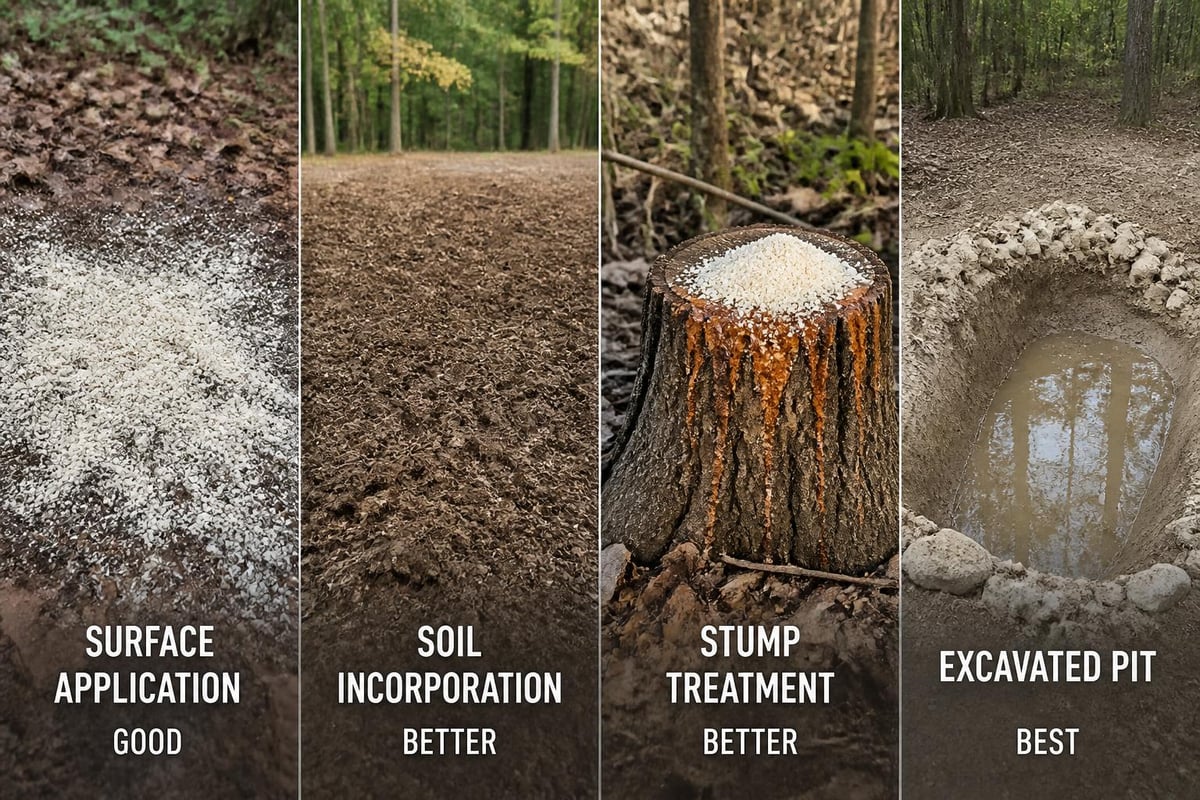
The practice of stump treatment or creating punch sites involves applying minerals to freshly cut stumps or creating small depressions in the soil. These methods concentrate minerals in specific areas where deer can access them easily while preventing excessive dispersal through wind or water erosion.
Site Development Techniques
| Preparation Method | Time Investment | Effectiveness | Maintenance Needs |
|---|---|---|---|
| Surface application | 15 minutes | Moderate | High (weekly) |
| Soil incorporation | 45 minutes | High | Moderate (monthly) |
| Stump treatment | 30 minutes | Very high | Low (seasonal) |
| Excavated pit | 60 minutes | Very high | Low (seasonal) |
Tilling or soil disturbance helps incorporate minerals into the top soil layer where deer can access them through both consumption and absorption from moisture in the ground. Many hunters use garden tools or ATV-mounted implements to create 4×4 foot areas of exposed soil where minerals mix with the earth rather than sitting on the surface.
The keyword mineral stump describes the practice of drilling holes in cut stumps and filling them with granular minerals. This method creates concentrated mineral sources that resist weather degradation while attracting deer to specific locations ideal for trail camera placement and hunting access.
Monitoring and Documentation Practices
Trail camera surveys represent essential monitoring keywords for serious mineral site management. Cameras positioned at mineral sites provide invaluable data about which bucks utilize your property, when deer visit most frequently, and how many individual animals benefit from your supplementation efforts. This information drives decisions about hunting pressure, stand placement, and future management strategies.
The concept of photo inventory or buck census describes the practice of cataloging individual bucks based on trail camera images from mineral sites. Spring and summer mineral site activity provides excellent opportunities to photograph bucks in velvet, when antler characteristics are easily visible and individual identification becomes straightforward.
Data Collection and Analysis Keywords
Understanding monitoring terminology helps hunters extract maximum value from their trail camera efforts:
- Daylight activity percentage: Indicates deer comfort level and hunting potential
- Unique buck count: Documents the number of individual bucks using the site
- Visit frequency: Shows how often individual deer return to the mineral site
- Age structure: Reveals the demographic composition of your deer herd
- Peak activity windows: Identifies optimal times for hunting or observation
Pattern disruption represents an important concept as hunting season approaches. Mature bucks often shift their movement patterns and reduce daylight activity as fall arrives, so mineral site visitation data from summer doesn't necessarily predict fall hunting opportunities. Understanding this transition helps hunters avoid over-relying on summer patterns when making stand placement decisions.
Hunters looking for practical application techniques can benefit from video demonstrations of mineral site setup, which provide visual guidance on product selection and application methods that maximize deer attraction and mineral uptake.
Legal and Ethical Considerations
Keywords for mineral sites for deer hunters must include regulatory terminology that varies significantly by state and management unit. Baiting laws, supplemental feeding regulations, and fair chase ethics all impact how hunters can legally establish and utilize mineral sites for hunting purposes.
The distinction between year-round mineral sites and pre-season baiting represents a critical legal concept in many jurisdictions. States that prohibit hunting over bait often permit mineral sites provided they're maintained throughout the year rather than established specifically before hunting season. Understanding your state's specific regulations prevents violations that could result in citations, license suspension, or harvest disqualification.
State-Specific Regulatory Framework
Restricted periods describe timeframes when mineral sites must be removed or when hunting near them becomes illegal. Some states require mineral site removal 30-90 days before hunting season opens, while others permit year-round sites but prohibit hunting within a certain distance. Researching your state's specific requirements protects you from unintentional violations.
Public land restrictions often differ significantly from private property regulations. Many public hunting areas completely prohibit mineral sites or supplemental feeding regardless of timing, while others permit limited mineral placement under specific permit systems. Understanding these distinctions helps hunters plan management strategies appropriate for their hunting locations.
The concept of fair chase extends beyond legal requirements into ethical hunting practices. Some hunters choose to position stands away from mineral sites to avoid the perception of hunting over bait, even when regulations permit it. Understanding these ethical considerations helps each hunter develop their own standards consistent with their values and hunting traditions.
Advanced Management Strategies and Keywords
Multiple site networks represent an advanced management concept where hunters establish 3-5 mineral sites distributed across their property. This strategy prevents overcrowding at individual locations while providing opportunities to pattern buck movements between sites and understand how different areas of your property are utilized.
The practice of rotational supplementation involves alternating which sites receive fresh minerals, encouraging deer to explore different areas of your property while preventing excessive concentration in single locations. This approach distributes hunting pressure and prevents single areas from becoming over-browsed or degraded through excessive traffic.
Integration with Food Plot Management
Coordinated nutrition programs combine mineral sites with food plot strategies to provide comprehensive nutritional supplementation throughout the year. Positioning mineral sites near food plots creates nutritional hubs where deer can access both macro nutrients from planted forages and trace minerals from supplementation sites.
Transition zone placement describes positioning mineral sites between food plots and bedding areas, creating travel corridors where deer naturally move while accessing both resources. This strategic placement increases mineral usage while providing hunting opportunities as deer transition between bedding and feeding activities.
Hunters focused on serious deer management should consider how mineral site strategies integrate with broader habitat improvement efforts, including native browse enhancement, water source development, and security cover establishment.
Product Selection and Quality Assessment
Understanding keywords related to product quality helps hunters distinguish between effective mineral supplements and marketing-driven products that deliver minimal benefits. Guaranteed analysis labels reveal the actual mineral content percentages, allowing comparison between products based on nutritional value rather than package size or price alone.
The term chelated minerals describes supplements where minerals are bonded to amino acids or organic molecules, significantly improving absorption rates compared to inorganic mineral salts. While typically more expensive, chelated minerals deliver superior bioavailability, meaning deer receive more nutritional benefit from smaller quantities.
Evaluating Product Claims and Formulations
Proprietary blends often obscure actual mineral concentrations, making it difficult to assess product value or compare formulations. Reputable manufacturers provide detailed guaranteed analysis information, while products relying primarily on marketing claims may offer minimal nutritional benefit despite premium pricing.
Mineral-to-salt ratios represent critical evaluation criteria. Products containing 90% or more salt with minimal trace minerals function primarily as attractants rather than nutritional supplements. Quality mineral products typically contain 60-80% trace minerals with salt serving as an attractant component rather than the primary ingredient.
Specialized formulations like ocean-derived mineral supplements provide naturally balanced trace mineral profiles that some hunters prefer over synthetic formulations, believing they offer superior bioavailability and more comprehensive nutritional profiles.
Troubleshooting Common Mineral Site Challenges
Site abandonment describes the frustrating situation where deer initially use a mineral site but gradually reduce visitation over time. This problem typically stems from improper placement in high-pressure areas, inadequate security cover, or excessive human scent contamination from frequent checking and maintenance visits.
The keyword mineral migration addresses the challenge of supplements washing deep into soil profiles during heavy rainfall, becoming inaccessible to deer. Selecting weather-resistant formulations or creating crowned site designs that shed water prevents this common problem, particularly in regions with significant spring precipitation.
Addressing Low Utilization Rates
When mineral sites fail to attract expected deer activity, several diagnostic keywords help identify problems:
- Access obstacles: Fencing, ditches, or terrain features preventing easy approach
- Predator pressure: Coyote or bear activity creating security concerns
- Competition: Natural mineral sources or neighboring properties with established sites
- Timing: Sites established too late in spring after deer have established patterns elsewhere
Scent contamination represents a frequently overlooked factor in mineral site effectiveness. Excessive human scent from site preparation, maintenance, or trail camera checking can deter deer from approaching, particularly mature bucks. Minimizing visits and using scent-elimination practices during site maintenance increases usage rates among the most cautious deer in your herd.
Understanding complete mineral formulations designed specifically for antler development helps hunters select products that deliver measurable results rather than relying on generic livestock minerals that may not address whitetail-specific nutritional requirements.
Integration with Hunting Season Strategies
As fall approaches, understanding how mineral site patterns translate to hunting opportunities becomes crucial. Summer range versus fall range describes how mature bucks often shift their core areas as the rut approaches, meaning summer mineral site activity may occur miles from where those same bucks will be during hunting season.
The practice of transition monitoring involves maintaining trail cameras on mineral sites through early fall to document when bucks shift from summer patterns to fall behaviors. This information helps hunters understand whether mineral site locations will remain productive hunting areas or if bucks are relocating to different portions of the property.
Pre-Season Site Management
Gradual withdrawal describes the strategy of slowly reducing mineral site maintenance as hunting season approaches, allowing natural food sources to become more attractive while preventing the perception of hunting directly over active bait sites. This approach maintains legal compliance in restrictive states while potentially influencing deer movement toward preferred hunting areas.
Off-season hunting areas represent locations where hunters intentionally avoid mineral site placement, preserving these areas as low-pressure zones where mature bucks feel secure during hunting season. This strategic approach recognizes that summer mineral sites create human scent and activity that may make areas less attractive to cautious bucks once hunting pressure begins.
Hunters preparing for upland bird season alongside their deer management efforts might explore opportunities like The Upland Escape Giveaway, which combines traditional wingshooting experiences with comprehensive hunting packages that celebrate multiple aspects of the American hunting heritage.

Technology and Modern Mineral Site Management
Cellular trail cameras revolutionize mineral site monitoring by providing real-time images of deer activity without physical site visits that introduce scent and disturbance. These cameras allow hunters to track which bucks are using sites, monitor mineral depletion rates, and adjust management strategies without compromising deer comfort levels.
Mapping applications help hunters plan optimal mineral site networks by analyzing topography, cover types, and distances between bedding areas, food sources, and water. Digital mapping tools allow experimentation with different site configurations before investing time and money in actual site development.
Data-Driven Management Approaches
Modern hunters increasingly apply analytics to mineral site management, tracking metrics like unique deer counts, visit frequencies, and daylight activity percentages across multiple sites and seasons. This data reveals patterns about which locations produce the most activity and which site characteristics correlate with increased usage by mature bucks.
Photo organization software helps hunters catalog thousands of trail camera images, identifying individual bucks across multiple sites and tracking antler development throughout the summer. These tools transform raw image data into actionable intelligence about herd composition, age structure, and individual buck movements.
Understanding keywords for mineral sites for deer hunters extends beyond simple product names to encompass the complete management system that supports herd health, documents deer populations, and creates opportunities for successful hunting seasons. Whether you're establishing your first mineral site or refining a comprehensive property management plan, mastering this terminology helps you research effectively, communicate precisely with other hunters, and implement strategies proven to deliver results. The investment in proper mineral supplementation pays dividends in improved herd health, enhanced antler development, and increased opportunities to observe and pattern the deer that call your property home.
Implementing effective mineral site strategies requires both knowledge and the right equipment to make the most of your hunting property. From trail cameras to monitor activity patterns to the firearms you'll eventually use during season, having quality gear makes all the difference. Whether you're setting up your first mineral site or refining your existing management program, RCS Outdoors provides the equipment and accessories serious hunters need to succeed, backed by expertise in the firearms and hunting industry that understands what it takes to make your next season the best one yet.


