
North Carolina Dove Season: Complete Guide for 2026
Dove hunting represents one of North Carolina's most beloved hunting traditions, bringing together thousands of sportsmen each fall for fast-paced wingshooter action. The north carolina dove season offers exceptional opportunities across the state's diverse landscapes, from agricultural fields in the Piedmont to coastal plains. Understanding the regulations, timing, and strategies specific to this season ensures hunters maximize their success while maintaining compliance with state and federal wildlife laws. Whether you're a seasoned dove hunter or preparing for your first September field hunt, proper preparation makes the difference between a memorable season and missed opportunities.
Understanding North Carolina Dove Season Dates and Structure
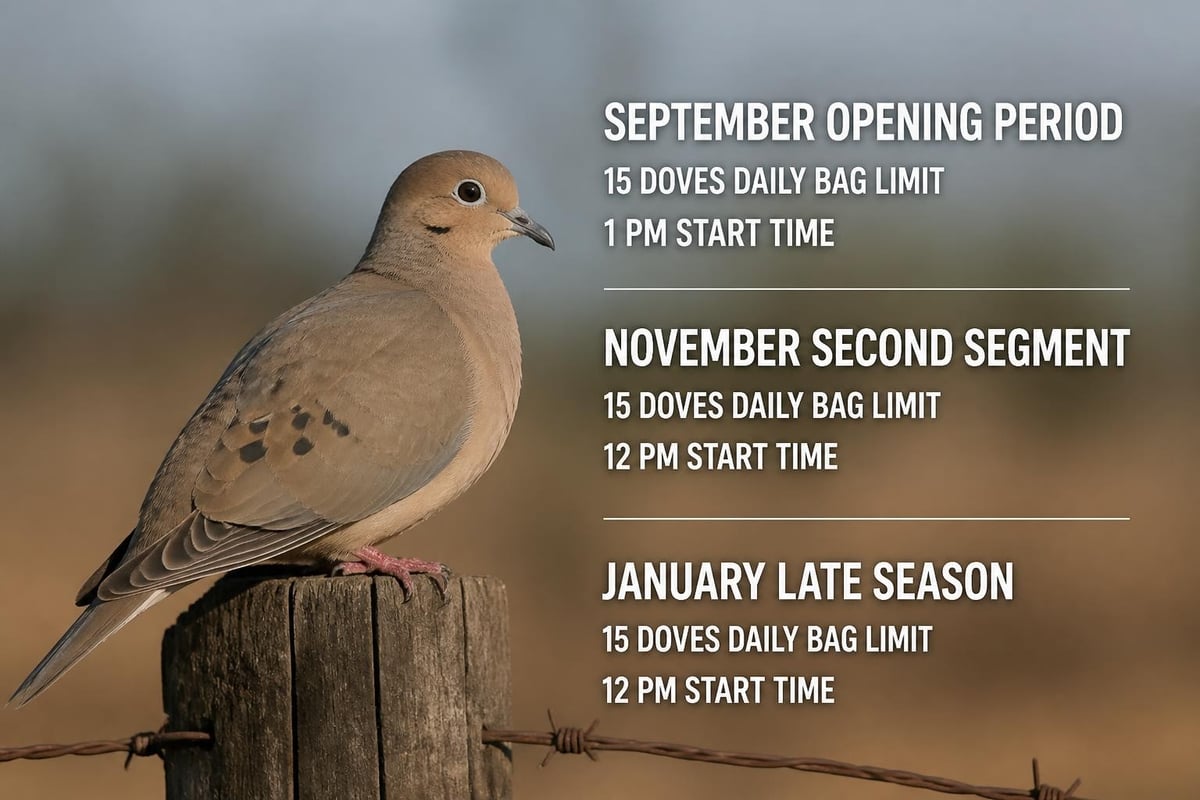
North Carolina divides the north carolina dove season into multiple segments to align with federal migratory bird regulations and maximize hunting opportunities. The 2026 season typically includes three distinct hunting periods that span from early September through January.
The first segment usually opens during the first week of September, providing hunters with prime early-season action when dove populations remain concentrated near feeding areas. This opening weekend traditionally draws the largest crowds as hunters flock to harvested grain fields and sunflower plots. The second segment typically begins in late November, coinciding with cooler temperatures and migratory patterns. The final segment often extends into January, offering late-season opportunities for dedicated hunters.
Season Splits and Daily Limits
North Carolina follows federal frameworks established by the U.S. Fish and Wildlife Service. The North Carolina Wildlife Resources Commission sets early waterfowl and migratory bird seasons through a structured regulatory process each year.
Daily bag limits for the 2026 season include:
- 15 mourning doves per day
- 30 doves in possession after opening day
- Legal shooting hours from noon to sunset on opening day, then thirty minutes before sunrise to sunset thereafter
These limits apply statewide, though hunters must verify specific regulations for game lands and wildlife management areas where additional restrictions may exist.
Licensing and Legal Requirements
Every hunter participating in the north carolina dove season must possess proper licensing and meet specific legal requirements. North Carolina requires both state hunting licenses and federal documentation for migratory bird hunting.
Required documentation includes:
- North Carolina hunting license – Required for residents and non-residents over age 16
- Federal Migratory Bird Hunting and Conservation Stamp (Duck Stamp) – Mandatory for hunters age 16 and older
- Harvest Information Program (HIP) certification – Free registration obtained when purchasing licenses
Hunters can obtain licenses through the North Carolina Wildlife Resources Commission website, licensed vendors throughout the state, or by phone. The rules and regulations for dove season in North Carolina emphasize the importance of proper licensing to avoid citations and fines.
Age-Specific Regulations
Youth hunters under age 16 may hunt without a state hunting license but still require HIP certification and must comply with all bag limits and hunting regulations. Hunters born on or after July 1, 1977, must successfully complete a hunter education course approved by the North Carolina Wildlife Resources Commission.
| License Type | Resident Cost | Non-Resident Cost | Requirements |
|---|---|---|---|
| Annual Hunting | $25 | $80 | Age 16+ |
| Federal Duck Stamp | $25 | $25 | Age 16+ |
| HIP Certification | Free | Free | All ages |
Prime Hunting Locations Across North Carolina
North Carolina offers diverse dove hunting opportunities across public and private lands. Game lands managed by the Wildlife Resources Commission provide accessible options for hunters without private land access.
The dove hunting opportunities on North Carolina’s game lands include specially managed dove fields at numerous wildlife management areas. These public hunting areas receive regular maintenance, including planting and mowing, to attract dove populations.
Top public dove hunting areas include:
- Caswell Game Land – Features multiple dove fields in the Piedmont region
- Sandhills Game Land – Offers extensive acreage with excellent early-season action
- Croatan Game Land – Coastal location with unique hunting opportunities
- Jordan Game Land – Popular destination near central North Carolina population centers
Private agricultural lands remain the backbone of north carolina dove season hunting. Harvested grain fields, particularly those containing wheat, millet, corn, and sunflower, attract concentrations of feeding doves. Many farmers allow hunting with permission, making relationship-building with landowners valuable for consistent access.
Coastal vs. Piedmont Hunting Strategies
Coastal areas often see higher dove populations during migration periods, particularly during the second and third season segments. The Piedmont region typically provides stronger opening-day action due to resident bird populations and agricultural activity. Hunters should consider regional weather patterns, as drought conditions significantly impact dove movements and field selection.
Essential Gear and Equipment for Success
Proper equipment significantly impacts success during the north carolina dove season. Unlike stationary hunting methods, dove hunting requires mobility, quick target acquisition, and sustained shooting throughout the afternoon.
Firearms and Ammunition Selection
Shotguns chambered in 12-gauge or 20-gauge remain the most popular choices for dove hunting. Modified or improved cylinder chokes provide optimal pattern density for targets at typical dove hunting ranges of 20-35 yards.
Ammunition selection should prioritize reliability and consistent patterns. Shot sizes between #7.5 and #9 work effectively for dove hunting, with #8 shot offering the best balance of pattern density and pellet energy. Hunters should stock quality ammunition from their local shop before opening day, as popular loads often sell out during peak season.
Recommended ammunition characteristics:
- Shot size: #7.5, #8, or #9
- Shell length: 2¾ inches
- Velocity: 1,200-1,300 fps
- Payload: 1 ounce to 1⅛ ounces
Consider bringing 2-3 boxes minimum for opening day, as fast-paced shooting can quickly deplete ammunition supplies. Semi-automatic shotguns offer advantages for follow-up shots, though pump-action and over-under shotguns remain popular choices.
Field Equipment and Accessories
Beyond firearms, successful dove hunting requires thoughtful gear selection. Hunters spend hours standing or sitting in open fields under September sun, making comfort and preparation essential.
| Equipment Category | Essential Items | Purpose |
|---|---|---|
| Seating | Folding stool, bucket | Comfort during lulls |
| Sun Protection | Wide-brim hat, sunglasses, sunscreen | Prevent fatigue and sunburn |
| Game Care | Cooler with ice, game bags | Preserve harvested birds |
| Safety | Shooting glasses, hearing protection | Protect eyes and ears |
| Convenience | Water bottles, snacks, extra shells | Maintain energy levels |
Camouflage clothing helps hunters blend with field environments, though earth-tone casual clothing works adequately. Avoid wearing blue, as research suggests doves may see this color more readily.
Field Setup and Hunting Strategies
Strategic positioning within dove fields determines success rates during the north carolina dove season. Understanding dove flight patterns, feeding behaviors, and field dynamics separates productive hunters from those who struggle.
Doves typically fly into feeding areas from roosting cover, follow predictable flight paths, and prefer open ground for landing. Hunters should arrive early to scout the field and identify prime locations before other hunters claim spots.
Positioning for Success
Key positioning considerations include:
- Wind direction – Position so doves approach into the wind when possible
- Flight corridors – Set up beneath observed flight paths from scouting
- Field edges – Utilize tree lines and fence rows for background cover
- Sun position – Avoid looking directly into afternoon sun when shooting
- Spacing from other hunters – Maintain 30-40 yards minimum for safety
Opening day often features crowded fields with multiple hunters. Communication and courtesy prevent conflicts and enhance everyone's experience. Establish clear shooting lanes and respect other hunters' positions.
Reading Dove Behavior
Doves exhibit distinct behavioral patterns throughout the afternoon. Early arrivals often circle fields multiple times before committing to land. Mid-afternoon typically provides peak action as birds feed heavily. Late afternoon may see reduced activity or renewed feeding before roosting.
Shot opportunities vary based on dove approach angles. Incoming birds present easier shots than departing targets. Crosswind shots require proper lead calculations, while overhead passes demand different techniques than low, incoming doves.
Hunting Game Lands and Public Areas
Public land dove hunting presents unique challenges and opportunities during the north carolina dove season. Game land dove fields operate under specific regulations designed to manage hunter density and ensure safe, quality experiences.
The regulations for hunting on Croatan Game Land exemplify the detailed rules governing public hunting areas. Most game lands require check-in procedures, designated parking areas, and compliance with field-specific regulations.
Common game land requirements include:
- Check-in at designated stations before hunting
- Hunting from assigned positions or designated zones
- Compliance with specific shooting hour restrictions
- Steel shot requirements on certain properties
- Harvest reporting at check-out stations
Some popular game lands implement lottery or reservation systems for opening day to manage hunter numbers. Checking specific game land regulations before hunting prevents violations and ensures access.
Maximizing Public Land Success
Midweek hunting on game lands often provides better experiences than opening weekends. Reduced hunter pressure allows more natural dove behavior and easier field positioning. Late-season segments typically see minimal crowds, offering quality hunting for dedicated sportsmen.
Scouting game lands during the week before opening day reveals current field conditions, dove activity levels, and optimal positioning options. Many game lands allow scouting access outside hunting hours.
Hunters passionate about dove season and upland bird hunting might also appreciate opportunities to expand their wingshooting experiences. RCS Outdoors, Heartland Lodge, and Benelli have partnered to offer The Upland Escape Giveaway, featuring an all-inclusive upland hunt package and a premium Benelli shotgun, celebrating the broader tradition of American bird hunting.
Shot Placement and Retrieval Techniques
Ethical hunting during the north carolina dove season requires proficient marksmanship and responsible game retrieval. Doves present challenging aerial targets that demand practiced shooting skills and patience.
Effective Shooting Techniques
Successful dove shooting relies on fundamentals applicable to all shotgun sports. Maintaining proper gun mount, smooth swing mechanics, and consistent follow-through improve hit rates significantly.
Shot execution steps:
- Identify incoming dove and track flight path
- Mount shotgun smoothly to shoulder while establishing lead
- Match dove speed with barrel swing
- Maintain swing through shot and follow-through
- Prepare for follow-up shots on misses
Leading targets appropriately for distance and angle requires practice and experience. Most hunters underestimate necessary lead, particularly on crossing shots. A general guideline suggests 3-6 feet of lead for typical dove shots, though actual requirements vary by range and angle.
Responsible Retrieval Practices
Every hunter must make reasonable efforts to retrieve shot doves. Mark locations where birds fall immediately, as tall vegetation conceals downed game quickly. Walking directly to fall locations prevents losing orientation in unfamiliar fields.
Training retrieving dogs enhances recovery rates and demonstrates hunting ethics. Even without dogs, methodical searching in expanding circles from fall locations increases retrieval success. Hunters should never leave wounded birds unfound without thorough search efforts.
Field Preparation and Property Management
Property owners and hunting clubs investing in dove field preparation significantly enhance north carolina dove season success. Strategic plantings, field maintenance, and habitat improvements concentrate dove populations on specific properties.
Ideal dove fields combine feeding areas, bare ground, and nearby water sources. Agricultural fields containing small grains attract feeding doves, while sparse vegetation allows comfortable landing zones.
Effective field preparation includes:
- Planting browntop millet, sunflower, or grain crops
- Discing or mowing portions to create bare ground
- Maintaining food plots through summer months
- Providing accessible water sources within flight range
- Leaving standing crops for post-harvest feeding areas
Timing field preparation to peak during early September maximizes opening day success. Fields planted in late spring and early summer mature appropriately for fall hunting seasons.
| Planting Option | Planting Time | Maturity Period | Dove Attractiveness |
|---|---|---|---|
| Browntop Millet | May-June | 60-90 days | Excellent |
| Sunflower | April-May | 90-120 days | Outstanding |
| Wheat | September | Following spring | Good |
| Corn | April-May | 100-120 days | Moderate |
Water Management Strategies
Doves require regular water access, particularly during hot September weather. Properties with ponds, creeks, or stock tanks near feeding fields see increased dove activity. Creating artificial water sources through shallow basins or small ponds enhances property attractiveness to migratory and resident dove populations.
Conservation and Ethical Hunting Practices
The north carolina dove season exists through careful wildlife management balancing hunting opportunities with sustainable dove populations. Hunters contribute directly to conservation through license purchases, ammunition excise taxes, and adherence to regulations.
Mourning doves remain North America's most abundant and widely distributed game bird. Population surveys indicate stable to increasing dove numbers across most of their range, supporting generous harvest regulations. North Carolina hunters help fund habitat improvement projects, population research, and conservation programs through their license fees and federal duck stamp purchases.
Practicing Ethical Sportsmanship
Ethical dove hunting extends beyond legal compliance to encompass fair chase principles and respect for wildlife. Hunters should focus on clean kills within effective range, avoid over-shooting beyond personal skill levels, and make every reasonable effort to retrieve harvested birds.
Ethical hunting standards include:
- Shooting only at doves within effective range (under 40 yards typically)
- Limiting shots to clear targets with safe backstops
- Respecting daily bag limits and possession limits strictly
- Properly caring for harvested game to prevent waste
- Reporting violations and unsafe hunting practices observed
Field etiquette among hunters promotes positive experiences and preserves hunting traditions. Sharing successful fields, assisting new hunters, and maintaining courteous interactions strengthen the hunting community.
Weather Impact on Dove Movements
Weather conditions dramatically influence dove behavior and hunting success during the north carolina dove season. Understanding weather patterns helps hunters predict productive hunting days and adjust strategies accordingly.
Temperature affects dove activity levels significantly. Extremely hot weather reduces midday feeding, concentrating activity during early morning and late afternoon. Cooler temperatures associated with frontal passages often trigger increased feeding as doves prepare for changing conditions.
Wind and Precipitation Effects
Wind speed and direction alter dove flight patterns and field selection. Light to moderate winds (5-15 mph) create ideal conditions, as doves fly more actively and present varied shooting angles. Strong winds above 20 mph may keep doves sheltered in roosting cover or force them to fly low and fast.
Recent rainfall impacts feeding patterns through several mechanisms. Light rain softens ground, making seed foraging easier. Heavy rainfall may flood low areas, concentrating doves on higher ground fields. Drought conditions limit available food sources, potentially concentrating birds on the best remaining fields.
Barometric pressure changes associated with weather fronts influence dove activity. Falling pressure before storm systems often triggers increased feeding. Rising pressure after front passage may reduce activity temporarily.
Processing and Preparing Harvested Doves
Proper field care and processing preserve meat quality and demonstrate respect for harvested game. Doves require minimal processing effort compared to larger game birds but benefit from prompt attention after retrieval.
Field dressing should begin immediately upon returning from the field. Keep harvested doves cool using coolers with ice or frozen gel packs. High temperatures accelerate spoilage, particularly during September heat.
Cleaning and Preparation Methods
Two primary cleaning methods work effectively:
- Breast only – Remove breast meat, discarding remaining carcass (fastest method)
- Whole bird – Pluck or skin entire dove, removing entrails (preserves more meat)
Most hunters prefer the breast-only method for efficiency. Using a sharp knife or game shears, cut along both sides of the breastbone and remove each breast fillet. This process takes 30-60 seconds per bird with practice.
Rinse cleaned meat thoroughly in cold water, removing any remaining feathers or debris. Pat dry and refrigerate immediately if cooking within 2-3 days, or freeze for longer storage. Vacuum sealing extends freezer life significantly.
Cooking Applications
Dove breast offers mild, flavorful meat suitable for various cooking methods. Popular preparations include grilling, pan-searing, slow-cooking, and incorporation into appetizers.
Classic dove recipes include:
- Bacon-wrapped dove poppers with jalapeño and cream cheese
- Grilled dove breast with barbecue glaze
- Pan-seared dove with mushroom sauce
- Slow-cooked dove in red wine or stock
Avoid overcooking, as dove breast becomes tough and dry when cooked past medium doneness. Most recipes recommend cooking to an internal temperature of 145-160°F.
Youth and New Hunter Opportunities
The north carolina dove season provides excellent introduction to hunting for youth and new sportsmen. Fast-paced action, social atmosphere, and accessible field hunting create positive first experiences that build lifelong hunting interest.
Many hunting clubs and conservation organizations sponsor youth hunting events during dove season. These organized hunts provide supervision, equipment, and instruction from experienced mentors. The North Carolina Wildlife Resources Commission supports youth hunting initiatives through various programs and resources.
Mentoring Best Practices
Experienced hunters mentoring newcomers should prioritize safety, patience, and enjoyment over harvest success. New hunters benefit from clear instruction on firearm handling, shooting techniques, and hunting etiquette before field exposure.
Effective mentoring includes:
- Pre-hunt safety briefings covering specific field scenarios
- Selecting less crowded fields with reduced pressure
- Providing appropriate firearms fitted to shooter size
- Offering constructive feedback on shooting mechanics
- Celebrating participation and learning over harvest numbers
Youth hunters often develop skills rapidly with proper instruction. Starting with dove hunting builds shotgun proficiency applicable to other wingshooting pursuits throughout their hunting careers.
Connecting with the Hunting Community
North Carolina's dove hunting community includes thousands of dedicated sportsmen who share knowledge, access, and experiences. Connecting with other hunters enhances skills, provides field access opportunities, and builds lasting relationships.
Local hunting clubs often welcome new members and provide organized dove hunts on club properties. These organizations pool resources for field preparation, manage hunter access, and promote ethical hunting practices. Membership fees typically cover field maintenance costs and facility improvements.
Online forums and social media groups dedicated to North Carolina hunting offer platforms for information sharing, field reports, and advice. Hunters share scouting updates, regulation changes, and tips throughout the season. Engaging respectfully in these communities builds your network and knowledge base.
Conservation organizations including Ducks Unlimited, the National Wild Turkey Federation, and local sportsmen's clubs conduct habitat projects benefiting doves and other wildlife. Volunteering for these initiatives connects you with passionate hunters while contributing to conservation.
The information on North Carolina’s dove hunting season helps hunters stay current on regulations, opportunities, and management updates from official sources and hunting publications.
The north carolina dove season offers unmatched opportunities for wingshooters across the state, combining tradition, challenging shooting, and excellent game populations. Success requires understanding regulations, preparing appropriate equipment, and developing field strategies matched to local conditions. Whether you're outfitting for your first season or stocking up for another year of tradition, having the right firearms and ammunition makes all the difference. RCS Outdoors provides the shotguns, shells, and accessories North Carolina dove hunters need to make the most of every field opportunity this season.


