

Revolvers: A Comprehensive Guide for 2026 Shooters
Revolvers remain one of the most iconic and reliable firearm designs in modern shooting sports and personal defense applications. Despite the proliferation of semi-automatic handguns over the past several decades, these classic firearms continue to hold a special place in the hearts of enthusiasts, collectors, and practical shooters alike. Understanding the mechanics, varieties, and proper maintenance of revolvers can help shooters make informed decisions about whether these time-tested handguns fit their specific needs in 2026.
Understanding Revolver Mechanics and Design
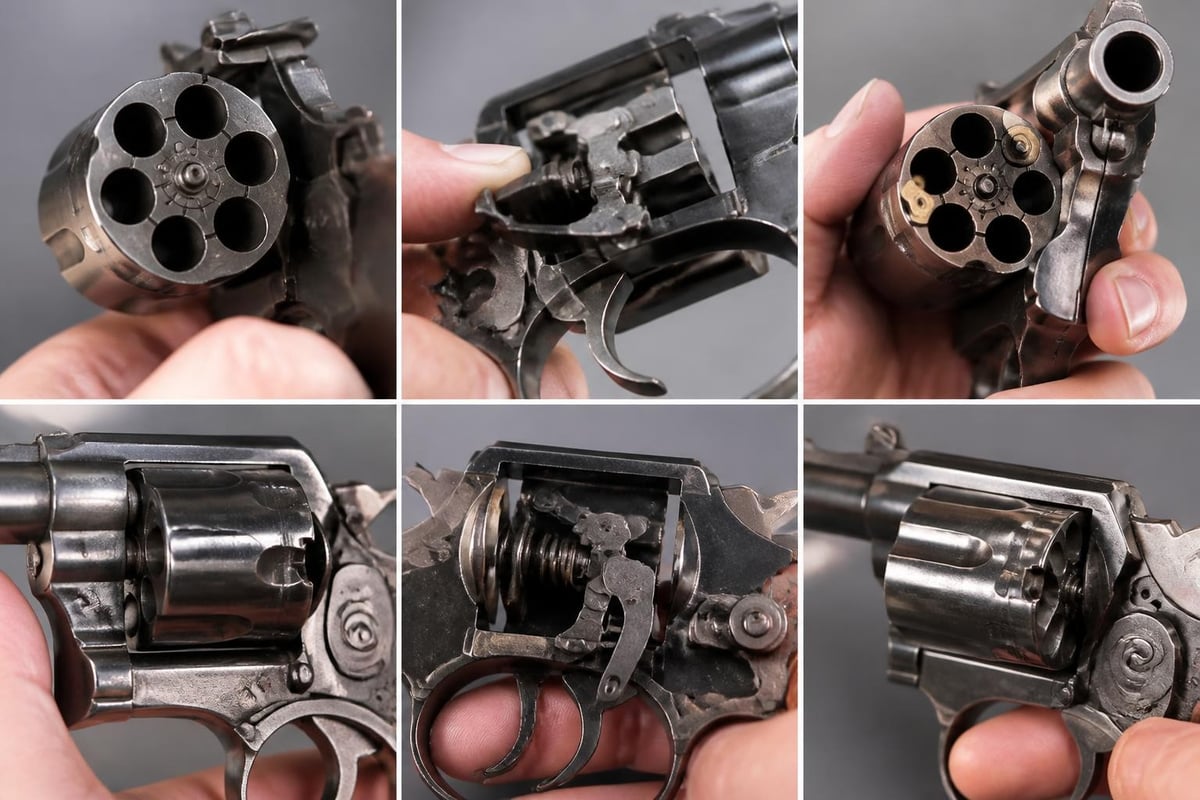
The fundamental operation of revolvers centers on a rotating cylinder that holds multiple cartridges, typically five to eight rounds depending on the model and caliber. When a shooter pulls the trigger or cocks the hammer, the cylinder rotates to align the next chamber with the barrel and firing pin. This mechanical simplicity has made revolvers exceptionally reliable for over 180 years.
Single-Action vs. Double-Action Operation
Single-action revolvers require the shooter to manually cock the hammer before each shot, which rotates the cylinder and prepares the firing mechanism. This design offers several advantages:
- Lighter trigger pull weight for improved accuracy
- Shorter trigger travel for precise shot placement
- Simpler internal mechanics with fewer moving parts
- Historical authenticity for collectors and cowboy action shooters
Double-action revolvers allow shooters to fire by simply pulling the trigger, which both cocks the hammer and rotates the cylinder in one motion. Modern double-action designs also permit single-action operation when the shooter manually cocks the hammer first.
The choice between these operating systems depends heavily on intended use. Competitive shooters often prefer single-action models for their crisp triggers, while those seeking personal defense may favor double-action designs for their immediate readiness.
Historical Development and Evolution
Samuel Colt’s patent of the revolver in the 1830s revolutionized personal firearms by creating the first practical repeating handgun. The Colt Paterson, introduced in 1836, became the first commercial repeating firearm employing a revolving cylinder, though early models faced manufacturing challenges and limited commercial success.
By the mid-1800s, improvements in metallurgy and manufacturing processes allowed companies like Colt and Smith & Wesson to refine revolver designs significantly. The introduction of metallic cartridges in the 1850s eliminated the need for separate percussion caps and loose powder, dramatically improving reliability and reload speed.
Modern Manufacturing Standards
Today's revolvers benefit from advanced computer-controlled machining, precision steel alloys, and rigorous quality control processes. Manufacturers produce cylinders with tolerances measured in thousandths of an inch, ensuring proper timing between cylinder rotation and hammer fall. Modern finishing techniques provide superior corrosion resistance compared to historical models, extending service life even under demanding conditions.
The integration of transfer bar safety mechanisms in contemporary designs prevents accidental discharge if the revolver is dropped while loaded. This critical safety feature has become standard across most modern production revolvers, addressing one of the primary concerns with older hammer-mounted firing pin designs.
Popular Caliber Options and Applications
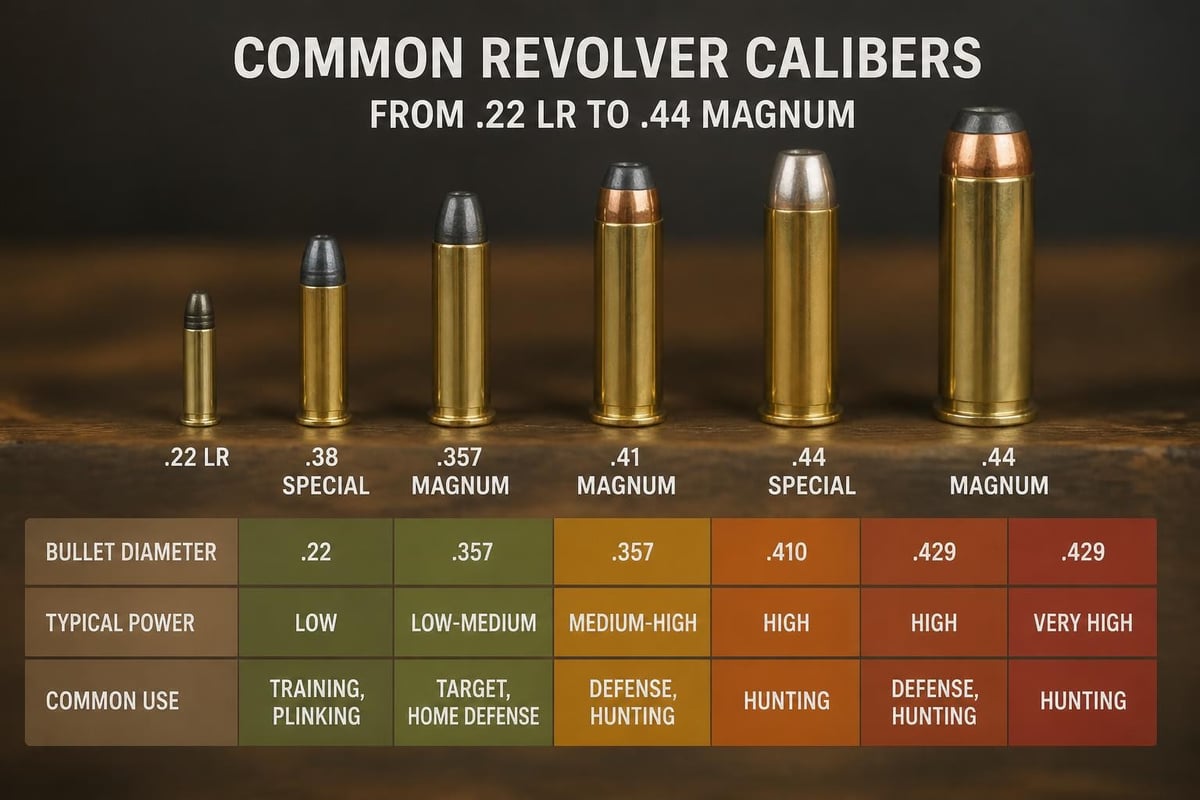
Revolvers chamber a diverse range of cartridges, from lightweight .22 Long Rifle rounds perfect for training and small game hunting to powerful magnum calibers designed for hunting large game or personal protection against dangerous animals.
| Caliber | Typical Use | Advantages | Considerations |
|---|---|---|---|
| .22 LR | Training, plinking | Low recoil, inexpensive ammunition | Limited stopping power |
| .38 Special | Personal defense, target shooting | Manageable recoil, widely available | Moderate power |
| .357 Magnum | Defense, hunting | Excellent power, versatile | Significant recoil |
| .44 Magnum | Hunting, outdoor protection | Maximum power | Heavy recoil, large frame |
| .45 Colt | Cowboy action, hunting | Historical appeal, adequate power | Longer cartridge length |
Selecting the Right Caliber
Choosing an appropriate caliber requires balancing several factors including intended purpose, shooter experience level, and physical capability to manage recoil. New shooters often benefit from starting with .38 Special loads before progressing to more powerful options. Experienced handgun hunters frequently select .357 Magnum or .44 Magnum chamberings for their ability to deliver sufficient energy for ethical harvests of medium to large game within appropriate range limitations.
The availability of ammunition represents another practical consideration in 2026. While popular calibers like .38 Special and .357 Magnum remain readily stocked at retailers like RCS Outdoors, some specialty or obsolete calibers may require advance ordering or prove difficult to source during periods of high demand.
Frame Sizes and Carry Considerations
Manufacturers produce revolvers in various frame sizes to accommodate different cartridges and user preferences. Understanding these size classifications helps shooters select models that balance power, concealability, and shootability.
Small frame revolvers typically chamber .22 LR, .32 H&R Magnum, or .38 Special cartridges. These compact designs excel for concealed carry applications where minimal printing and light weight take priority. However, their reduced mass amplifies felt recoil and limits capacity to five rounds in most models.
Medium frame revolvers represent the most versatile category, comfortably handling .38 Special and .357 Magnum loads while maintaining reasonable dimensions for both carry and range use. Six-shot capacity becomes standard at this frame size, and the additional weight helps manage recoil from magnum cartridges.
Large frame revolvers accommodate powerful cartridges like .44 Magnum, .45 Colt, and various specialty hunting rounds. These substantial handguns provide the mass necessary to tame heavy recoil while offering the structural strength required for maximum-pressure loads. Their size and weight make them impractical for concealed carry but ideal for hunting, trail carry, and outdoor protection scenarios.
Maintenance and Reliability
One significant advantage of revolvers lies in their reputation for mechanical reliability and relatively simple maintenance requirements. Unlike semi-automatic pistols that depend on magazine springs, feed ramps, and complex extraction systems, revolvers function through straightforward mechanical linkages between trigger, hammer, and cylinder.
Routine Cleaning Procedures
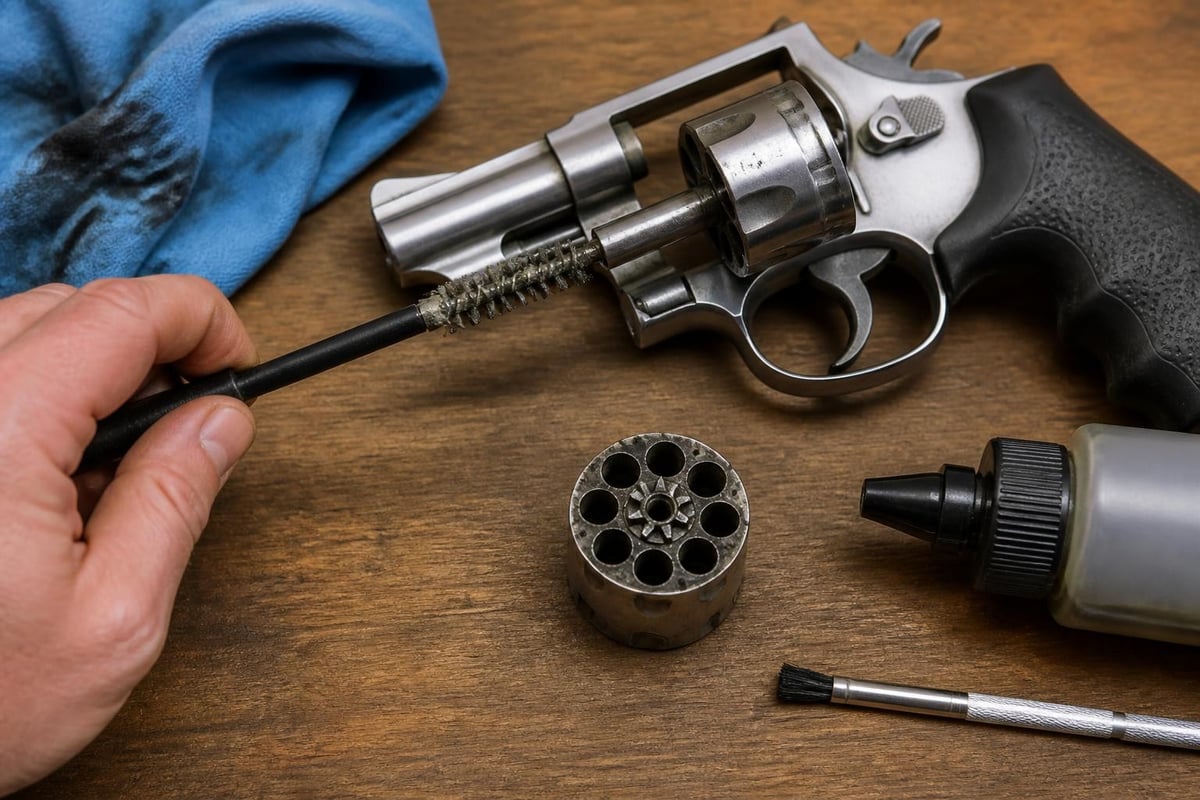
Proper maintenance begins with regular cleaning, particularly after firing sessions. Powder residue and lead deposits accumulate in the barrel, cylinder chambers, and forcing cone-the tapered area where the cylinder meets the barrel. Neglecting these areas can lead to accuracy degradation and increased mechanical wear over time.
- Unload completely and visually verify all chambers are empty
- Remove cylinder if design permits for thorough cleaning
- Clean barrel from breech to muzzle using appropriate bore brush
- Address cylinder chambers individually with proper-sized brushes
- Inspect forcing cone for lead buildup and erosion
- Lubricate moving parts sparingly with quality gun oil
- Function check all mechanical operations before storage
The simplicity of revolver mechanics means fewer parts require lubrication compared to semi-automatic designs. However, critical wear points including the cylinder crane, ejector rod, and hammer-trigger interface need periodic attention to maintain smooth operation.
Common Issues and Troubleshooting
While revolvers earn well-deserved reputations for reliability, they can experience malfunctions under certain conditions. Understanding common revolver malfunctions and stoppages helps shooters identify and address problems quickly.
Timing issues occur when the cylinder fails to align properly with the barrel, potentially causing dangerous gas leakage or bullet strikes on the frame. This serious problem typically results from worn internal parts or improper reassembly after cleaning. Any suspected timing problem requires immediate attention from a qualified gunsmith.
Light primer strikes manifest as failures to fire despite proper ammunition. Causes include weak mainsprings, accumulated debris in the hammer channel, or improper hand-loaded ammunition with hard primers. Replacing the mainspring and thorough cleaning often resolve this issue.
Difficulty ejecting spent cases usually stems from chamber fouling, expanded cases from excessive pressure, or mechanical problems with the ejector star mechanism. Regular chamber cleaning prevents most extraction difficulties, while persistent problems may indicate ammunition incompatibility or mechanical defects requiring professional evaluation.
Preventing Mechanical Problems
Preventive maintenance significantly reduces the likelihood of malfunctions. Shooters should establish regular inspection schedules based on round count rather than arbitrary time intervals. Every 500 rounds represents a reasonable checkpoint for detailed inspection of critical components including:
- Cylinder gap measurement to detect excessive wear
- Forcing cone condition and erosion patterns
- Trigger return spring functionality
- Hand and bolt engagement with cylinder notches
High-volume shooters benefit from maintaining detailed logs documenting round counts, ammunition types used, and any irregularities observed during shooting sessions. This information proves invaluable when diagnosing developing problems or communicating issues to gunsmiths.
Modern Revolver Applications
Despite the dominance of semi-automatic pistols in military and law enforcement contexts, revolvers continue serving important roles in various shooting disciplines and practical applications throughout 2026. Their inherent reliability in adverse conditions makes them particularly valuable for outdoor enthusiasts who venture into remote areas where firearm malfunctions could prove catastrophic.
Hunting and Outdoors Use
Handgun hunters frequently choose revolvers for their ability to digest powerful cartridges unsuitable for most semi-automatic designs. The application in various fields demonstrates their versatility. A .357 Magnum revolver loaded with heavy-for-caliber bullets provides adequate power for deer-sized game within 50 yards, while .44 Magnum chamberings extend effective range and game size capabilities significantly.
Backcountry travelers in bear country often carry large-frame revolvers as protection against dangerous wildlife encounters. The certainty of ignition and ability to verify loaded status at a glance provides psychological confidence that semi-automatic pistols cannot match. Additionally, revolvers function reliably regardless of grip strength or shooting position, important considerations during high-stress wildlife encounters.
For those interested in combining outdoor adventures with their passion for shooting sports, opportunities like hunting experiences expand the practical application of firearm skills in realistic field scenarios.
Competition Shooting
Several competitive shooting disciplines showcase revolvers as primary or exclusive platforms. Cowboy Action Shooting requires participants to use period-appropriate firearms including single-action revolvers, creating demand for both authentic reproductions and modern interpretations of classic designs. The challenges of reproducing historical firearms highlights the complexity involved in creating competition-ready replicas.
International Defensive Pistol Association (IDPA) maintains a revolver division, ensuring these traditional handguns remain viable in practical shooting sports. Competitors appreciate the discipline required to succeed with limited capacity and reload speed compared to semi-automatic divisions.
Bullseye pistol competition allows revolver use, and many precision shooters prefer the consistent trigger pull and sight picture these firearms provide. The mechanical simplicity eliminates variables like slide reciprocation that can affect accuracy in semi-automatic platforms.
Selecting Your First Revolver
New revolver buyers face numerous decisions regarding caliber, frame size, barrel length, and action type. Prioritizing intended use helps narrow the overwhelming array of options available from manufacturers in 2026.
For home defense purposes, medium-frame .357 Magnum revolvers with 3-4 inch barrels offer an excellent balance of power, maneuverability, and capacity. The ability to load .38 Special ammunition for practice while maintaining the option for more powerful .357 loads provides flexibility. Models featuring adjustable sights allow precise zero at typical indoor distances.
Concealed carry applications demand smaller frames and shorter barrels despite compromises in shootability. Five-shot .38 Special snubnose revolvers remain popular choices, though shooters must commit to regular practice given their challenging recoil characteristics and limited sight radius.
Target shooting and hunting justify larger, heavier revolvers with longer barrels for maximum accuracy and velocity. Six or seven-inch barrels extract significantly more energy from magnum cartridges while providing extended sight radius for precise aiming. Adjustable sights become essential for accommodating different loads and distances.
Quality Considerations
Price ranges for new revolvers span from budget-friendly options under $400 to premium custom guns exceeding $3,000. While expensive revolvers often feature superior fit and finish, mid-range offerings from established manufacturers deliver excellent performance and reliability for most shooters. Critical evaluation points include:
| Feature | Budget Models | Premium Models |
|---|---|---|
| Trigger quality | Acceptable with break-in | Excellent out of box |
| Finish durability | Adequate for regular use | Superior corrosion resistance |
| Sight options | Fixed only | Adjustable, fiber optic |
| Cylinder lockup | Functional | Extremely tight |
| Resale value | Depreciates significantly | Holds value well |
Purchasing from reputable dealers ensures access to manufacturer warranties and return policies if problems arise. Online retailers like RCS Outdoors provide extensive selections with detailed specifications to aid decision-making.
Accessories and Customization
The aftermarket supports revolvers with numerous accessories designed to enhance performance, comfort, and utility. Unlike semi-automatic pistols where modifications often affect reliability, most revolver accessories prove purely beneficial without introducing potential malfunction sources.
Grip upgrades represent the most common and impactful modification. Factory grips frequently prioritize compact dimensions over ergonomics, leaving room for improvement. Aftermarket options using rubber, wood, or G10 materials can dramatically improve control and reduce felt recoil. Larger grips distribute recoil forces across more hand surface area while improving trigger reach for shooters with larger hands.
Speedloaders and moon clips address the revolver's primary tactical disadvantage: slow reloads compared to magazine-fed pistols. Speedloaders hold a full cylinder's worth of cartridges in proper alignment for simultaneous chamber loading. With practice, competent shooters achieve reload times approaching those of semi-automatic pistols. Moon clips, which hold rimmed cartridges together in a circular pattern, enable even faster reloads in compatible revolvers.
Optics mounting has gained popularity as miniature red dot sights become more reliable and affordable. While purists may scoff at electronic sights on traditional revolvers, aging shooters appreciate enhanced target acquisition speed and precision. Most modern revolvers require custom machining or aftermarket scope bases to accommodate optics, though some manufacturers now offer optics-ready models from the factory.
Ammunition Selection and Storage
Proper ammunition selection maximizes revolver performance while ensuring safety and reliability. Unlike semi-automatic pistols with specific ammunition requirements for reliable feeding, revolvers digest virtually any cartridge of the correct caliber regardless of bullet shape or profile.
Defensive Load Considerations
Personal protection applications demand ammunition optimized for expansion and energy transfer. Modern jacketed hollow point designs expand reliably while minimizing over-penetration risks in populated environments. Leading manufacturers offer dedicated revolver loads accounting for shorter barrel lengths common in defensive revolvers.
Velocity considerations become critical in short-barreled revolvers where powder burn efficiency drops significantly. Ammunition designed for 4-inch service revolvers may fail to reach advertised velocities from 2-inch snubnose models, potentially preventing proper hollow point expansion. Manufacturers now produce short-barrel optimized loads using faster-burning powders to maximize performance from compact revolvers.
Practice Ammunition
Cost-effective practice requires different ammunition than defensive or hunting applications. Full metal jacket or lead round nose bullets provide adequate accuracy for skill development at significantly lower cost than premium hollow points. Many .357 Magnum owners practice extensively with .38 Special loads to reduce recoil fatigue and ammunition expenses while maintaining similar sight picture and trigger control.
Storage best practices include climate-controlled environments protected from temperature extremes and humidity. Ammunition stored properly remains viable for decades, though periodic rotation ensures fresh defensive loads. Inspecting stored ammunition annually for corrosion or case discoloration prevents potentially dangerous malfunctions from degraded cartridges.
Legal and Safety Considerations
Responsible revolver ownership requires understanding applicable federal, state, and local regulations governing purchase, possession, and carry. Laws vary significantly across jurisdictions, making research essential before acquiring any firearm. Some states impose waiting periods, capacity restrictions, or registration requirements that impact revolver purchases.
Safety protocols transcend legal requirements, representing fundamental responsibilities of firearm ownership. The four universal safety rules apply equally to revolvers as any other firearms:
- Treat every firearm as if loaded
- Never point at anything you're unwilling to destroy
- Keep your finger off the trigger until ready to shoot
- Be certain of your target and what lies beyond it
Storage security prevents unauthorized access, particularly in households with children or visitors unfamiliar with firearms. Dedicated gun safes provide optimal security, though quick-access biometric safes balance security with defensive accessibility. Cable locks through the frame prevent operation while allowing visual verification of unloaded status.
Revolvers continue offering unmatched reliability, mechanical simplicity, and proven performance across diverse applications from concealed carry to hunting. Whether you're drawn to their rich history, appreciate their intuitive operation, or simply value firearms that work when needed most, understanding the nuances of revolver selection and maintenance ensures satisfying ownership experiences. RCS Outdoors provides extensive selections of quality revolvers, ammunition, and accessories to support your shooting endeavors, backed by knowledgeable customer service ready to help you find the perfect firearm for your specific needs.


