
Best First Gun for Beginners: Complete Buyer’s Guide
Selecting your first firearm represents a significant decision that requires careful consideration of multiple factors, from intended use and caliber selection to safety protocols and budget constraints. For new shooters entering the firearms community in 2026, understanding the fundamental differences between firearm types, recognizing essential safety requirements, and identifying reliable starter models will ensure a positive introduction to responsible gun ownership. This comprehensive guide examines the critical elements every beginner should evaluate when purchasing their first firearm.
Understanding Your Primary Purpose
Before selecting the best first gun for beginners, you must identify your intended use. This foundational decision shapes every subsequent choice, from firearm type to caliber selection.
Self-Defense Considerations
Home defense requires different characteristics than concealed carry. A full-sized handgun offers greater accuracy and capacity for home defense, while a compact model provides easier concealment for personal protection. Reliability stands as the paramount concern for defensive firearms, as mechanical failures during critical moments prove unacceptable.
The debate between revolvers and semi-automatic pistols for defense continues among experienced shooters. Revolvers offer mechanical simplicity and absolute reliability, while semi-automatics provide higher capacity and faster reloads.
Recreational Shooting Goals
Target shooting and recreational plinking allow beginners to develop fundamental marksmanship skills without the pressure of defensive scenarios. Rimfire rifles chambered in .22 LR deliver low recoil, minimal noise, and affordable ammunition costs, making them ideal for regular practice sessions.
Competitive shooting disciplines require specific firearm characteristics. USPSA competitions favor 9mm semi-automatics, while precision rifle competitions demand bolt-action centerfire rifles with superior accuracy potential.
Hunting Applications
Hunting requirements vary dramatically based on game species and regional regulations. Upland bird hunting demands shotguns with quick handling characteristics, while deer hunting requires rifles with sufficient power and accuracy at extended ranges. New hunters should research their state's legal requirements before making purchasing decisions.
Firearm Types Compared
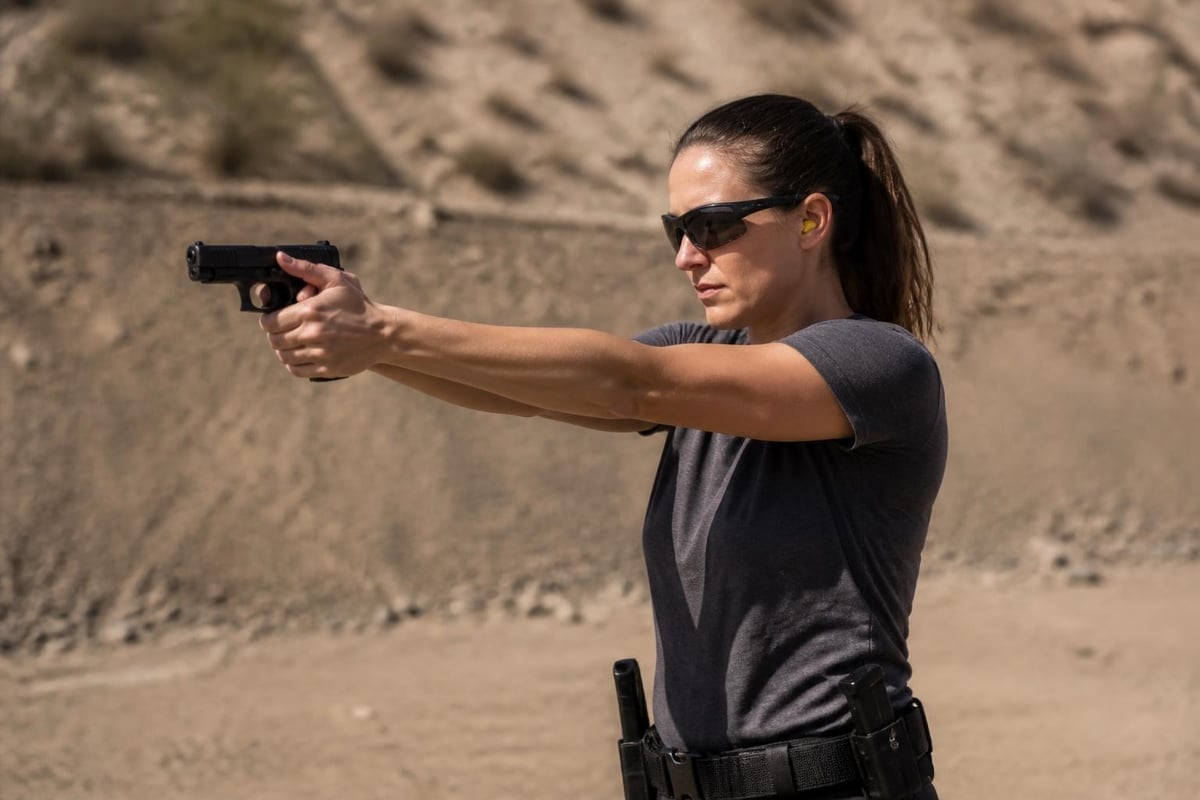
Understanding the fundamental differences between handguns, rifles, and shotguns helps narrow your selection process when choosing the best first gun for beginners.
| Firearm Type | Primary Advantages | Common Calibers | Typical Applications |
|---|---|---|---|
| Semi-Auto Pistol | High capacity, quick follow-up shots | 9mm, .380 ACP, .45 ACP | Self-defense, target shooting |
| Revolver | Mechanical simplicity, reliability | .38 Special, .357 Magnum, .22 LR | Home defense, learning fundamentals |
| Rimfire Rifle | Low recoil, affordable ammunition | .22 LR, .17 HMR | Skill development, small game |
| Centerfire Rifle | Versatility, accuracy | .223 Rem, .308 Win, 6.5 Creed | Hunting, long-range shooting |
| Shotgun | Multiple ammunition types, effectiveness | 12 gauge, 20 gauge, .410 bore | Bird hunting, home defense, clays |
Handgun Selection for Beginners
Revolvers offer new shooters an intuitive operating system without complex controls. The double-action trigger pull requires deliberate effort, reducing the likelihood of accidental discharges. Models chambered in .38 Special provide manageable recoil while maintaining defensive effectiveness.
Semi-automatic pistols dominate the modern handgun market for valid reasons. Their higher capacity and lower recoil (due to slide reciprocation absorbing energy) make them excellent choices for many beginners. Striker-fired models eliminate external hammers and manual safeties, simplifying operation for defensive use.
Popular beginner-friendly pistols include:
- Glock 19 (9mm): Mid-sized frame, proven reliability, extensive aftermarket support
- Smith & Wesson M&P9 M2.0: Ergonomic design, customizable grip size, competitive pricing
- Ruger Security-9: Budget-friendly option, solid construction, standard capacity
- Sig Sauer P365: Compact carry option, exceptional capacity-to-size ratio
Rifle Options for New Shooters
The .22 LR rifle represents the gold standard for beginners learning marksmanship fundamentals. Virtually non-existent recoil allows shooters to focus exclusively on sight picture, trigger control, and breathing without developing flinching habits.
Bolt-action .22 rifles like the Ruger American Rimfire teach deliberate shot placement and ammunition conservation. Semi-automatic options like the Ruger 10/22 provide faster shooting experiences while maintaining the platform's beginner-friendly characteristics.
Centerfire rifles serve hunters and those seeking defensive carbines. The AR-15 platform chambered in .223 Remington offers modular customization, low recoil, and abundant training resources. Despite misconceptions, the AR-15's ergonomic design and mild recoil make it an excellent choice for many first-time rifle buyers.
Shotgun Considerations
Shotgun gauge selection significantly impacts recoil management. While 12-gauge remains the most versatile option, 20-gauge shotguns deliver substantially reduced recoil while maintaining effectiveness for most applications. Youth and smaller-statured shooters particularly benefit from 20-gauge platforms.
Pump-action shotguns provide reliability and affordability. The Mossberg 500 and Remington 870 represent time-tested designs with extensive aftermarket support. Semi-automatic shotguns reduce felt recoil through gas operation, though they command higher price points.
Safety Fundamentals Every New Owner Must Know
Responsible firearm ownership begins with unwavering commitment to safety protocols. The fundamental gun safety rules established by the NRA provide universal guidelines that every shooter must internalize before handling any firearm.
The Four Cardinal Rules
These non-negotiable principles prevent accidents:
- Treat every firearm as if it's loaded – Never assume a gun is unloaded without personally verifying
- Never point the muzzle at anything you're not willing to destroy – Maintain constant muzzle awareness
- Keep your finger off the trigger until ready to fire – Rest your trigger finger along the frame
- Be certain of your target and what's beyond it – Understand bullet penetration and backstop requirements
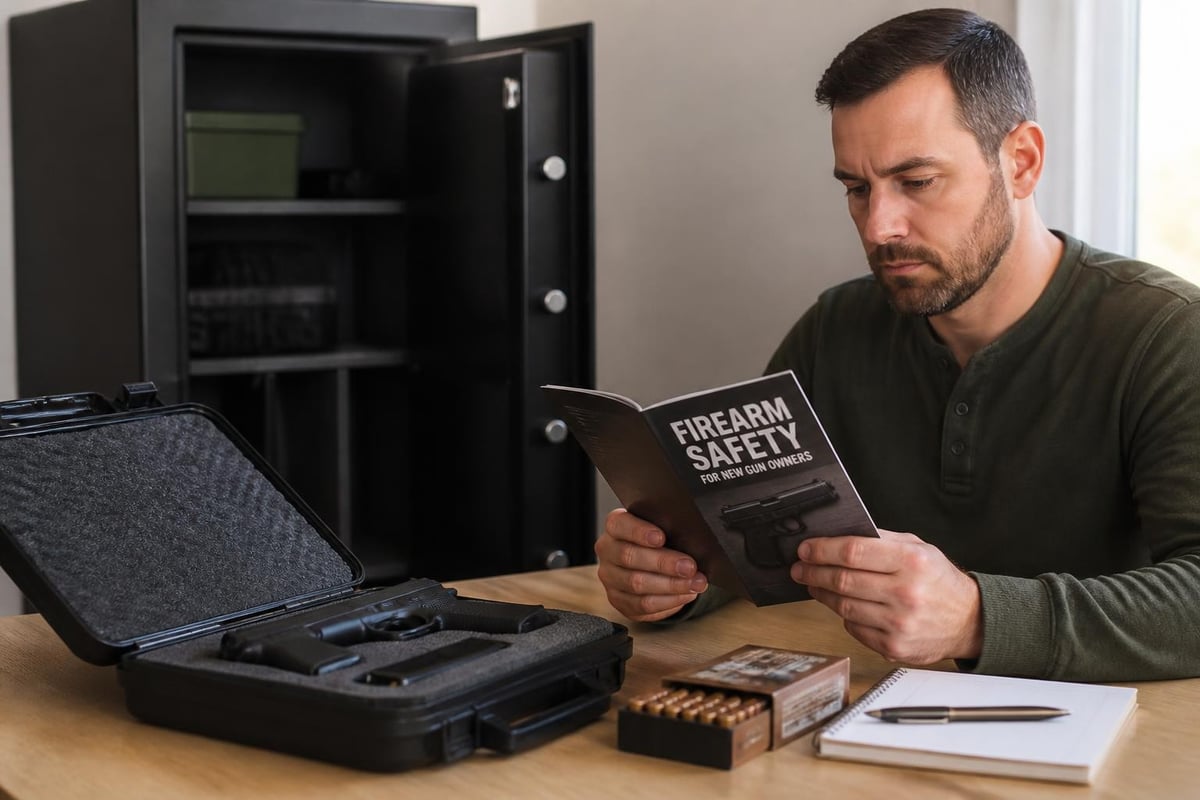
Secure Storage Requirements
Safe storage practices prevent unauthorized access, particularly in households with children. Research demonstrates that properly implemented storage programs significantly reduce firearm-related incidents.
Beginners should invest in quality storage solutions immediately:
- Biometric safes provide rapid access while preventing unauthorized use
- Trigger locks offer inexpensive secondary security layers
- Gun safes protect multiple firearms while preventing theft
- Separate ammunition storage adds an additional safety barrier
Caliber Selection Strategy
Choosing appropriate ammunition represents a critical decision when selecting the best first gun for beginners. Caliber affects recoil, cost, availability, and effectiveness.
Handgun Calibers Evaluated
9mm Luger dominates the handgun market for compelling reasons. Modern ammunition delivers excellent defensive performance while producing manageable recoil. Widespread adoption ensures competitive pricing and universal availability. For beginners, 9mm provides the optimal balance of effectiveness, affordability, and shootability.
The .22 LR handgun caliber deserves consideration for pure skill development. Ammunition costs pennies per round, enabling extensive practice sessions. However, its defensive limitations mean most shooters eventually acquire centerfire options.
Larger calibers like .40 S&W and .45 ACP generate substantially more recoil without meaningful defensive advantages over modern 9mm loads. New shooters should avoid these chamberings until developing proper fundamentals.
Rifle Caliber Choices
Beyond the .22 LR platform, beginners selecting centerfire rifles should consider these versatile chamberings:
- .223 Remington/5.56 NATO: Low recoil, abundant ammunition, suitable for varmints and home defense
- .308 Winchester: Proven hunting cartridge, long-range capability, widespread availability
- 6.5 Creedmoor: Superior ballistics, moderate recoil, growing popularity among precision shooters
Regional hunting regulations often dictate minimum caliber requirements for specific game species. Research your state's laws before purchasing hunting rifles.
Shotgun Gauge Guidance
The 12-gauge versus 20-gauge decision hinges on intended applications and shooter physique. Twelve-gauge ammunition offers the broadest selection, from light target loads to heavy waterfowl rounds. Twenty-gauge provides 60% less recoil while maintaining effectiveness for upland birds, home defense, and sporting clays.
Avoid .410 bore shotguns despite their mild recoil. Limited payload capacity reduces effectiveness, and ammunition costs exceed larger gauges.
Training and Education Requirements
Purchasing a firearm represents the beginning of your educational journey, not the conclusion. Comprehensive training develops safe handling skills and marksmanship fundamentals.
Professional Instruction Benefits
Self-teaching often ingrains bad habits that prove difficult to correct later. Professional instructors identify technique errors immediately and provide structured progression through skill development stages.
Quality courses cover:
- Safe manipulation and handling procedures
- Proper stance, grip, and sight alignment
- Trigger control and follow-through
- Malfunction clearing procedures
- Practical shooting scenarios
Many states require training for concealed carry permits. Understanding licensing requirements in your jurisdiction helps ensure legal compliance from the outset.
Ongoing Practice Commitments
Firearm proficiency represents a perishable skill requiring regular maintenance. Monthly practice sessions maintain baseline competency, while serious defensive shooters should train more frequently.
Dry fire practice at home costs nothing while developing muscle memory and trigger control. Modern snap caps protect firing pins during dry fire sessions. Live fire confirms zero retention and tests reliability with defensive ammunition.
Budget Planning Beyond the Firearm
First-time buyers often underestimate total ownership costs when selecting the best first gun for beginners. Comprehensive budgeting prevents financial surprises.
Essential Accessories and Equipment
| Item Category | Estimated Cost | Priority Level |
|---|---|---|
| Quality holster (handguns) | $50-$150 | Critical |
| Gun safe or lock box | $150-$1,000+ | Critical |
| Hearing protection | $20-$300 | Critical |
| Eye protection | $15-$100 | Critical |
| Cleaning supplies | $30-$75 | High |
| Snap caps | $10-$20 | High |
| Range bag | $30-$100 | Medium |
| Additional magazines | $20-$50 each | Medium |
Ammunition and Training Costs
Budget $200-$500 for initial ammunition purchases depending on caliber selection. Practice ammunition (FMJ for handguns/rifles, target loads for shotguns) costs less than premium defensive rounds.
Professional training courses range from $100 for basic classes to $500+ for advanced instruction. Consider training an investment in safety and effectiveness rather than an optional expense.
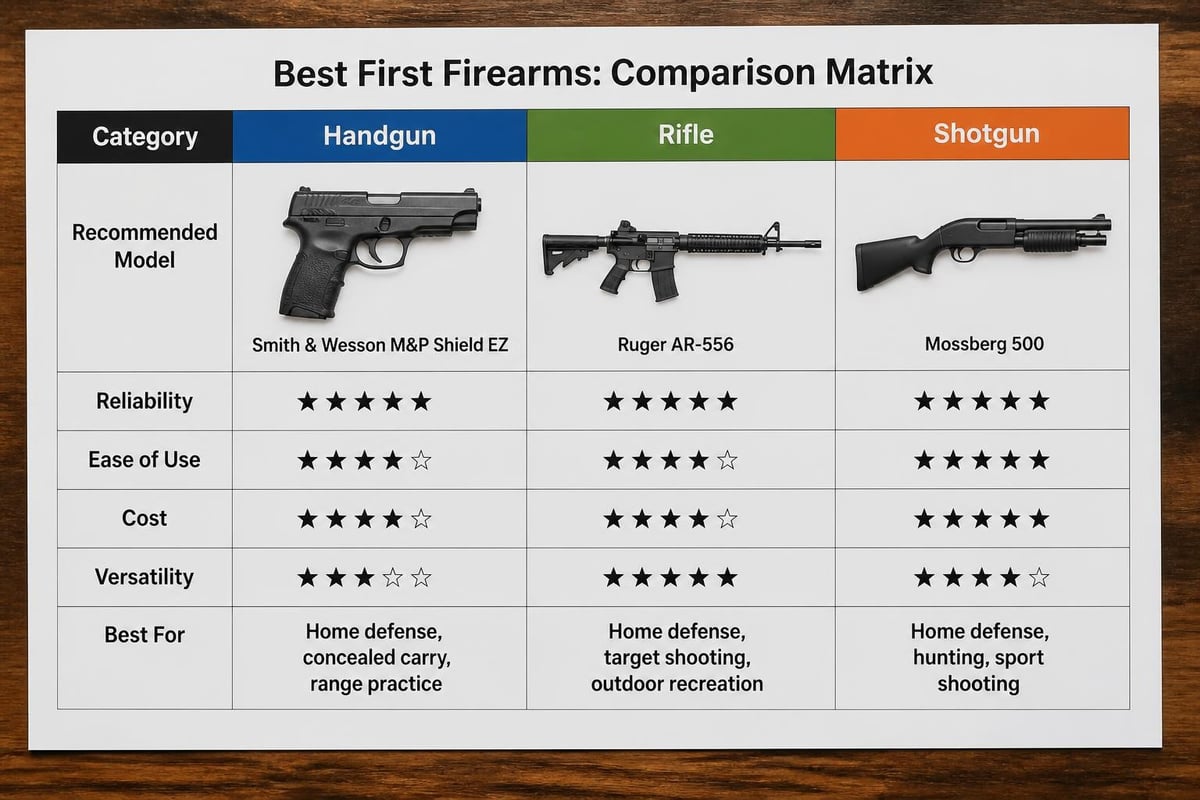
Top Recommended Models by Category
Based on reliability, affordability, and beginner-friendly characteristics, these models represent excellent starting points.
Best First Handguns
Glock 19 – This 9mm pistol's proven track record, moderate size, and extensive parts availability make it the default recommendation for many instructors. The striker-fired design eliminates external safeties, while the polymer frame reduces weight.
Ruger LCR – For those preferring revolvers, this lightweight .38 Special delivers reliability in a compact package. The smooth trigger pull and transfer bar safety system enhance both usability and security.
Best First Rifles
Ruger 10/22 – Six decades of production prove this semi-automatic .22 LR rifle's enduring value. Exceptional accuracy, legendary reliability, and endless customization options serve beginners and experienced shooters equally well.
Ruger American Rifle – Available in multiple calibers, this bolt-action platform provides accuracy exceeding its modest price point. Adjustable triggers and user-changeable stocks accommodate various shooter sizes.
Best First Shotguns
Mossberg 500 – This pump-action 12-gauge's dual extractors and top-mounted safety deliver reliability and intuitive operation. Interchangeable barrels adapt the platform for hunting, home defense, or clay sports.
Weatherby SA-08 – This semi-automatic 20-gauge reduces recoil while maintaining cycling reliability. Chrome-lined chambers and Turkish manufacturing provide quality at competitive pricing.
RCS Outdoors has partnered with Heartland Lodge and Benelli for The Upland Escape Giveaway, offering one winner an all-inclusive hunting package and a Benelli Super Black Eagle 3 shotgun. This premium opportunity provides aspiring upland hunters the chance to experience traditional wingshooting while acquiring a professional-grade firearm.
Common Mistakes to Avoid
New shooters frequently make predictable errors that compromise their early experiences with firearms. Awareness prevents these pitfalls.
Overlooking Fit and Ergonomics
Firearms must fit your hand size and body proportions. A pistol with excessive grip circumference causes loss of control, while rifles with improper length of pull prevent proper sight alignment. Always test-fit firearms before purchasing when possible.
Women and smaller shooters often receive misguided advice to purchase compact or subcompact pistols. These smaller guns actually produce sharper recoil and prove more difficult to shoot accurately. Full-sized firearms provide better control for learning fundamentals.
Prioritizing Appearance Over Function
Tactical accessories and custom finishes attract beginners but add unnecessary cost and complexity. A reliable, stock configuration firearm outperforms a heavily modified unreliable one. Master the basics before considering modifications.
Neglecting Long-Term Costs
Purchasing an expensive firearm while budgeting inadequately for ammunition and training represents counterproductive prioritization. A moderately priced gun with ample practice ammunition develops skills far better than a premium model that sits unused due to ammunition costs.
Skipping Research and Testing
Impulse purchases based on appearance or sales pressure often result in buyer's remorse. Research thoroughly, read multiple reviews, and rent or borrow various models before committing to purchase. Your first firearm should serve your needs for years.
Legal Compliance and Documentation
Understanding firearms laws prevents inadvertent violations that carry serious consequences.
Federal Requirements
All firearms purchases through licensed dealers require completion of ATF Form 4473 and successful NICS background check. Certain state residents face additional waiting periods. Prohibited persons include felons, domestic violence offenders, and individuals with specific mental health adjudications.
State and Local Regulations
Firearm laws vary dramatically by jurisdiction. California, New York, and Massachusetts impose strict regulations including approved firearm rosters, magazine capacity limits, and registration requirements. Research your specific location's laws before purchasing.
Some states require permits to purchase handguns or safety training certificates. Concealed carry permits involve separate application processes with varying reciprocity between states.
Storage and Transport Laws
Many jurisdictions mandate specific storage requirements, particularly in households with children. Transport regulations specify locked containers and ammunition separation. Traveling across state lines requires careful research of each jurisdiction's laws.
Building Your Support Network
Successful firearm ownership extends beyond the individual to encompass the broader shooting community and available resources.
Finding Quality Instruction
Seek instructors certified by recognized organizations including NRA, USCCA, or state peace officer standards. Credentials matter because they demonstrate standardized training methodology and safety emphasis.
Women-specific courses address unique considerations including holster selection, concealment challenges, and defensive tactics. These classes often provide more comfortable learning environments for female beginners.
Joining Shooting Communities
Local gun clubs provide range access, competitive opportunities, and mentorship from experienced shooters. Online forums and social media groups offer advice, though quality varies significantly. Verify information from multiple reputable sources before accepting guidance.
Range membership delivers substantial long-term value compared to per-visit fees. Many facilities offer beginner orientation sessions and basic safety courses included with membership.
Ongoing Education Resources
Books, videos, and online courses supplement live instruction. Authors like Massad Ayoob and instructors like Rob Pincus provide evidence-based defensive shooting education. However, nothing replaces hands-on training with qualified professionals.
Selecting the best first gun for beginners requires balancing multiple factors including intended use, budget constraints, and personal fit while maintaining unwavering commitment to safety protocols. Whether choosing a reliable 9mm handgun for home defense, a .22 LR rifle for skill development, or a versatile shotgun for hunting, proper training and responsible storage form the foundation of successful firearm ownership. RCS Outdoors provides the firearms, ammunition, and accessories new shooters need to begin their journey, backed by partnerships that support the shooting sports community. Explore their selection today to find your ideal first firearm.


