Guided Merriam Turkey Hunts: Expert Tips & Tactics
The Merriam's wild turkey represents one of North America's most sought-after game birds, combining striking white-tipped tail feathers with challenging mountain terrain that tests even experienced hunters. Whether you're pursuing your first Grand Slam or simply seeking an unforgettable spring hunt, guided Merriam turkey hunts offer access to premium habitat, expert local knowledge, and significantly improved success rates compared to DIY expeditions. These hunts take place across the western United States in states like South Dakota, Wyoming, Montana, Nebraska, and Colorado, where ponderosa pine forests meet expansive grasslands and rugged canyons create ideal conditions for this magnificent subspecies.
Understanding the Merriam's Turkey Subspecies
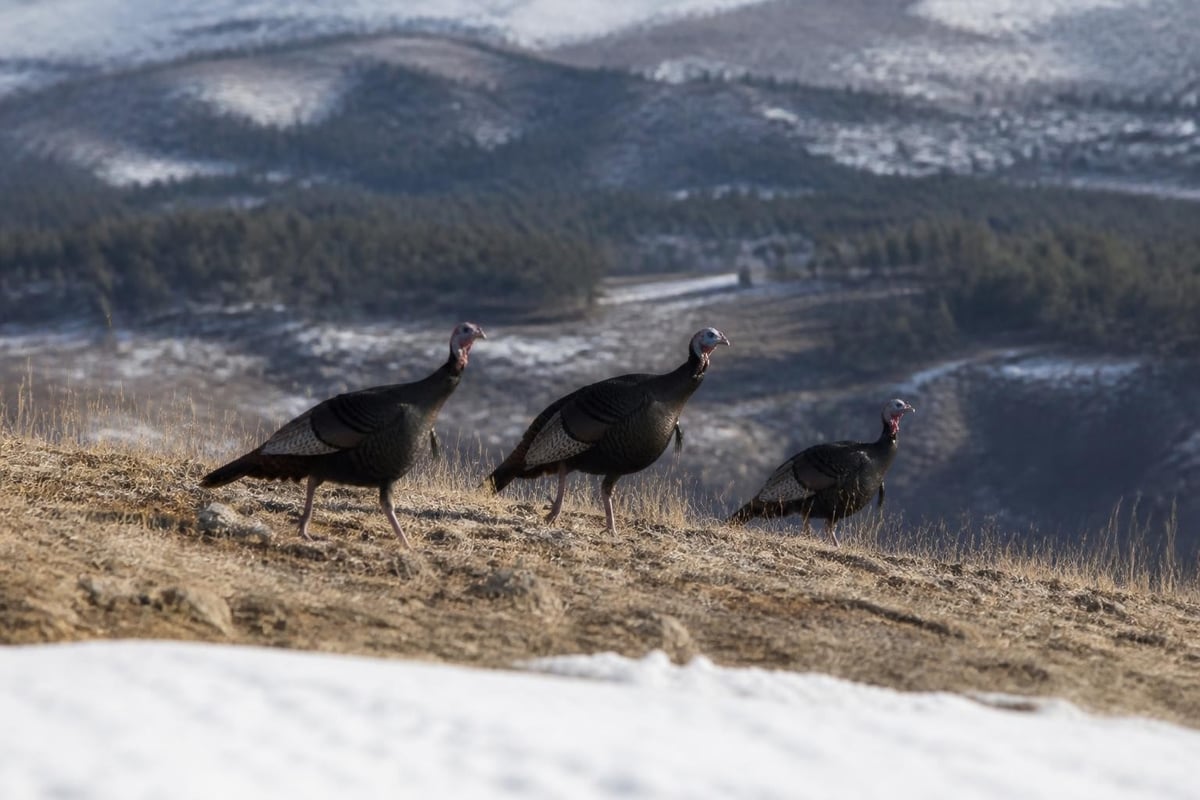
Merriam's turkeys differ substantially from their Eastern, Rio Grande, and Osceola cousins in both appearance and behavior. These birds feature distinctive white tail tips and rump feathers that contrast sharply with their dark bodies, creating a striking visual when fanned during courtship displays. Adult toms typically weigh between 18 and 22 pounds, making them slightly smaller than Eastern turkeys but equally challenging to hunt.
The Merriam’s subspecies inhabits specific ecological zones characterized by ponderosa pine forests interspersed with open parks and mountain meadows. Their daily routines revolve around roosting in mature pines at elevations between 6,000 and 9,000 feet, then descending to forage in grassy openings and creek bottoms during daylight hours. This vertical movement pattern creates unique opportunities for hunters who understand how to position themselves along travel corridors.
Behavioral Patterns and Seasonal Movements
Merriam's turkeys exhibit pronounced seasonal migrations driven by snow depth and food availability. During winter months, flocks concentrate in south-facing draws and lower elevations where they can access bare ground for feeding. As spring progresses and snow recedes, birds gradually move upslope to traditional breeding areas where gobblers establish territories and hens select nesting sites.
Key behavioral characteristics include:
- Earlier breeding season compared to Eastern subspecies, often beginning in mid-April
- Strong vocal responses to calling, particularly on cool mornings
- Tendency to travel greater distances between roosting and feeding areas
- Preference for using ridge lines and saddles as natural highways
- Reduced wariness in areas with limited hunting pressure
Selecting the Right Guided Hunt Package
Choosing among the dozens of outfitters offering guided Merriam turkey hunts requires careful evaluation of several critical factors. Hunt duration typically ranges from two to five days, with longer packages providing buffer days for weather delays and increased opportunities to harvest mature gobblers. Most reputable outfitters maintain success rates between 80 and 95 percent on guided hunts, significantly higher than self-guided adventures in unfamiliar territory.
Accommodation styles vary considerably across operations. Some outfitters provide rustic wall-tent camps that immerse hunters in backcountry settings, while others feature comfortable lodges with private rooms, hot showers, and chef-prepared meals. Neither option inherently provides better hunting, but your personal preferences regarding comfort and amenities should factor into your decision.
Hunt Structure and Guide Ratios
Professional outfitters structure their hunts using different guide-to-hunter ratios that directly impact your experience and success probability. Premium packages often feature one-on-one guiding, where a dedicated professional works exclusively with you throughout the hunt. This arrangement maximizes flexibility and allows guides to adapt strategies based on your physical abilities, shooting range, and experience level.
| Package Type | Guide Ratio | Typical Duration | Price Range | Best For |
|---|---|---|---|---|
| Premium | 1:1 | 3-4 days | $2,500-$4,000 | First-time Merriam hunters |
| Standard | 1:2 | 2-3 days | $1,800-$2,800 | Experienced turkey hunters |
| Semi-Guided | Mixed | 2-3 days | $1,200-$2,200 | Budget-conscious hunters |
| DIY Access | Self-guided | Variable | $500-$1,000 | Advanced hunters wanting land access |
The planning process for successful Merriam’s hunts begins months before your departure date. License applications, preference point accumulation, and draw deadlines vary by state, with some requiring applications in January or February for spring hunts occurring in April and May.
Essential Gear and Equipment Considerations
Proper equipment selection separates comfortable, successful guided Merriam turkey hunts from frustrating experiences. The mountainous terrain these birds inhabit demands different gear than flatland Eastern turkey hunting. Your shotgun should pattern reliably at 40 yards with quality turkey loads, though many western shots present themselves at closer ranges where terrain features funnel birds into predictable locations.
Critical gear components include:
- Quality waterproof boots with aggressive tread for steep, rocky terrain
- Layered clothing system accommodating temperature swings from 20°F mornings to 60°F afternoons
- Camouflage patterns appropriate for ponderosa pine and sage environments
- Compact binoculars for glassing distant ridges and openings
- Reliable friction or diaphragm calls matched to Merriam's vocal characteristics
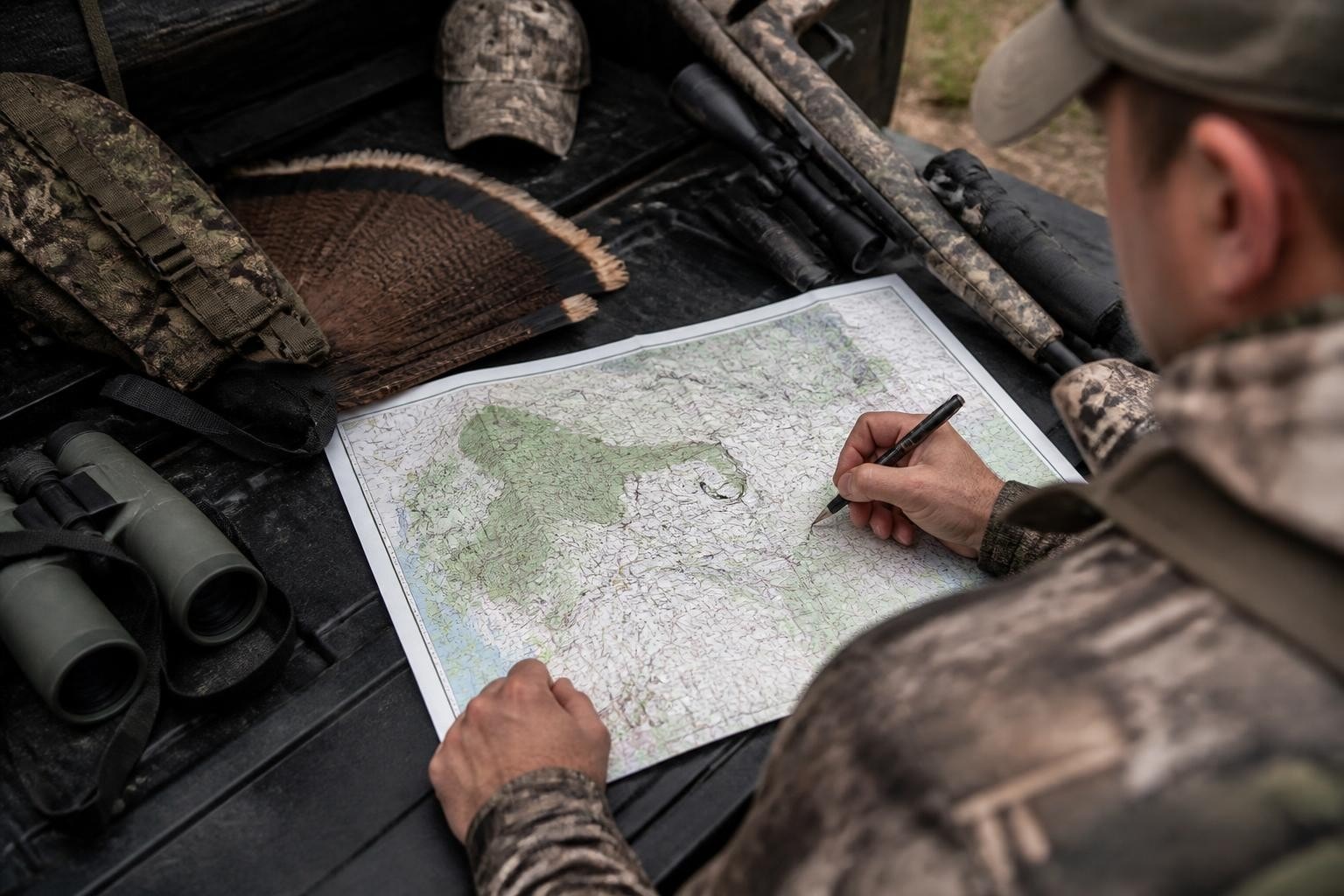
The specific accessories for Merriam’s hunting extend beyond basic requirements to include items addressing high-altitude conditions. Sunscreen and lip balm prevent painful burns at elevations where UV exposure intensifies. Trekking poles assist with steep ascents and descents, particularly when carrying harvested birds. Range finders help judge distances across deceptive mountain valleys where shots frequently prove farther than they appear.
Shotgun and Ammunition Selection
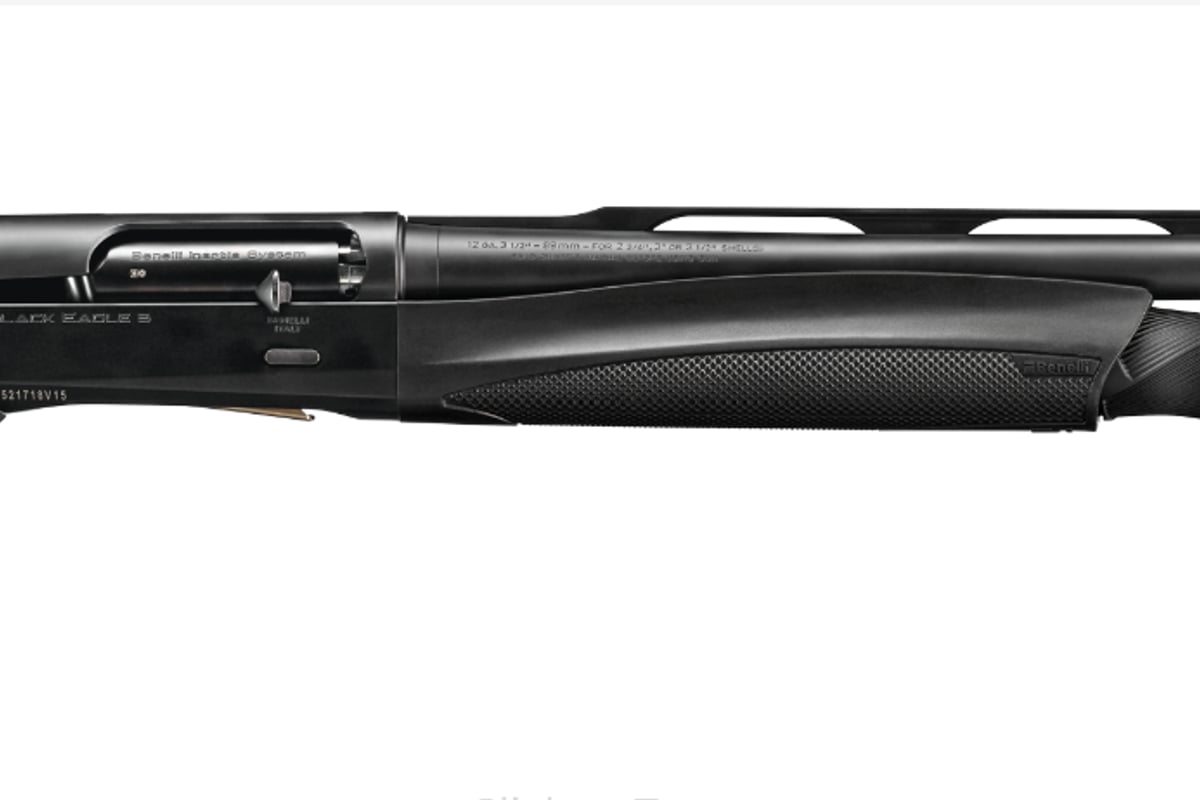
Choosing appropriate firearms for guided Merriam turkey hunts involves balancing pattern density, recoil management, and portability during extended mountain hikes. Most guides recommend 12-gauge shotguns with 3-inch chambers as the versatile standard, though 20-gauge guns loaded with premium tungsten shot perform admirably within reasonable ranges. Barrel length between 22 and 26 inches provides optimal handling in brushy setups while maintaining sufficient sight radius for accurate shooting.
Pattern testing remains critical regardless of shotgun selection. Western guides consistently emphasize that knowing your exact effective range prevents wounding birds that escape into vast wilderness landscapes where recovery becomes extremely difficult. Quality turkey chokes and modern ammunition combinations produce reliable patterns exceeding 100 pellets in a 10-inch circle at 40 yards, ensuring clean, ethical harvests.
Hunting Strategies and Tactical Approaches
Guided Merriam turkey hunts employ diverse tactical approaches depending on terrain features, weather conditions, and bird behavior on any given morning. The classic run-and-gun strategy works exceptionally well in open ponderosa forests where hunters can cover substantial ground while calling periodically to locate responsive gobblers. This mobile approach maximizes contact with birds across large hunting areas and allows guides to position clients ahead of traveling toms.
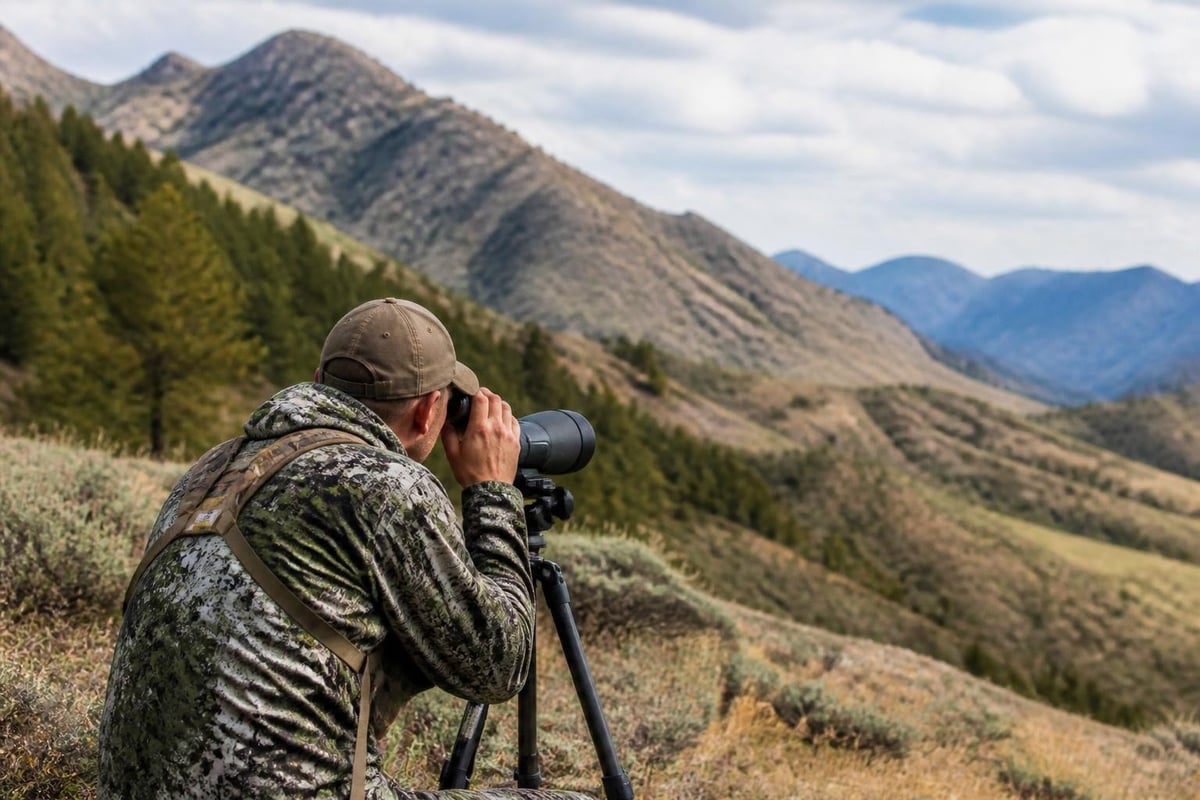
Roosting operations conducted the evening before hunts provide invaluable intelligence about bird locations and numbers. Professional guides glass open hillsides during late afternoon, watching for turkeys flying up into roosting trees as daylight fades. This reconnaissance work enables precise morning setups within calling range of known birds, dramatically increasing encounter rates compared to random wandering.
Reading Terrain and Predicting Movement
Understanding Merriam’s turkey habitat preferences allows hunters to anticipate where birds will travel between roosting and feeding areas. Gobblers consistently use natural terrain features as corridors, following ridge tops, crossing saddles between drainages, and utilizing benches that contour around mountainsides. Experienced guides position hunters along these travel routes rather than calling from random locations.
Weather patterns significantly influence bird behavior and hunting strategies during guided Merriam turkey hunts. Cold fronts often suppress gobbling activity while increasing movement as birds seek sheltered feeding areas. Warm, calm mornings typically produce excellent vocal activity but may see birds henned up early as breeding groups form quickly. Professional guides adjust tactics throughout hunts based on evolving conditions.
- Scout multiple drainage systems to identify active gobbling areas
- Position setups between roosts and preferred feeding zones
- Use terrain features to remain concealed during approach
- Call conservatively once set up in prime ambush locations
- Remain patient as western birds often cover substantial ground
- Be prepared to relocate if initial setups prove unproductive
Regional Variations and Prime Hunting Locations
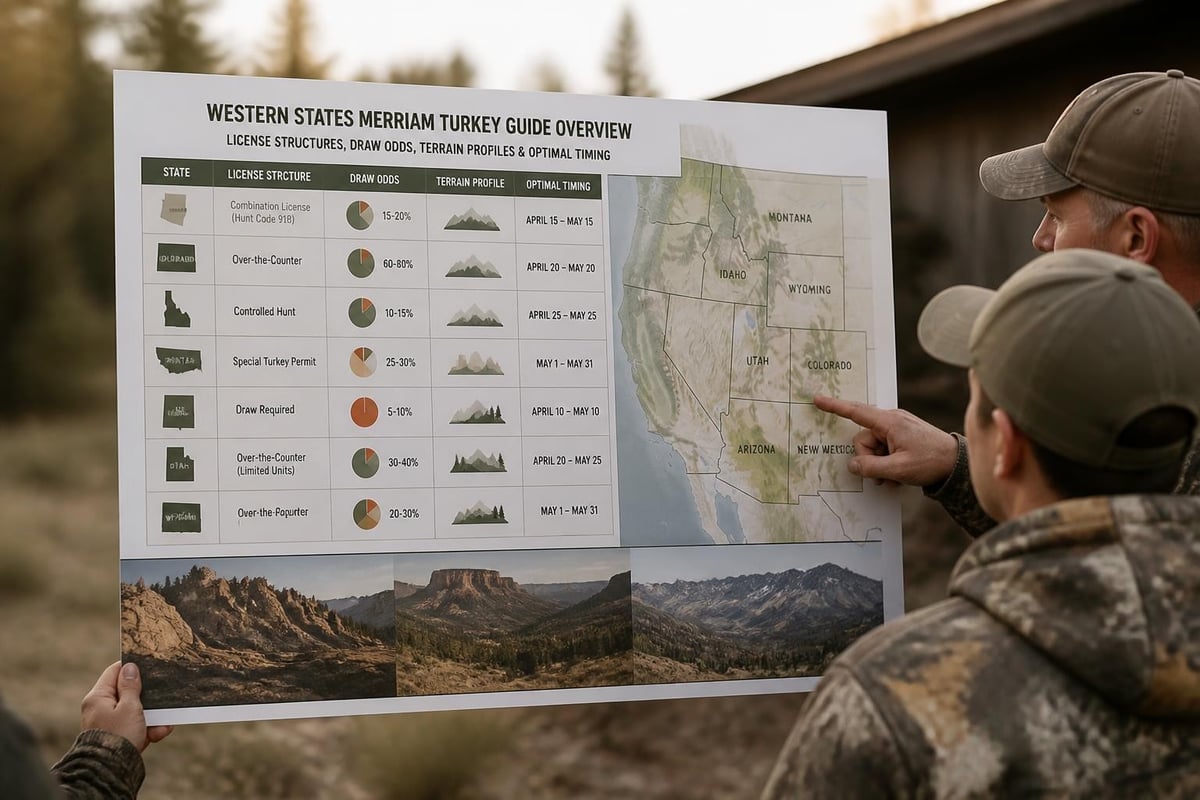
Different states hosting guided Merriam turkey hunts offer unique advantages regarding bird populations, terrain characteristics, and license availability. South Dakota's Black Hills region supports excellent turkey densities with relatively liberal license allocations, making it accessible for hunters without extensive preference point accumulation. The guided hunt opportunities in South Dakota provide encounters with mature gobblers in classic ponderosa pine habitat mixed with aspen groves and mountain meadows.
Wyoming's Bighorn Mountains present more rugged terrain with spectacular scenery and lower hunting pressure compared to some neighboring states. Outfitters operating in Wyoming’s premier turkey country emphasize physical preparation, as hunts frequently involve hiking several miles daily across steep elevation changes. These efforts reward hunters with less pressured birds that respond aggressively to calling.
Nebraska and Colorado Opportunities
Nebraska offers unique guided Merriam turkey hunts along the Niobrara River valley and Pine Ridge escarpment, where prairie grasslands transition into forested canyons. The personalized hunting experiences in Nebraska combine Merriam's birds with occasional Rio Grande subspecies, potentially allowing hunters to harvest two subspecies during a single trip. This region features gentler topography than mountain states while maintaining quality bird populations.
Colorado's diverse landscapes support Merriam's turkeys across numerous mountain ranges, from the Front Range foothills to western slope mesas. Hunters can find specialized guided hunts in Colorado accessing private ranches with mature timber stands and agricultural edges that concentrate birds. License availability varies considerably by unit, requiring careful research and potentially several years of preference point accumulation for premium areas.
| State | Season Dates | License Type | Typical Success Rate | Terrain Difficulty |
|---|---|---|---|---|
| South Dakota | April 1-May 31 | OTC/Limited | 85-95% | Moderate |
| Wyoming | April 15-May 31 | Limited Draw | 80-90% | Challenging |
| Montana | April 15-May 20 | OTC/Limited | 75-85% | Moderate-Challenging |
| Nebraska | April 1-May 31 | Combination | 80-90% | Easy-Moderate |
| Colorado | April 11-May 31 | Limited Draw | 70-85% | Moderate-Challenging |
Physical Preparation and Fitness Requirements
Unlike turkey hunting in agricultural regions with gentle topography, guided Merriam turkey hunts demand moderate to excellent physical conditioning. Daily elevation gains between 500 and 2,000 feet challenge cardiovascular systems, while thin air at altitudes between 6,000 and 8,000 feet reduces oxygen availability for lowland hunters. Starting a conditioning program at least two months before your hunt improves both performance and enjoyment.
Cardiovascular fitness proves most critical for sustained hiking across mountainous terrain. Incorporate regular hiking with a weighted pack, stair climbing, or cycling to build the aerobic capacity needed for pre-dawn approaches and midday relocations. Leg strength exercises including squats, lunges, and step-ups prepare muscles for steep ascents and controlled descents on loose terrain.
Altitude Acclimatization Strategies
Hunters traveling from sea level to mountain elevations benefit from arriving at least one day early to begin acclimatization. This additional time allows your body to adjust to reduced oxygen levels before undertaking strenuous hunting activities. Hydration becomes exponentially more important at altitude, with most guides recommending water intake exceeding three liters daily.
Fitness preparation timeline:
- 8 weeks out: Begin regular cardiovascular exercise three times weekly
- 6 weeks out: Add weighted pack training with 20-25 pounds
- 4 weeks out: Incorporate hill or stair climbing workouts
- 2 weeks out: Taper intensity while maintaining frequency
- 1 week out: Rest and focus on hydration
The benefits of excellent physical condition extend beyond simply keeping pace with your guide. Fit hunters recover faster between morning and evening hunts, maintain mental sharpness during critical calling sequences, and shoot more accurately because they're not gasping for breath when turkeys appear.
Maximizing Your Investment in Guided Hunts
Guided Merriam turkey hunts represent significant financial and time investments that deserve thorough preparation beyond physical conditioning. Pre-trip practice with your calls ensures you can produce convincing yelps, purrs, and clucks that match the vocal characteristics of western turkeys. While guides handle most calling duties, backup calling ability proves valuable when birds hang up or approach from unexpected directions.
Shooting practice should emphasize realistic hunting positions rather than exclusively shooting from a bench. Practice seated shots with your back against a tree, simulating actual hunting setups. Verify your shotgun patterns with hunting ammunition at various distances between 20 and 40 yards, documenting where patterns center relative to your point of aim.
Communication with your outfitter before arrival establishes clear expectations and prevents misunderstandings. Discuss your physical capabilities honestly so guides can plan appropriate hunting strategies. Clarify what equipment the outfitter provides versus what you should bring, particularly regarding specialty items like decoys, blinds, and cameras for documenting your experience.
Hunters seeking diverse wingshooting experiences might also explore opportunities like The Upland Escape Giveaway, which combines premium accommodations with traditional upland hunting adventures that complement turkey pursuits.
Understanding Hunt Economics and Value Factors
Evaluating guided Merriam turkey hunts purely on price overlooks important value considerations that influence overall satisfaction. The cheapest packages often involve larger hunter groups, shared guides, and basic accommodations that sacrifice comfort and individualized attention. Mid-tier and premium hunts provide better guide ratios, superior lodging, and flexibility to extend hunting days if weather interferes.
Included services vary substantially between outfitters, impacting true cost comparisons. Some packages include license fees, airport transportation, and bird processing, while others charge these as separate line items. Trophy preparation services like fanning, foot mounting, and cape preservation add value for hunters wanting professional-quality mementos. When comparing options, calculate total costs including all fees rather than focusing exclusively on advertised base rates.
Ethical Considerations and Conservation
Participating in guided Merriam turkey hunts connects hunters with broader conservation efforts supporting wild turkey populations across western states. License fees and federal excise taxes on firearms and ammunition fund habitat improvements, population monitoring, and wildlife management programs. The National Wild Turkey Federation and state wildlife agencies collaborate on projects restoring and enhancing ponderosa pine forests that benefit Merriam's turkeys and countless other species.
Ethical hunting practices extend beyond legal compliance to encompass respect for landowners, fellow hunters, and the quarry itself. Professional guides emphasize clean kills within established effective ranges, proper bird handling and care after harvest, and leaving hunting areas cleaner than you found them. These standards preserve hunting opportunities for future generations while maintaining positive relationships with rural communities hosting hunting operations.
Shot Selection and Recovery Protocols
Responsible hunters on guided Merriam turkey hunts exercise patience, waiting for high-percentage shots rather than attempting low-probability attempts that risk wounding birds. Ideal shots present when gobblers stand fully upright within 35 yards, with heads and necks clearly visible above ground vegetation or terrain features. Guides typically recommend against shooting at turkeys in full strut at extended ranges, as body feathers protect vital areas and deflect pellets.
Immediate recovery protocols following shots maximize bird retrieval rates. Mark the exact location where the turkey stood when you fired, then approach cautiously as some birds run considerable distances after being hit. Professional guides carry flagging tape to mark blood trails and utilize systematic search patterns when birds aren't found immediately. These thorough recovery efforts ensure ethical treatment of game and maintain high standards within the hunting community.
The comprehensive guidance provided on successful Merriam’s hunts emphasizes patience, preparation, and respect for both the species and the challenging environments they inhabit.
Guided Merriam turkey hunts deliver unforgettable experiences combining challenging mountain terrain, striking scenery, and encounters with one of North America's most beautiful game birds. Success requires proper physical preparation, quality equipment matched to western conditions, and partnerships with experienced outfitters who understand turkey behavior and habitat. When you're ready to upgrade your firearms, ammunition, or hunting gear for your next adventure, RCS Outdoors offers the specialized equipment and expertise to ensure you're properly prepared for pursuing these magnificent birds across the western landscape.


