Merriam Turkey Hunts: The Complete 2026 Guide
Merriam turkey hunts represent one of the most challenging and rewarding pursuits in American upland game hunting. Named after renowned ornithologist C. Hart Merriam, this subspecies thrives in the mountainous regions of the western United States, offering hunters unique opportunities in spectacular landscapes. Unlike their eastern cousins, Merriam's turkeys exhibit distinct behaviors shaped by their ponderosa pine habitat, demanding specialized tactics and preparation from hunters who seek to complete their Grand Slam. Understanding these birds' ecology, seasonal patterns, and preferred terrain is essential for anyone planning a successful hunt in 2026.
Understanding the Merriam's Turkey Subspecies
The Merriam's turkey stands apart from other North American wild turkey subspecies through several distinctive characteristics. Their striking white-tipped tail feathers and rump patches create an unmistakable appearance in the field, making identification straightforward for experienced hunters. These birds typically weigh between 15 and 20 pounds for hens and 18 to 30 pounds for toms, with mature gobblers displaying impressive wingspans.
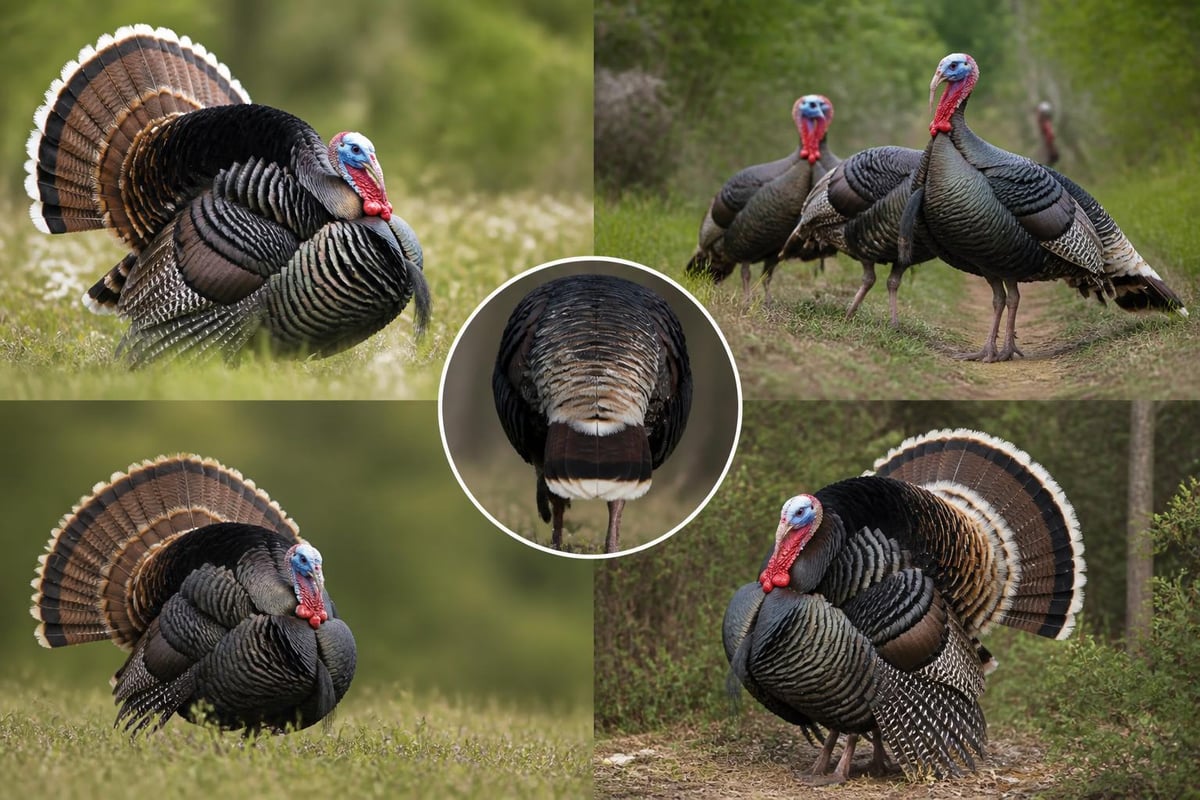
Habitat preferences define Merriam's turkey behavior throughout the year:
- Ponderosa pine forests with open understory
- Mixed conifer woodlands at elevations between 6,000 and 9,000 feet
- Mountain meadows adjacent to timber stands
- Riparian corridors providing water and dense cover
- Oak brush transitions offering seasonal food sources
The Oklahoma Department of Wildlife Conservation provides comprehensive details on the species' natural history and observation patterns. These birds demonstrate remarkable adaptability to harsh mountain environments, often enduring severe winter conditions that would challenge other turkey subspecies.
Geographic Distribution and Prime Hunting Regions
Merriam turkey hunts take place across a broad geographic range spanning multiple western states. The subspecies' historical distribution has expanded considerably since restoration efforts began in the mid-20th century, creating abundant hunting opportunities for modern sportsmen.
| State | Primary Regions | Season Timing | Success Rates |
|---|---|---|---|
| Montana | Pine forests, foothills | April-May | 25-35% |
| Wyoming | Black Hills, mountain ranges | April-May | 30-40% |
| South Dakota | Black Hills region | April-May | 35-45% |
| Colorado | Ponderosa zones, high country | April-May | 20-30% |
| New Mexico | Northern mountains | April-May | 25-35% |
South Dakota's Black Hills remain the epicenter of Merriam turkey hunts, consistently producing trophy birds with exceptional genetics. The region's combination of accessible public land, established populations, and favorable habitat conditions creates ideal circumstances for both novice and veteran hunters. Wyoming offers similarly productive opportunities, particularly in areas where recent conservation work has bolstered flock numbers.
Strategic Planning for Merriam Turkey Hunts
Success in pursuing Merriam's turkeys begins months before opening day with thorough preparation and research. The National Wild Turkey Federation’s comprehensive guide emphasizes the importance of understanding this subspecies' unique characteristics when developing your hunting strategy.
Pre-season scouting priorities include:
- Identifying roosting sites near water sources
- Mapping feeding areas with abundant pine nuts or acorns
- Locating strutting zones in meadows and openings
- Assessing public land access points and boundaries
- Understanding local flock dynamics through observation
The nomadic nature of Merriam's turkeys sets them apart from other subspecies. These birds regularly travel several miles daily between roosting, feeding, and watering locations, particularly during dry periods. This mobility requires hunters to think expansively about their approach rather than focusing on single locations.
Seasonal Movement Patterns
Spring weather patterns significantly influence Merriam turkey behavior and hunting success. As snowpack melts in higher elevations, birds gradually move upslope following emerging vegetation and insect activity. Early-season hunts often concentrate in lower valleys where winter range transitions into spring habitat. American Hunter’s strategic planning advice highlights adapting tactics to these seasonal shifts.
Mid-season opportunities develop as breeding activity intensifies and gobblers become more vocal and aggressive. Late April through early May typically represents peak activity across most Merriam's range, when toms actively seek receptive hens and respond well to calling. Temperature variations at mountain elevations create microclimates affecting daily movement schedules, requiring hunters to adjust their timing accordingly.
Essential Gear and Equipment Selection
Proper equipment makes the difference between success and frustration on Merriam turkey hunts. The mountainous terrain and variable weather conditions demand thoughtful gear choices that balance functionality with packability. RCS Outdoors offers an extensive selection of shotguns and ammunition suitable for turkey hunting applications, helping hunters prepare with quality equipment.
Shotgun and Ammunition Considerations
Recommended shotgun specifications for Merriam's:
- 12-gauge or 20-gauge chambering
- 3-inch or 3.5-inch chamber capacity
- Screw-in choke system with turkey-specific tubes
- Adjustable or fiber-optic sights
- Weather-resistant finish for mountain conditions
Shot selection matters significantly when hunting turkeys in varied terrain. Number 5 or 6 shot provides excellent patterns at typical engagement ranges of 20 to 40 yards, delivering sufficient energy for clean harvests. Modern tungsten-based loads extend effective range while maintaining dense patterns, though traditional lead loads remain viable where regulations permit.
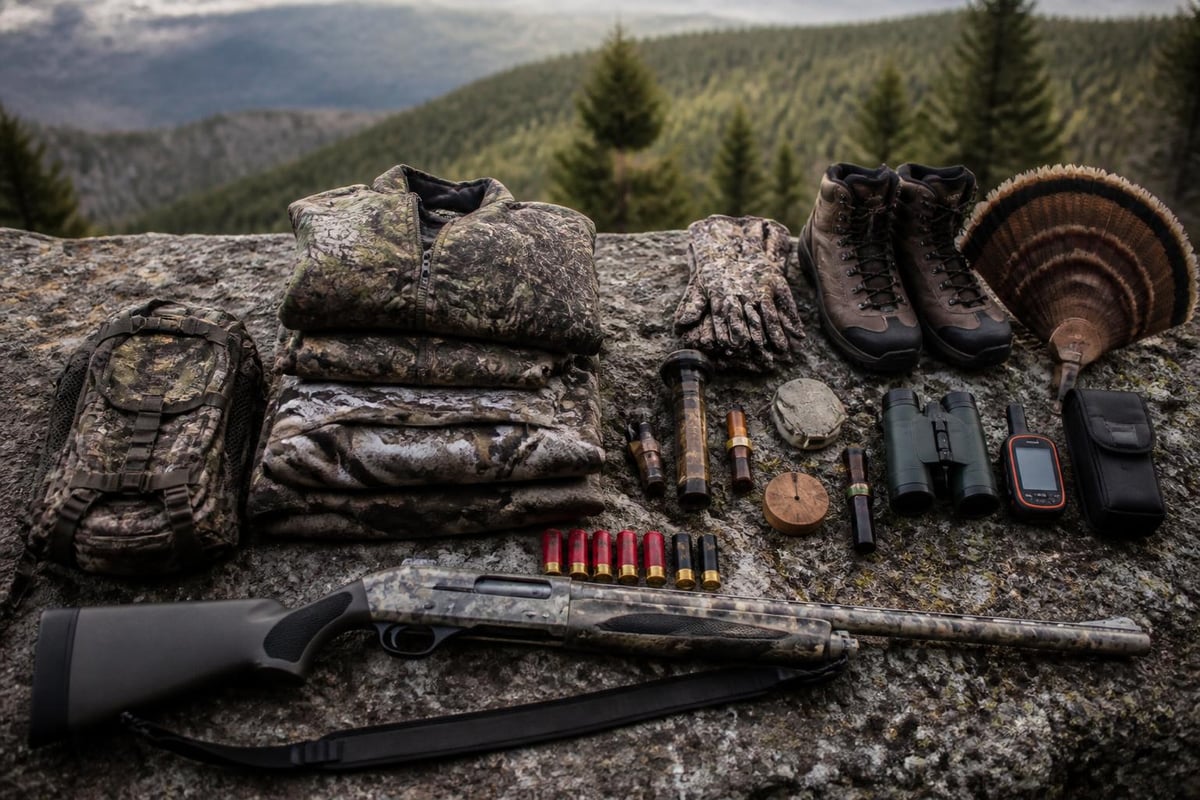
Choke selection directly impacts pattern density and effective range. Extra-full turkey chokes concentrate pellets for longer shots across open meadows, while modified chokes offer versatility for closer encounters in timber. Pattern testing before your hunt ensures confidence in your setup's capabilities at various distances.
Calling Techniques and Strategies
Merriam's turkeys vocalize differently than eastern birds, using slightly higher-pitched calls that carry well across mountain valleys. Successful hunters adapt their calling approach to match local dialects while avoiding over-calling that educates wary toms. OnX Hunt’s specialized guidance on Merriam's characteristics includes valuable calling insights specific to this subspecies.
Effective call types for Merriam turkey hunts:
- Soft tree yelps at first light
- Aggressive cutting when birds are henned up
- Contented purrs and clucks for close-range work
- Gobbler yelps to challenge dominant birds
- Fly-down cackles to simulate hens leaving roost
Locator calls serve double duty in mountain environments where turkeys may roost miles apart. Owl hoots, crow calls, and coyote howls trigger shock gobbles revealing bird locations without committing to specific hen vocalizations. Early morning and late evening represent prime windows for locator call effectiveness when toms naturally gobble more frequently.
Decoy Deployment Tactics
Decoy strategies for Merriam's turkeys differ from flatland applications due to terrain visibility and bird approach patterns. Open meadows allow long-range visual contact, making realistic decoy setups crucial for drawing interested toms within range. Conversely, timber hunting often succeeds without decoys when aggressive calling and strategic positioning substitute for visual attractants.
Two-decoy spreads featuring a hen and jake combination create breeding competition scenarios that trigger aggressive responses from dominant gobblers. Positioning decoys 15 to 25 yards from your setup provides clear shooting lanes while maintaining realistic spacing. Wind direction influences decoy placement since approaching birds typically circle downwind to scent-check before committing.
Public Land Opportunities and Access
Public land Merriam turkey hunts provide accessible, affordable options for hunters across the western United States. National forests, Bureau of Land Management areas, and state wildlife management areas collectively offer millions of acres of turkey habitat. The US Forest Service’s management guidelines detail habitat conservation approaches that benefit both hunters and turkey populations.
| Agency | Land Types | Access Level | Permit Requirements |
|---|---|---|---|
| USFS | National Forests | Open (seasonal) | State license, tags |
| BLM | Public Lands | Generally open | State license, tags |
| State | Wildlife Areas | Varies by unit | State license, special permits |
| Tribal | Reservation Lands | Limited/permitted | Tribal permits required |
Researching specific unit regulations prevents violations and optimizes hunting opportunities. Many states employ limited-entry draw systems for prime turkey hunting units, requiring advance application submissions during winter months. Preference point systems reward consistent applicants with improved draw odds over time, though leftover licenses often remain available for less-pressured areas.
Navigation and Safety in Remote Terrain
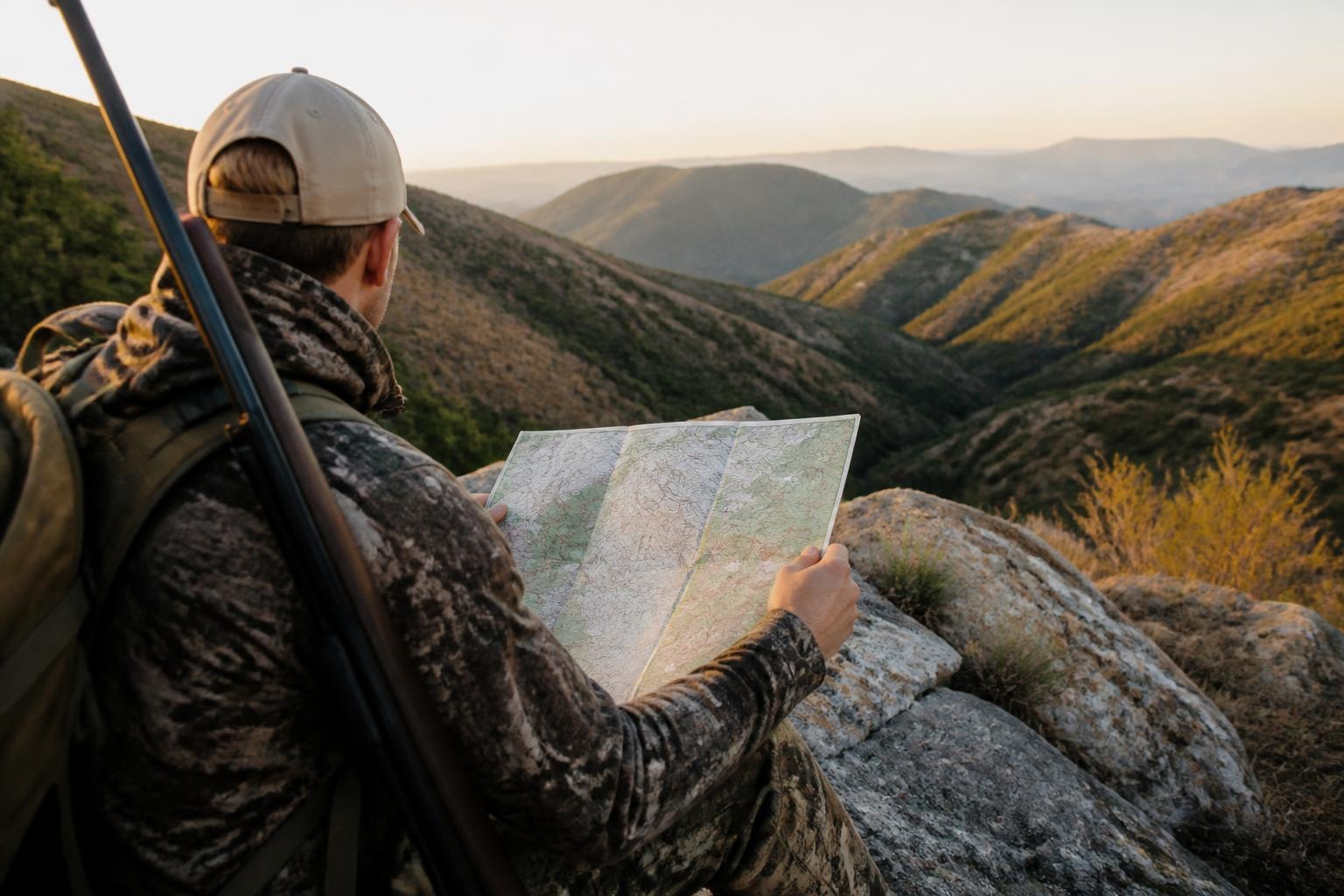
Mountain turkey hunting presents unique safety challenges that demand respect and preparation. Elevation changes, unpredictable weather, and limited cell service require hunters to carry appropriate safety equipment and inform others of their plans. GPS devices or smartphone mapping applications prevent disorientation in unfamiliar country while documenting successful locations for future reference.
Essential safety items for backcountry Merriam turkey hunts include:
- Topographic maps and compass as backup navigation
- First aid kit with altitude sickness medication
- Emergency shelter and fire-starting materials
- Adequate water and filtration capability
- Communication device or satellite messenger
Physical conditioning prepares hunters for the cardiovascular demands of mountain hunting. Hiking 3 to 5 miles daily at elevation while carrying gear taxes even fit individuals, making pre-season training valuable for hunt success and enjoyment. Acclimatization to altitude prevents debilitating headaches and nausea that compromise hunting effectiveness.
Advanced Hunting Tactics for Pressured Birds
Merriam turkey hunts on popular public lands encounter educated birds familiar with standard calling and setup techniques. These pressured toms demonstrate extreme wariness, often hanging up beyond effective range or refusing to approach obvious setups. Colorado Outdoors Magazine’s practical tips address these challenging scenarios with proven solutions.
Running and gunning tactics work exceptionally well for mobile Merriam's turkeys that cover substantial ground daily. This aggressive approach involves rapid relocation to intercept traveling birds rather than waiting for toms to approach stationary setups. Minimal calling combined with strategic positioning along travel corridors produces encounters with less-pressured birds moving between destinations.
Unconventional Calling Approaches
Silent hunting eliminates calling altogether, relying instead on woodsmanship and terrain knowledge to ambush turkeys. This technique excels during midday periods when breeding activity slows and toms return to predictable loafing areas. Setting up along known travel routes between feeding and roosting sites creates interception opportunities without alerting birds through vocalizations.
Gobbler fighting sequences employ aggressive yelps, purrs, and wing-beating sounds mimicking dominance battles between competing toms. This advanced technique triggers territorial responses from mature birds that ignore standard hen calls, particularly effective during peak breeding when competition intensifies. Realistic execution requires practice and confidence to maintain the charade through extended sequences.
Weather Considerations and Timing
Spring weather in Merriam's turkey country varies dramatically, influencing bird behavior and hunting conditions significantly. Petersen’s Hunting’s early-season strategies emphasize understanding how weather affects turkey activity patterns and adjusting tactics accordingly.
Windy conditions challenge turkey hunting through reduced hearing effectiveness and unpredictable call carry. Birds struggle to pinpoint call locations in gusty winds, often refusing to commit without visual confirmation. Hunting timbered draws and protected valleys minimizes wind impact while concentrating birds seeking shelter from harsh conditions.
Weather-based tactical adjustments:
- Heavy rain: Focus on covered roosting areas and sheltered feeding zones
- Snow: Hunt lower elevations where birds concentrate on accessible food
- High winds: Work protected terrain features with visual setups
- Clear, calm: Employ long-range calling across open country
- Temperature extremes: Adjust timing to warmest (cold) or coolest (hot) periods
Barometric pressure changes correlate with gobbling activity, though the relationship remains debated among hunters. Stable high-pressure systems generally produce consistent bird movement and vocalization, while rapidly falling pressure associated with approaching storms may trigger increased feeding activity before weather arrives.
Physical Preparation and Conditioning
The demanding nature of mountain Merriam turkey hunts requires adequate physical preparation for optimal performance. Cardiovascular endurance, leg strength, and respiratory efficiency at altitude separate successful hunters from those who struggle through each day. Training programs beginning 8 to 12 weeks before your hunt develop necessary fitness levels.
Recommended training activities include:
- Hiking with weighted pack simulating gear loads
- Stair climbing or stadium work for elevation gain
- Interval training for cardiovascular capacity
- Leg strength exercises (squats, lunges, step-ups)
- Core stability work for balance on uneven terrain
Altitude adaptation occurs gradually over several days, making early arrival in hunting country beneficial. Spending 2 to 3 days acclimating before serious hunting begins reduces altitude sickness risk while allowing time for final scouting and equipment checks. Hydration and adequate sleep accelerate acclimatization and maintain peak performance throughout your hunt.
Conservation and Ethical Hunting Practices
Merriam turkey hunts contribute significantly to wildlife conservation through license sales, excise taxes, and habitat improvement funding. Ethical hunting practices ensure sustainable populations for future generations while maintaining public support for regulated harvest. Huntwise’s comprehensive guide covers hunting techniques alongside conservation considerations.
Selective harvest targeting mature toms preserves breeding dynamics within turkey flocks. Young jakes and subordinate gobblers develop into dominant breeders when hunters focus efforts on fully mature birds displaying long beards and prominent spurs. This approach maximizes hunting challenge while supporting population health through natural selection processes.
Ethical considerations for responsible turkey hunting:
- Positive identification before shooting
- Understanding effective range limitations
- Clean, humane shot placement
- Respect for private property boundaries
- Proper field care and meat utilization
- Reporting harvest data accurately
Turkey populations fluctuate based on weather patterns, predation pressure, and habitat quality. Supporting conservation organizations through membership and volunteer efforts strengthens habitat protection and restoration initiatives benefiting all wildlife. The interconnected nature of mountain ecosystems means healthy turkey populations indicate broader environmental health.
Shot Placement and Field Care
Effective shot placement ensures quick, ethical harvests while minimizing bird damage for mounting considerations. The head and neck region represents the primary target area, offering a concentrated vital zone requiring precision but producing instant results. American Hunter’s gear recommendations include equipment suited for accurate close-range shooting.
Waiting for ideal shot opportunities demonstrates patience and hunting discipline. Turkeys in full strut present challenging targets with vital areas obscured by fanned tails and puffed feathers. Allowing birds to relax from breeding displays reveals head and neck clearly, providing ethical shooting opportunities at appropriate ranges.
Immediate field care preserves meat quality and trophy condition in variable mountain temperatures. Removing breast meat promptly prevents spoilage while allowing cape preservation for taxidermy purposes. Cooling harvested birds in shade and transporting in breathable game bags maintains quality during the journey home.
Prime Hunting Opportunities and Experiences
Special hunting packages combine Merriam turkey hunts with comprehensive services simplifying logistics and maximizing success potential. Professional outfitters provide local knowledge, access to prime properties, and experienced guides familiar with current bird locations and behavior patterns. While Merriam's represent mountain challenges, hunters seeking exceptional upland experiences might also consider opportunities like The Upland Escape Giveaway, which showcases premium wingshooting traditions at celebrated destinations.
Do-it-yourself hunters benefit from thorough preparation and realistic expectations regarding success rates. Public land Merriam turkey hunts typically average 25 to 35 percent success, reflecting the challenging nature of pursuing wild birds in expansive mountain habitat. Multiple-day trips increase encounter opportunities while providing backup options when initial plans encounter obstacles.
Regional Timing and Optimal Periods
Spring turkey seasons across Merriam's range typically open in mid-April and extend through May, coinciding with peak breeding activity. Early-season hunts encounter vocal birds actively seeking hens, though lingering snow at higher elevations may concentrate populations in limited areas. Late-season opportunities find birds more dispersed but potentially less pressured after initial hunting activity subsides.
Monitoring local wildlife agency reports provides current information on hatch success, winter survival, and population trends. Poor production years following harsh winters may reduce bird numbers temporarily, while favorable conditions produce abundant opportunities. Flexibility in hunt timing and location selection adapts to current conditions rather than relying on historical patterns alone.
Successfully executing Merriam turkey hunts requires understanding this unique subspecies' mountain habitat, behavioral patterns, and the specialized tactics that produce consistent results across challenging terrain. Whether you're preparing for your first western turkey hunt or seeking to improve your success rate, proper equipment selection and physical readiness make all the difference. RCS Outdoors provides the firearms, ammunition, and accessories you need to pursue mountain turkeys with confidence, backed by expertise in serving hunters across all skill levels and hunting applications.


