

NC Concealed Carry Permit: Complete 2026 Guide
Understanding the requirements and process for obtaining an nc concealed carry permit is essential for North Carolina residents who wish to legally carry a concealed handgun for personal protection. The state maintains specific standards for permit eligibility, mandatory training, and application procedures that all applicants must follow. Whether you're a first-time applicant or seeking renewal, navigating the permit system requires knowledge of current laws, documentation requirements, and the steps involved in securing your permit through your local sheriff's office.
Understanding North Carolina Concealed Carry Permit Requirements
North Carolina requires residents to meet several specific criteria before qualifying for a concealed handgun permit. Applicants must be at least 21 years old, though active-duty military personnel may apply at 18 with proper documentation. The state mandates that applicants demonstrate competency with a handgun through approved training courses.
Age and Residency Qualifications
North Carolina law establishes clear residency requirements for permit applicants. You must be a resident of the state for at least 30 days before applying and submit your application to the sheriff's office in your county of residence. Military personnel stationed in North Carolina may apply even if they maintain residency elsewhere.
Key eligibility requirements include:
- Minimum age of 21 years (18 for qualified military members)
- North Carolina residency for at least 30 consecutive days
- Valid North Carolina identification or driver's license
- No felony convictions or pending criminal charges
- Mental health qualifications as defined by state law
The North Carolina concealed carry permit requirements outline additional disqualifying factors including domestic violence convictions, illegal substance abuse, and fugitive status from justice.
Background Check and Criminal History
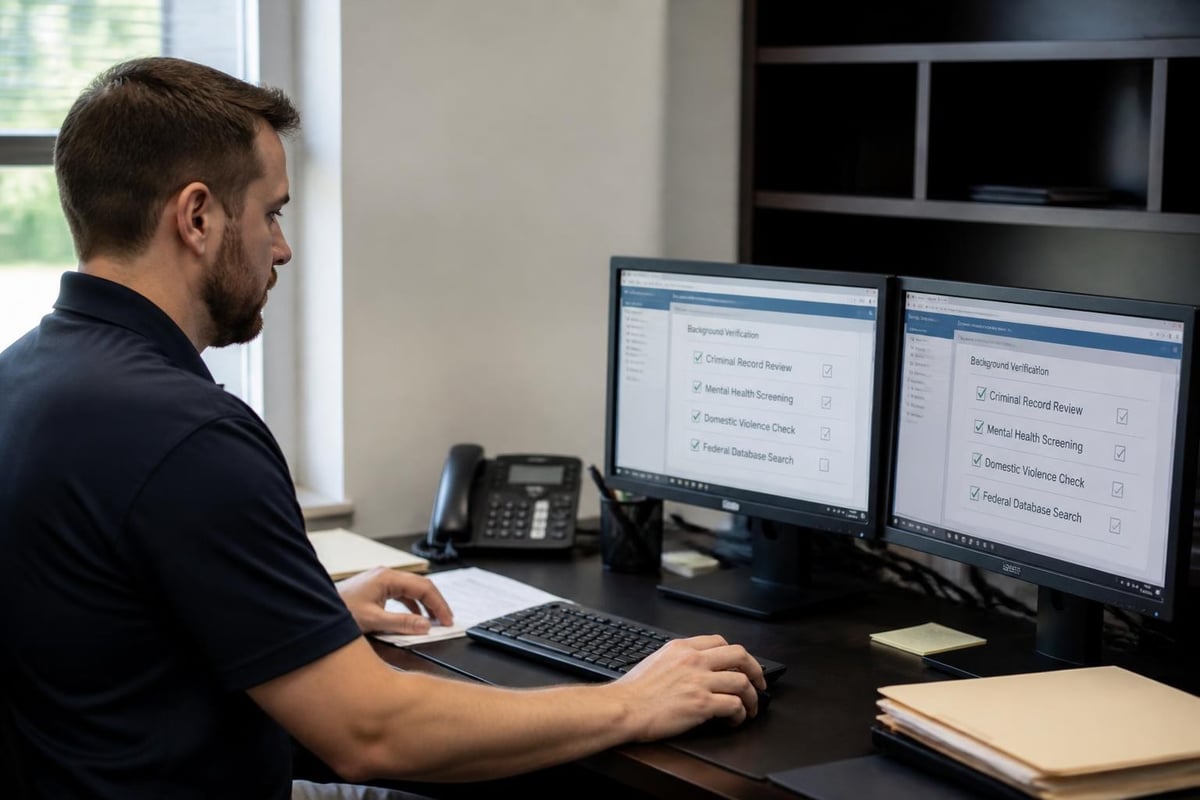
Every nc concealed carry permit applicant undergoes comprehensive background screening. The sheriff's office conducts both state and federal criminal background checks through the National Instant Criminal Background Check System (NICS). This process examines your criminal history, mental health records, and other disqualifying factors.
| Disqualifying Factor | Impact on Application | Waiting Period |
|---|---|---|
| Felony conviction | Permanent disqualification | Not applicable |
| Misdemeanor domestic violence | Permanent disqualification | Not applicable |
| DWI within 3 years | Application denied | Wait until 3 years pass |
| Mental health adjudication | Temporary/permanent based on circumstances | Varies by case |
| Pending criminal charges | Application delayed | Until case resolution |
Your fingerprints are submitted as part of the application process, allowing law enforcement to verify your identity and check for any disqualifying criminal history across multiple jurisdictions.
Mandatory Training Requirements for NC Permits
North Carolina requires all applicants to complete an approved firearms safety and training course before applying for an nc concealed carry permit. The NC concealed carry class requirements specify that courses must be at least eight hours in duration and cover both classroom instruction and live-fire exercises.
Approved Course Components
Training courses must be taught by certified instructors approved by the North Carolina Criminal Justice Education and Training Standards Commission. The curriculum covers multiple essential topics designed to ensure permit holders understand safe handling, legal responsibilities, and proper use of concealed firearms.
Required course topics include:
- North Carolina firearms laws and legal use of force
- Safe handling and storage of handguns
- Fundamentals of pistol shooting and marksmanship
- Dispute resolution and conflict avoidance
- Range qualification with live fire exercises
Instructors must verify that students demonstrate basic competency in handling and firing a handgun safely. You'll receive a certificate of completion that remains valid for application purposes, though most applicants submit their training documentation within a few months of completing the course.
Finding Qualified Instructors
Numerous certified instructors throughout North Carolina offer concealed carry courses at shooting ranges, gun stores, and training facilities. Many firearms retailers, including RCS Outdoors, can provide information about local training opportunities and certified instructors who meet state requirements.
Course costs typically range from $75 to $150, depending on the instructor, location, and additional materials provided. Some courses offer weekend or evening options to accommodate different schedules.
The Application Process Step by Step
Once you've completed your training and gathered necessary documentation, the application process for an nc concealed carry permit involves several specific steps through your county sheriff's office. Understanding this process helps ensure smooth processing and timely permit issuance.
Submitting Your Application
Applications must be submitted in person at your county sheriff's office. While some preliminary research about getting a concealed carry permit online in North Carolina may be helpful, the actual application requires a physical visit to complete fingerprinting and submit original documents.
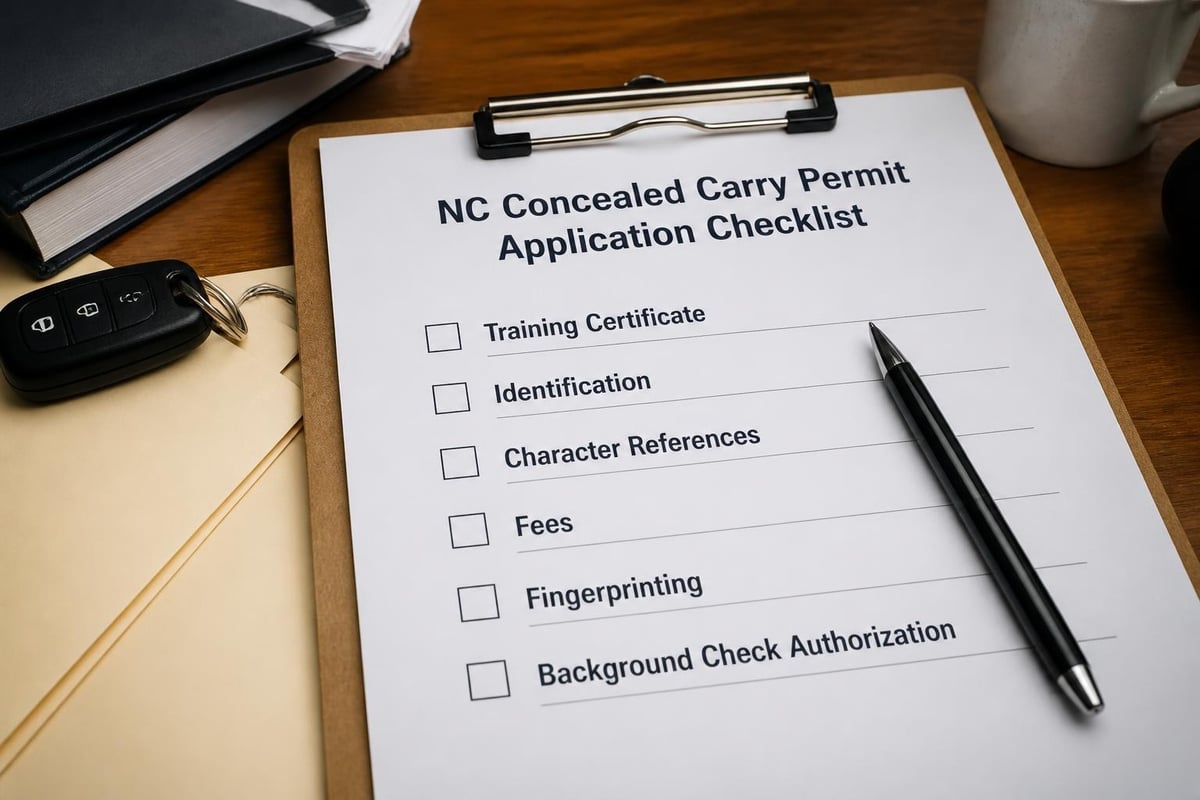
Documents required for application:
- Completed application form (provided by sheriff's office)
- Valid North Carolina driver's license or identification card
- Training course completion certificate
- Application fee (varies by county, typically $80-$100)
- Two character references from North Carolina residents
The sheriff's office will photograph and fingerprint you during the application appointment. Staff will verify all documentation and answer questions about the process timeline and next steps.
Processing Timeline and Approval
North Carolina law requires sheriffs to process permit applications within 45 days of receipt, though many counties complete reviews much faster. The sheriff may extend this period up to 90 days if additional investigation is needed regarding your background or qualifications.
| Application Stage | Typical Timeframe | Actions Required |
|---|---|---|
| Initial submission | Day 1 | Submit all documents, pay fees |
| Background check | 1-3 weeks | Wait for NICS and state results |
| Sheriff's review | 2-4 weeks | No action needed |
| Approval notification | Week 4-6 | Schedule pickup appointment |
| Permit issuance | Week 5-6 | Pick up permit at sheriff's office |
You'll receive notification by mail when your permit is ready for pickup. The sheriff may deny applications for specific legal reasons, and applicants have the right to appeal denials through the court system.
Understanding Your NC Concealed Carry Permit Rights
Once issued, your nc concealed carry permit grants specific rights and carries important responsibilities. The permit remains valid for five years from the date of issuance and must be renewed before expiration to maintain your concealed carry privileges.
Where You Can and Cannot Carry
North Carolina law establishes clear boundaries for where permit holders may legally carry concealed handguns. Understanding these restrictions prevents unintentional violations that could result in criminal charges or permit revocation.
Prohibited locations include:
- Posted private property prohibiting concealed weapons
- State and federal government buildings
- Educational property (schools, universities, daycares)
- Facilities where alcohol is sold and consumed (unless restaurant permit exception applies)
- Parades, funeral processions, picket lines, and demonstrations
- Law enforcement or correctional facilities
- Areas beyond TSA checkpoints at airports
The sample NC concealed carry permit requirements and rules provide detailed information about specific carrying restrictions and exceptions. Property owners maintain the right to prohibit concealed carry on their premises through proper signage.
Reciprocity with Other States
North Carolina recognizes concealed carry permits from all other states, allowing non-residents to carry concealed handguns while visiting. However, non-residents must follow all North Carolina laws regarding prohibited locations and carrying requirements.
When traveling outside North Carolina with your permit, research reciprocity agreements carefully. Many states recognize NC permits, but restrictions vary significantly. Some states require permits from your state of residency rather than recognizing permits issued by other states to their residents.
Permit Renewal and Maintenance
NC concealed carry permits expire five years after issuance. The renewal process requires similar documentation to initial applications but typically proceeds faster since applicants already have established records with the sheriff's office.
Renewal Application Requirements
You may apply for renewal up to 180 days before your current permit expires. Renewal applications require updated background checks and proof of continued competency with handguns through either completion of a new training course or demonstration of regular shooting practice.
Renewal documentation includes:
- Completed renewal application form
- Current valid North Carolina identification
- Proof of competency (training certificate or range qualification)
- Renewal fee (typically lower than initial application fee)
- Updated character references (some counties waive this requirement)
Many counties process renewals within 2-3 weeks since applicants already have files on record. The comprehensive guide on how to get a North Carolina concealed handgun permit includes renewal timeline information and county-specific procedures.
Maintaining Compliance Between Renewals
Permit holders must notify the sheriff's office within 30 days of any address change or name change. Failure to maintain current information can result in permit suspension or revocation. Additionally, any arrests or criminal charges may trigger permit review even if the charges don't result in conviction.
If you're passionate about firearms training and outdoor experiences, special opportunities like The Upland Escape Giveaway offer chances to enhance your shooting skills while enjoying premium hunting experiences at renowned destinations.
Legal Responsibilities and Use of Force
Understanding North Carolina's laws regarding lawful use of force is critical for every permit holder. Your nc concealed carry permit authorizes you to carry a concealed handgun, but it doesn't provide blanket legal protection for using that weapon in all circumstances.
Self-Defense Standards in North Carolina
North Carolina law allows use of deadly force when you reasonably believe it's necessary to prevent imminent death or great bodily harm to yourself or others. The state follows a modified Castle Doctrine, providing stronger legal protections when you're defending your home, vehicle, or workplace compared to public spaces.
Key self-defense principles:
- No duty to retreat from your home, vehicle, or workplace
- Duty to retreat in public if safely possible before using deadly force
- Force used must be proportional to threat faced
- Cannot claim self-defense if you provoked the confrontation
- Must have reasonable belief of imminent danger
The detailed overview of North Carolina concealed carry permit requirements and laws explains how courts evaluate self-defense claims and the legal standards applied in criminal and civil cases.
Interacting with Law Enforcement
North Carolina law requires permit holders to inform law enforcement officers that they're carrying a concealed weapon during any official interaction. This duty to inform applies during traffic stops, investigative detentions, and other encounters with police.
When stopped by law enforcement, immediately inform the officer that you have an nc concealed carry permit and are currently carrying a concealed weapon. Keep your hands visible and follow all instructions given by the officer. Never reach for your weapon or permit documentation without explicit permission from the officer.
Training Beyond Basic Requirements
While North Carolina requires only initial training for permit issuance, responsible gun owners benefit significantly from ongoing education and practice. Advanced training improves shooting skills, reinforces safe handling habits, and builds confidence in your ability to respond effectively to threats.
Advanced Skills Development
Consider pursuing additional training in defensive shooting, situational awareness, and force-on-force scenarios. Many instructors offer specialized courses covering home defense, vehicle defense, active shooter response, and low-light shooting techniques.
Regular range practice maintains and improves marksmanship skills essential for accurate shooting under stress. Establish a consistent practice schedule that includes:
- Monthly range sessions focusing on accuracy and speed
- Quarterly defensive shooting drills simulating real scenarios
- Annual advanced training courses with certified instructors
- Dry fire practice at home to reinforce muscle memory
Joining local shooting clubs or defensive pistol leagues provides structured practice opportunities and connects you with other responsible gun owners who share your commitment to ongoing skill development.
Staying Current on Legal Changes
North Carolina firearms laws evolve through legislative action and court decisions. Responsible permit holders stay informed about legal changes affecting concealed carry rights and responsibilities. Subscribe to updates from firearms advocacy organizations, follow legislative developments, and consult with attorneys specializing in firearms law when questions arise.
Major legal changes in recent years have affected where permit holders may carry, reciprocity agreements with other states, and procedures for permit issuance and renewal. The North Carolina concealed carry class requirements page provides current information about training standards that may change over time.
Preparing Your Concealed Carry Equipment
Selecting appropriate firearms and carry equipment directly impacts your ability to carry safely and comfortably throughout daily activities. Your nc concealed carry permit allows you to carry any legal handgun concealed, but choosing the right equipment requires careful consideration of multiple factors.
Choosing a Concealed Carry Handgun
The best concealed carry handgun balances concealability, capacity, caliber, and shootability. Popular options include compact and subcompact pistols in 9mm, .40 S&W, and .45 ACP calibers. Consider these factors when selecting your carry gun:
| Factor | Considerations | Impact on Daily Carry |
|---|---|---|
| Size | Compact vs. subcompact | Concealability and comfort |
| Weight | Loaded weight | All-day carry fatigue |
| Capacity | Rounds available | Defensive capability |
| Caliber | Stopping power vs. recoil | Shootability and effectiveness |
| Reliability | Failure rate | Critical in defensive situations |
Test multiple handguns at rental ranges before making a purchase decision. What works well for one person may not suit your hand size, strength, or intended carry method. Having the right equipment is essential whether you're carrying daily or heading out for special experiences like outdoor adventures.
Holster Selection and Carry Methods
Quality holsters protect the trigger, secure the firearm during physical activity, and allow quick access when needed. Inside-the-waistband (IWB) holsters offer excellent concealment, while outside-the-waistband (OWB) holsters provide faster draw speeds and greater comfort for some body types.
Choose holsters made from durable materials like Kydex or quality leather that maintain their shape and protect the trigger guard completely. Avoid soft, collapsible holsters that may allow objects to enter the trigger area during reholstering. Your holster should retain the firearm securely enough that it won't fall out during normal activity but allow smooth drawing when needed.
Common Mistakes to Avoid
New permit holders often make predictable mistakes that compromise safety or create legal problems. Learning from others' experiences helps you avoid these common pitfalls and develop responsible carrying habits from the start.
Inadequate Training and Practice
Completing the minimum required training satisfies legal requirements but doesn't prepare most people for the stress and complexity of actual defensive situations. Many permit holders fire their weapons only during the initial qualification course and never practice again.
Without regular practice, skills deteriorate rapidly. Shooting accuracy declines, weapon manipulation becomes uncertain, and decision-making under pressure suffers. Commit to regular practice schedules and seek advanced training opportunities that challenge your skills beyond basic competency standards.
Ignoring Carry Restrictions
Even experienced permit holders sometimes forget location-specific carrying restrictions. Carrying into prohibited areas, even accidentally, can result in criminal charges and automatic permit revocation. Before entering unfamiliar buildings or properties, look for posted signage prohibiting concealed weapons.
Common violation scenarios include:
- Forgetting to remove weapon before entering schools during events
- Carrying into government buildings without checking local ordinances
- Entering bars or restaurants with posted prohibitions
- Failing to notice "no weapons" signage at private businesses
Develop systematic habits that prevent prohibited carrying. Many permit holders use vehicle gun safes to secure firearms before entering questionable locations, eliminating the risk of unintentional violations.
Poor Equipment Choices
Cheap holsters, unreliable firearms, and inadequate ammunition represent false economies that may fail when you need them most. While quality equipment costs more initially, the investment in reliable gear pays dividends in safety and peace of mind.
Avoid holsters without trigger guard protection, firearms with known reliability issues, and bargain ammunition of questionable quality. Your concealed carry equipment serves a critical defensive purpose that justifies spending appropriately on proven, reliable products.
Obtaining and maintaining your nc concealed carry permit represents a significant responsibility that requires ongoing attention to legal requirements, training standards, and safe practices. By understanding eligibility criteria, completing quality training, following proper application procedures, and committing to regular practice, you protect your rights while ensuring you can carry safely and legally. Whether you're just starting your permit journey or preparing for renewal, RCS Outdoors provides the firearms, ammunition, and accessories you need to exercise your Second Amendment rights responsibly and effectively.


