

Handgun Holsters: Complete Guide for Safe Carry
Selecting the right holster is one of the most critical decisions a handgun owner makes. Whether you're a law enforcement professional, a concealed carry permit holder, or a competitive shooter, your holster directly impacts safety, accessibility, and comfort. With countless options available across materials, carry positions, and retention systems, understanding the fundamentals of handgun holsters helps ensure you make an informed choice that fits your specific needs and lifestyle.
Understanding Holster Functions and Importance
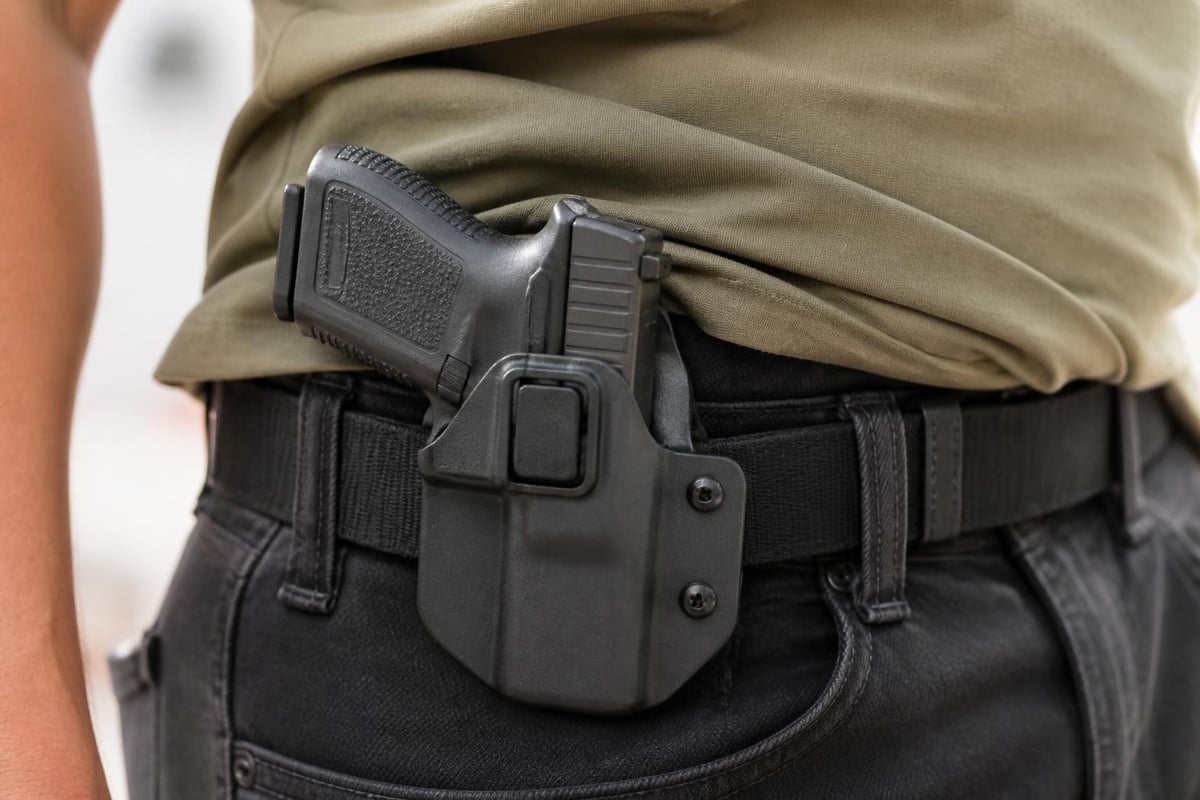
Handgun holsters serve multiple essential functions beyond simply holding your firearm. The primary purpose is weapon retention, keeping your handgun secure during daily activities while preventing unauthorized access. A quality holster also protects the trigger guard, preventing accidental discharges that could occur if clothing or other objects contact the trigger.
According to holster safety guidelines, a proper holster must completely cover the trigger and provide adequate retention to prevent the firearm from falling out during normal movement. These safety considerations apply regardless of whether you're carrying openly or concealed.
Critical Safety Features
Every reliable holster incorporates specific safety elements:
- Full trigger guard coverage preventing any object from contacting the trigger
- Adequate retention keeping the firearm secure during running, bending, or physical activity
- Rigid mouth structure allowing one-handed re-holstering without collapsing
- Proper fit designed specifically for your firearm model to prevent shifting
- Sweat guards and body shields protecting both the firearm and the wearer
The Wikipedia entry on handgun holsters provides historical context showing how these safety features evolved from simple leather pouches to today's sophisticated retention systems.
Material Options and Their Trade-offs
Choosing between holster materials involves balancing durability, comfort, retention, and price. Each material offers distinct advantages depending on your intended use.
Leather Holsters
Leather remains a traditional favorite for many carriers. Premium leather holsters mold to your specific firearm over time, creating a custom fit. They offer excellent comfort against the body and present a classic aesthetic many users prefer.
Advantages:
- Comfortable against skin with proper break-in period
- Attractive appearance for open carry situations
- Quieter when drawing and re-holstering
- Molds to firearm for custom retention
Disadvantages:
- Requires regular maintenance to prevent deterioration
- Can collapse when empty, complicating re-holstering
- Susceptible to moisture damage from sweat or rain
- Longer break-in period before optimal fit
Kydex and Polymer Holsters
Thermoplastic materials like Kydex revolutionized holster design. These synthetic options maintain their shape indefinitely and require virtually no maintenance. The comparison between Kydex and leather holsters demonstrates how each material performs under various conditions.
| Feature | Kydex/Polymer | Leather |
|---|---|---|
| Durability | Excellent, weather-resistant | Good, requires maintenance |
| Retention | Adjustable, consistent | Loosens over time |
| Break-in Period | None required | 1-4 weeks |
| Maintenance | Minimal | Regular conditioning needed |
| Re-holstering | Easy, rigid mouth | Can be difficult if collapsed |
| Comfort | Initially firm | Excellent after break-in |
Hybrid holsters combine both materials, using Kydex shells for the firearm pocket mounted to leather backing for comfort. These designs attempt to capture the benefits of both materials while minimizing their drawbacks.
Carry Position Options
Where you carry your handgun significantly affects accessibility, concealment, and comfort. Different carry positions suit different body types, clothing styles, and tactical requirements.
Inside-the-Waistband (IWB) Carry
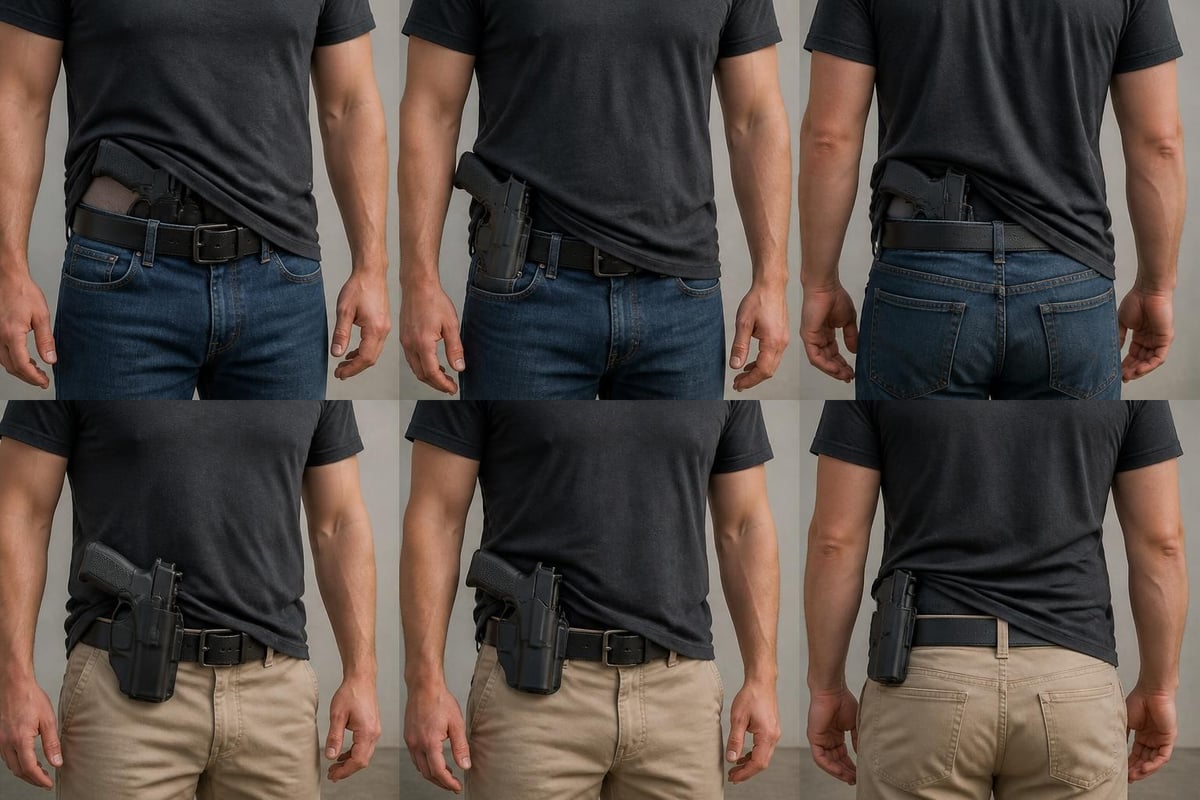
IWB holsters tuck between your pants and body, offering superior concealment. This method works exceptionally well for everyday concealed carry, keeping your handgun profile minimal under a shirt or jacket.
Popular IWB positions include:
- Appendix carry (1 o'clock for right-handed shooters) provides fastest draw times and excellent concealment while sitting
- Strong-side hip (3-4 o'clock) balances accessibility with comfort for extended wear
- Kidney position (5 o'clock) conceals well but can be uncomfortable when sitting
The comprehensive concealed carry holster guide provides detailed testing results for various IWB positions and holster models.
Outside-the-Waistband (OWB) Carry
OWB holsters attach to your belt outside your pants, distributing weight more comfortably for extended periods. While less concealable than IWB options, they excel for duty use, open carry, and situations where a covering garment is practical.
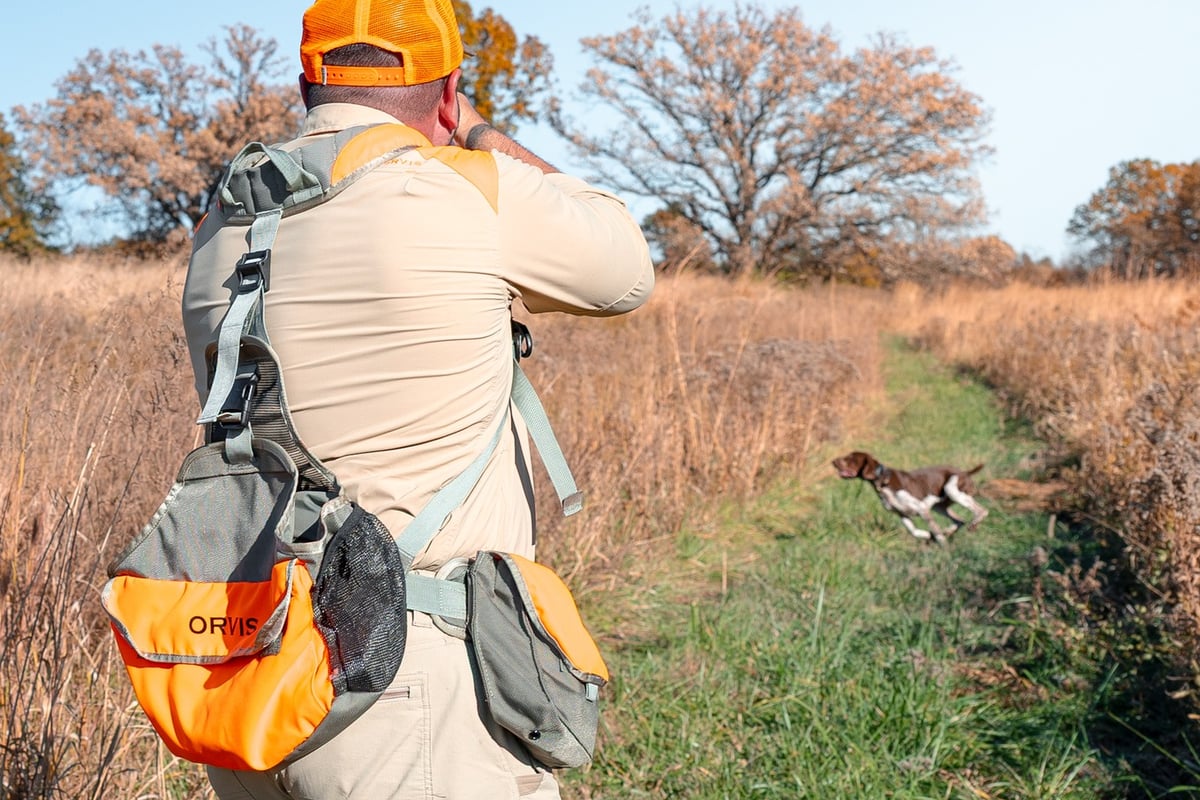
For those interested in outdoor activities where open carry is common, RCS Outdoors offers a selection of firearms and accessories suitable for hunting and field use. Speaking of outdoor pursuits, The Upland Escape Giveaway represents an exceptional opportunity for hunters, featuring a premium hunt package at Heartland Lodge in Pike County, Illinois, along with a Benelli Super Black Eagle 3 shotgun. This combination showcases how proper equipment selection matters across all shooting disciplines.
The best OWB holsters reviewed examines duty-rated and civilian carry options, evaluating their retention systems and durability through extensive testing.
Alternative Carry Methods
Beyond waistband carry, several specialized positions serve specific needs:
- Ankle holsters provide deep concealment for backup firearms, particularly effective when seated
- Shoulder holsters distribute weight across shoulders, comfortable for extended wear with larger handguns
- Pocket holsters enable discreet carry in pants or jacket pockets while protecting the trigger
- Belly band holsters offer versatile positioning and work with athletic wear lacking belts
According to concealment holster guidance for law enforcement, off-duty officers must balance deep concealment with rapid accessibility, often requiring different solutions than on-duty carry.
Retention Levels Explained
Retention systems prevent unauthorized access while allowing authorized users quick access. Understanding retention levels helps you select appropriate security for your situation.
Passive Retention
Passive retention relies on friction and holster design to secure the firearm. The holster's tight fit around the trigger guard and frame provides resistance when drawing. Adjustable retention screws allow users to customize draw resistance.
Active Retention
Active retention incorporates mechanical devices requiring specific actions to release the firearm. These systems range from simple thumb breaks to multi-point locks requiring sequential movements.
Common active retention mechanisms:
- Thumb break straps snap across the rear sight or slide, released by thumb during draw stroke
- Hood guards cover the rear sight, requiring upward pressure to release
- Trigger guard locks engage the trigger guard, releasing via button or lever
- Rotating hoods combine multiple movements for maximum security
| Retention Level | Description | Best For |
|---|---|---|
| Level I | Passive friction only | Concealed carry, competition |
| Level II | One active mechanism | Uniformed duty, open carry |
| Level III | Two active mechanisms | Law enforcement patrol |
| Level IV | Three+ active mechanisms | High-risk tactical situations |
The article on holster considerations for off-duty carry emphasizes matching retention level to your specific threat environment and training level.
Fitting Your Holster Properly
A properly fitted holster designed specifically for your firearm model ensures both safety and performance. Generic "universal" holsters compromise retention and trigger protection, creating potential safety hazards.
Manufacturer-Specific Molding
Quality holsters are molded for specific makes and models, accounting for unique features like rail systems, sights, and frame dimensions. A holster designed for a Glock 19 will not properly fit a Glock 17, despite their similarities.
When evaluating fit, verify these elements:
- The holster completely covers the trigger guard with no gaps
- Retention holds the firearm securely when inverted and shaken
- The draw stroke feels smooth without binding or catching
- Re-holstering requires minimal force and doesn't require looking
- The cant (angle) positions the grip for natural hand placement
Belt and Attachment Considerations
Your holster performs only as well as its attachment system. Quality gun belts designed specifically for carrying handguns provide necessary rigidity, preventing the holster from shifting or sagging.
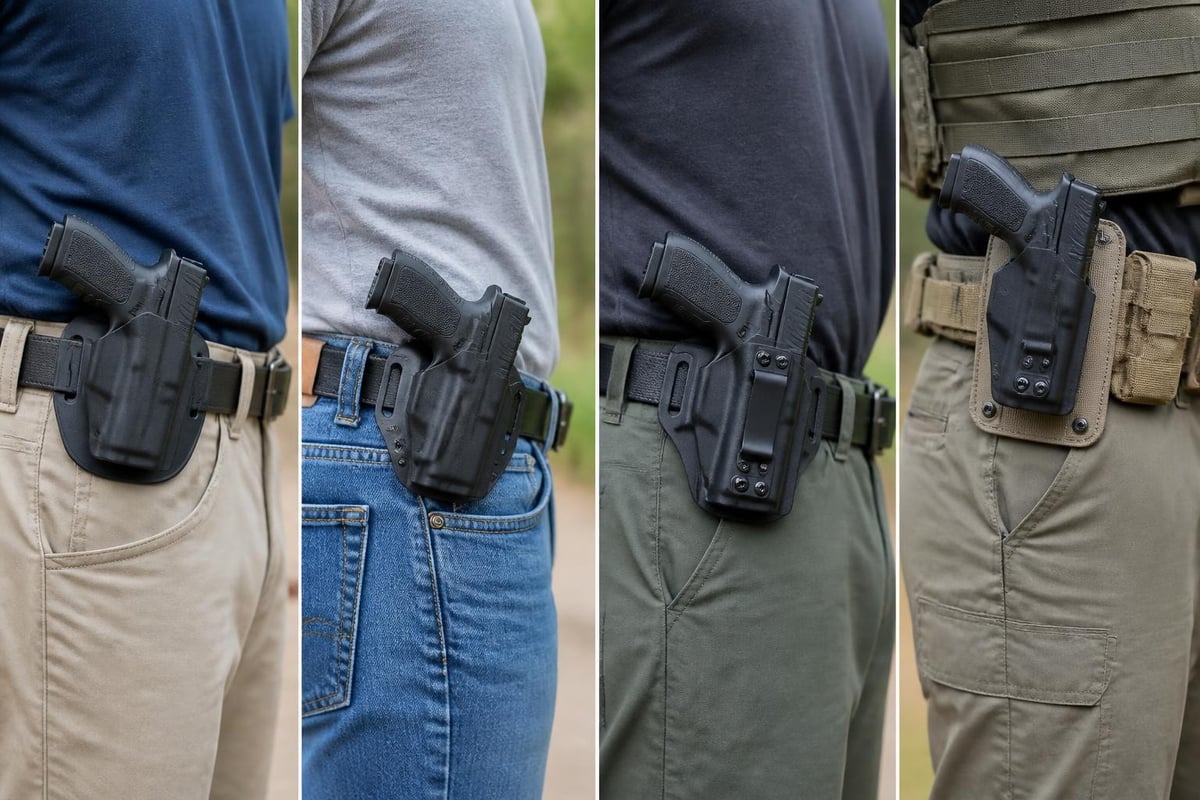
Belt attachment options include:
- Paddle attachments that slide over waistband without belt removal
- Belt loops or slots requiring belt threading
- Clip systems for quick attachment and removal
- MOLLE/tactical platform mounting for duty use
Clothing Compatibility and Concealment
Successful concealed carry requires coordination between your holster, firearm size, and clothing choices. Even the best holster fails if your wardrobe can't accommodate it comfortably.
Wardrobe Considerations
Different holster types work better with specific clothing styles. IWB holsters generally require pants one size larger in the waist to accommodate the holster comfortably. Shirts should provide adequate length to drape over the holster without riding up during movement.
Athletic or business professional dress codes present unique challenges requiring specialized solutions like belly bands, appendix carry, or ankle holsters that work with fitted clothing.
Printing and Draw Accessibility
"Printing" occurs when your firearm's outline becomes visible through clothing. Minimizing printing while maintaining quick access requires experimentation with carry positions, cant angles, and holster designs.
Factors affecting concealment:
- Holster ride height determining how deep the firearm sits
- Forward or rearward cant affecting grip accessibility and profile
- Clothing fabric weight and drape characteristics
- Body shape and how holsters conform to curves
Maintenance and Longevity
Proper holster maintenance extends service life and ensures reliable performance when needed most.
Leather Holster Care
Leather requires regular conditioning to prevent drying and cracking. Clean leather holsters with appropriate cleaners, condition quarterly with quality leather treatments, and allow them to dry completely after exposure to moisture.
Inspect leather holsters regularly for:
- Stitching integrity along stress points
- Structural weakening or excessive molding
- Moisture damage or mold growth
- Hardware corrosion or loosening
Kydex and Synthetic Maintenance
Synthetic holsters need minimal maintenance but benefit from periodic inspection. Check retention screws for tightness, examine mounting hardware for wear, and clean debris from the holster cavity that could scratch your firearm.
Avoid exposing Kydex holsters to extreme heat (like car interiors in summer) which can cause warping. While Kydex is thermoformable, unintended heat exposure can compromise the precise fit.
Training with Your Holster
Owning quality handgun holsters means nothing without proper training. Your holster becomes an extension of your firearm handling skills, requiring dedicated practice to achieve proficiency.
Developing Draw Fundamentals
Practice drawing from concealment in a safe environment with an unloaded firearm. Focus on consistent hand placement, efficient garment clearing, and smooth presentation to target. Repetition builds muscle memory that functions under stress.
Key draw sequence elements:
- Establish proper firing grip before breaking holster retention
- Clear garments decisively without fumbling
- Draw straight up to clear holster before rotating forward
- Keep trigger finger along frame until sights are on target
- Re-holster slowly and deliberately, never looking at holster
One-Handed Re-holstering
Quality holsters maintain their shape for one-handed re-holstering, a critical capability if your support hand is injured or occupied. Practice re-holstering without looking while maintaining muzzle awareness.
Specialized Holster Applications
Beyond everyday carry, specialized activities require purpose-built holster solutions optimized for unique demands.
Competition Shooting
Competition holsters prioritize speed over concealment, featuring minimal retention for lightning-fast draws. These holsters position firearms high and forward, often with extreme forward cant for optimal angles during competitive stages.
Duty and Professional Use
Law enforcement and security professionals require Level II or III retention preventing weapon takeaways during physical confrontations. The duty deployment considerations article examines how professionals balance security with accessibility in high-risk environments.
Vehicle and Truck Holsters
Driving while carrying requires adaptation, as traditional belt holsters become uncomfortable and inaccessible when seated. Vehicle-mounted holsters attach to center consoles, under steering columns, or between seats, providing secure storage during transit.
Outdoor and Field Carry
Hunters and outdoorsmen often prefer chest holsters or OWB belt holsters with enhanced retention for navigating rough terrain. These holsters accommodate larger handguns used for predator protection while remaining accessible despite heavy coats or pack straps.
Making Your Selection
With countless handgun holsters available, narrowing your choice requires honest assessment of your needs, lifestyle, and commitment level.
Assessment Questions
Before purchasing, answer these questions:
- What is my primary carry purpose (concealed daily, duty, competition, hunting)?
- What is my typical daily wardrobe and does it accommodate certain carry positions?
- What is my experience level with holster draw and re-holstering techniques?
- What climate conditions will I encounter (heat, humidity, rain)?
- What is my budget for initial purchase and potential replacements?
Trial and Adjustment
Most carriers try multiple holster types before finding their ideal setup. What works perfectly for one person may be uncomfortable or impractical for another due to body type, lifestyle, or preferences.
Consider starting with a quality mid-priced option rather than the cheapest available. Inexpensive holsters often lack proper retention, trigger protection, or durability, requiring replacement and ultimately costing more than investing in quality initially.
| Price Range | Typical Features | Best For |
|---|---|---|
| Under $30 | Basic materials, generic fit | Range use, testing positions |
| $30-75 | Model-specific, decent materials | Daily concealed carry |
| $75-150 | Premium materials, adjustability | Serious daily carry, duty |
| $150+ | Custom molding, advanced retention | Professional, competition, custom firearms |
Selecting appropriate handgun holsters involves balancing safety, comfort, accessibility, and concealment based on your specific requirements. Quality holsters designed for your firearm model with proper retention and trigger protection form the foundation of responsible carry, whether for professional duty, personal protection, or recreational shooting. When you're ready to pair your holster with the right firearm or explore accessories that complement your carry setup, RCS Outdoors provides expert guidance and a comprehensive selection of handguns, rifles, shotguns, and ammunition to meet every shooter's needs.


