

Attractant: Essential Tools for Successful Hunting
Understanding how to draw game animals into effective shooting range remains one of the most critical skills for hunters. An attractant serves as a powerful tool in this pursuit, offering hunters a strategic advantage when used correctly. These specialized substances leverage natural animal behaviors, particularly feeding and curiosity responses, to position wildlife where ethical shots become possible. Whether you're pursuing whitetail deer, wild hogs, or upland game birds, selecting and deploying the right attractant can transform an empty field into a productive hunting zone.
Understanding Attractant Chemistry and Animal Response
The science behind attractant effectiveness begins with understanding how animals process scent information. Wildlife species rely heavily on their olfactory systems to locate food sources, identify potential mates, and navigate their territories. Modern attractant formulations exploit these hardwired behaviors by replicating the chemical signatures that trigger approach responses.
Natural vs. Synthetic Formulations
Today's market offers two primary categories of attractant products, each with distinct advantages for specific hunting scenarios.
Natural attractants derive from organic sources including:
- Acorn extracts and crushed mast crops
- Mineral deposits containing sodium and calcium
- Fruit essences from apples, persimmons, and berries
- Peanut butter and grain-based compounds
Synthetic attractants use laboratory-developed compounds that:
- Provide consistent scent profiles regardless of temperature
- Resist degradation in adverse weather conditions
- Deliver concentrated aromatic compounds at lower volumes
- Offer extended shelf life compared to organic alternatives
Research demonstrates that animals respond to both types effectively, though natural formulations often produce stronger initial attraction while synthetics maintain potency over longer periods. The choice between these options depends on your hunting timeline, storage capabilities, and target species preferences.
Seasonal Effectiveness Patterns
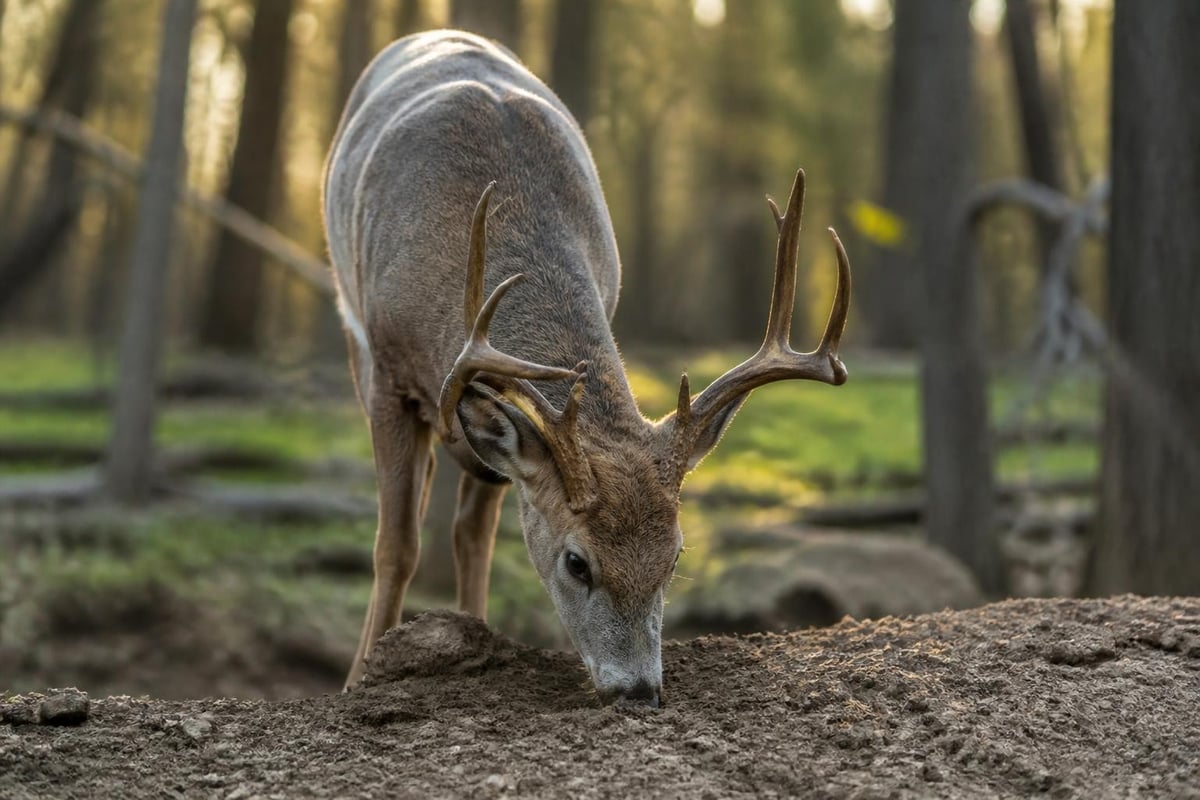
Attractant performance varies significantly throughout the hunting calendar. During early fall, deer show stronger responses to food-based products as they enter hyperphagia before winter. Spring turkey hunting benefits from breeding-related scents, while summer scouting sessions work well with mineral-based options that animals seek for nutritional supplementation.
| Season | Most Effective Attractant Type | Target Species Response |
|---|---|---|
| Early Fall | Acorn and mast scents | High feeding motivation |
| Late Fall/Rut | Estrous and breeding scents | Peak curiosity and territorial behavior |
| Winter | High-calorie food attractants | Survival-driven feeding |
| Spring | Mineral and protein blocks | Antler growth and recovery needs |
Strategic Placement and Application Methods
Proper attractant deployment requires understanding wind patterns, animal travel corridors, and property-specific terrain features. Random application rarely produces consistent results, while strategic placement creates predictable movement patterns that enhance hunting success rates.
Site Selection Criteria
Identifying optimal attractant locations begins with thorough property scouting. Look for natural funnels where terrain features concentrate animal movement, such as ridgeline saddles, creek crossings, and field edges adjacent to bedding cover. These high-traffic areas amplify attractant effectiveness because animals already frequent these zones during normal daily routines.
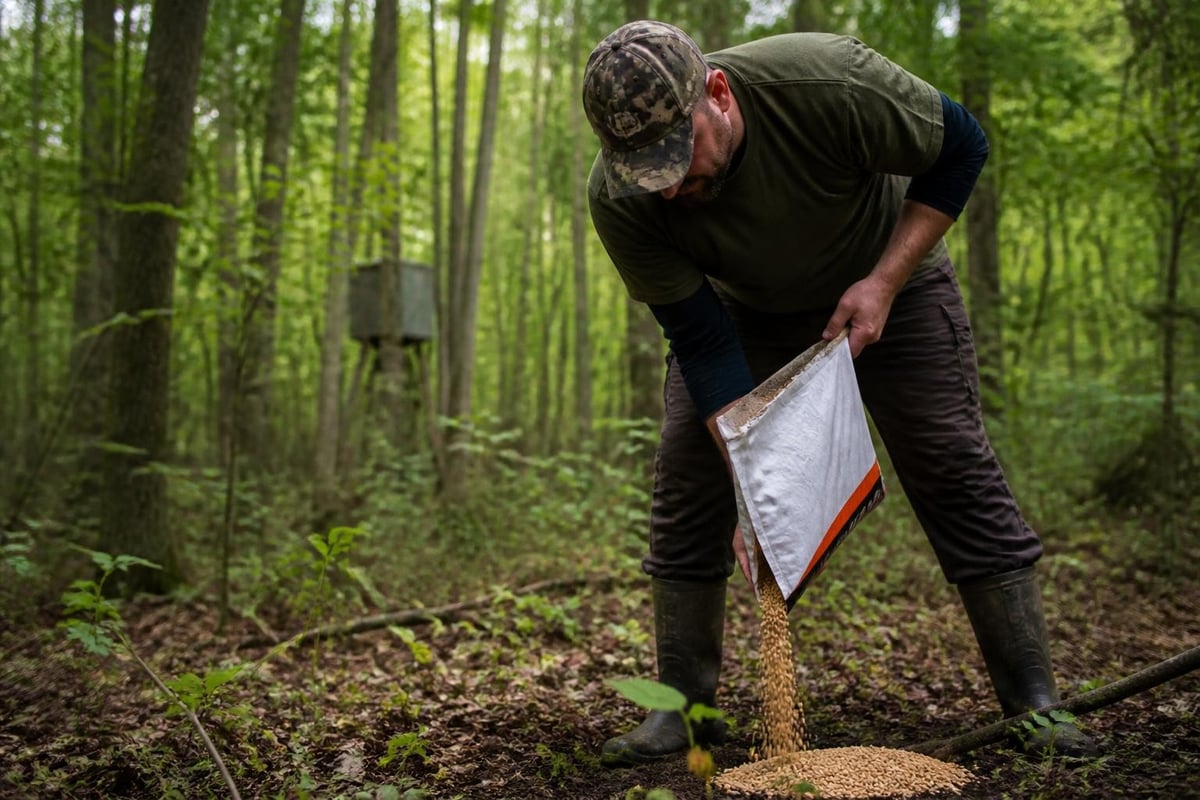
Ground-level application works best for granular and liquid formulations. Create mock scrapes by clearing a three-foot diameter circle down to bare soil, then apply your chosen attractant according to manufacturer specifications. Position these sites 15-30 yards from your stand location to ensure animals present broadside shooting angles while investigating the scent.
Elevated deployment using scent wicks or drip dispensers offers advantages in areas with heavy ground-level vegetation. These systems release attractant slowly, creating sustained scent columns that reach animals at greater distances. Studies examining chemotactic response patterns in biological systems show that gradient detection mechanisms function optimally when scent concentrations increase gradually toward the source.
Application Timing and Frequency
Establishing a consistent attractant schedule conditions animals to visit specific locations during predictable timeframes. Begin applications two to three weeks before your planned hunting dates to allow discovery and pattern development.
Weekly maintenance schedule:
- Monday: Initial site preparation and first application
- Thursday: Reapplication and site inspection
- Saturday/Sunday: Hunting sessions with minimal disturbance
- Following Monday: Evaluation and adjustment
This rotation ensures fresh scent availability while preventing over-pressure that might educate animals to human presence. Trail camera monitoring at attractant sites provides valuable intelligence about visitation patterns, allowing you to adjust hunting times for peak activity windows.
Legal Considerations and Ethical Hunting Practices
Regulations governing attractant use vary significantly across jurisdictions, making compliance research essential before implementing any attraction strategy. State wildlife agencies balance hunter opportunity against fair chase principles and disease transmission concerns when crafting these rules.
State-by-State Regulatory Framework
Some states permit attractant use with minimal restrictions, while others impose specific limitations on product types, application methods, and hunting proximities. Texas allows attractant hunting on private land but restricts it on public properties. Michigan prohibits baiting entirely in areas affected by chronic wasting disease, demonstrating how wildlife health concerns influence regulations.
Common regulatory categories include:
- Complete prohibition during hunting seasons
- Allowance for scouting but not concurrent hunting
- Volume limits on applied materials
- Distance requirements between attractants and hunters
- Seasonal restrictions tied to specific game species
Contact your state's department of natural resources or fish and wildlife division for current regulations in your hunting area. These rules change periodically based on wildlife population health, so annual verification protects you from unintentional violations that could result in citation or license revocation.
Fair Chase and Sporting Ethics
Beyond legal compliance, ethical hunters consider whether attractant use aligns with fair chase principles. The Boone and Crockett Club, which maintains North America's premier big game records program, defines fair chase as pursuit that doesn't give hunters an improper advantage over wild game.
Most hunting organizations accept food-based attractants as ethical when used to pattern animals rather than guarantee immediate harvest opportunities. This distinction matters because it preserves the uncertainty and challenge that define authentic hunting experiences. Trophy recognition programs may disqualify animals harvested over bait, so verify acceptance criteria if you plan to submit your harvest for official measurement.
Species-Specific Attractant Selection
Different game animals respond to distinct attractant formulations based on their dietary preferences, reproductive behaviors, and seasonal nutritional requirements. Matching your product choice to target species biology dramatically increases effectiveness.
Whitetail Deer Strategies
Deer attractants dominate the market due to this species' popularity among American hunters. Food-based options work year-round, while estrous scents prove most effective during the breeding season when bucks actively search for receptive does. Curiosity scents mimicking territorial markers trigger investigative responses from dominant bucks defending their ranges.
Premium deer attractants often combine multiple attractant types in staged-release formulations. These products deliver immediate food scent that draws initial interest, followed by slower-releasing pheromone compounds that keep animals in the area longer. This extended presence increases your opportunity window for ethical shot placement.
For hunters seeking exceptional wingshooting experiences, The Upland Escape Giveaway offers a traditional upland hunt at Heartland Lodge in Pike County, Illinois, where natural bird populations and expert habitat management create ideal hunting conditions without reliance on artificial attraction methods.

Wild Hog and Predator Applications
Feral swine respond aggressively to sour and fermented grain attractants that mimic their preferred food sources. Corn soaked in fermentation liquids creates powerful scent trails that hogs follow from considerable distances. Their omnivorous diet and constant feeding behavior make them particularly susceptible to attractant strategies.
Predator hunters use different approaches entirely. Canine species including coyotes respond to food-based scents during winter months when natural prey becomes scarce. Gland lures mimicking breeding behaviors prove effective during mating seasons when territorial responses peak. Curiosity scents exploiting investigative behaviors work across multiple seasons.
| Target Species | Primary Attractant | Secondary Option | Peak Effectiveness Period |
|---|---|---|---|
| Whitetail Deer | Acorn/mast scents | Estrous during rut | September – January |
| Wild Hog | Fermented grain | Soured fruit | Year-round |
| Black Bear | Sweet anise oil | Meat-based | Spring and early fall |
| Turkey | Scratch feed | Visual decoys | March – May |
Weather Impact and Environmental Factors
Temperature, humidity, precipitation, and wind conditions all influence how effectively attractant scents disperse through hunting environments. Understanding these relationships helps you maximize product performance across varying weather patterns.
Temperature Effects on Scent Dispersal
Cold temperatures reduce scent molecule volatility, meaning fewer particles become airborne to reach animal olfactory systems. Attractants perform best when temperatures range between 45-70 degrees Fahrenheit, conditions common during prime fall hunting periods. Winter hunts in freezing conditions require higher attractant volumes or heat-activated formulations that maintain volatility despite cold air.
Extreme heat above 85 degrees accelerates scent degradation, particularly for natural food-based products. Synthetic formulations resist thermal breakdown better, making them superior choices for early-season hunting in southern states where temperatures remain elevated through September and October.
Humidity enhances scent carrying capacity because moisture particles bond with aromatic molecules, creating heavier compounds that remain suspended in air longer. Foggy mornings and drizzly conditions actually improve attractant performance, contrary to the belief that rain washes away scent. Light precipitation distributes attractant molecules across wider areas without completely eliminating the scent cone.
Wind Management Techniques
Wind direction determines whether your carefully placed attractant reaches target animals or alerts them to human presence instead. Always position stands downwind from expected approach routes, ensuring game encounters scent before detecting you.
Effective wind strategies include:
- Creating multiple attractant sites for various wind directions
- Using topography to funnel scent along predictable paths
- Applying attractant in crosswind positions relative to stands
- Monitoring weather forecasts to hunt appropriate sites
- Adjusting stand locations based on shifting wind patterns
Thermals complicate scent management in mountainous terrain. Morning warming causes air to rise upslope, while evening cooling reverses this flow. Place attractant sites accounting for these vertical air movements to ensure scent reaches valleys during morning hunts and ridge systems during evening sits.
Product Categories and Application Technologies
Modern attractant manufacturers offer increasingly sophisticated delivery systems designed to extend effectiveness periods and reduce application frequency. Understanding these technological advances helps you select products matching your hunting style and property management capabilities.
Traditional Application Methods
Granular attractants remain the most straightforward option for most hunters. These products pour directly onto the ground or into feeders, requiring no special equipment beyond basic distribution tools. Mineral blocks and licks provide long-term attraction with minimal maintenance, though they work slower than liquid or spray formulations.
Liquid attractants offer versatility through multiple application methods. Spray bottles distribute product over wide areas, while dripper systems provide controlled release over extended periods. Gel formulations stick to vegetation and terrain features, resisting washout during rainstorms while maintaining scent availability.
Advanced Delivery Systems
Electronic attractant dispensers revolutionize scent management by automating release schedules and volumes. These battery-powered units spray attractant at programmed intervals, ensuring fresh scent availability during prime movement hours without requiring your presence for manual application. Some models integrate with trail cameras, activating when motion sensors detect approaching animals.
Scent drag systems create artificial scent trails leading to your hunting location. Absorbent pads saturated with attractant attach to boots or pull-behind ropes, depositing scent as you walk to your stand. This technique mimics natural animal movement patterns, triggering investigative responses from game following the trail to its source.
The biological complexity of attraction and repulsion mechanisms in nature demonstrates that effective attractant use requires more than simple application. Understanding how animals process and respond to chemical signals separates successful hunters from those who merely hope for chance encounters.
Integration with Broader Hunting Strategies
Attractant use represents just one component within comprehensive hunting plans. The most successful hunters integrate attraction tactics with habitat management, scouting intelligence, and adaptive stand placement to create synergistic advantages.
Combining Food Plots and Attractants
Agricultural food plots provide large-scale nutrition that holds deer on properties throughout hunting seasons. Attractants complement these plantings by creating focal points within larger feeding areas. Apply attractant along plot edges where you've established shooting lanes and stand locations, concentrating animal activity where you can capitalize on it.
This combination proves particularly effective during late season when natural browse becomes scarce and planted crops represent primary food sources. A properly formulated attractant applied to high-quality brassica or winter wheat plots draws animals from adjacent properties, expanding your effective hunting area beyond actual ownership boundaries.
Trail Camera Intelligence Gathering
Trail cameras positioned at attractant sites generate valuable data about animal presence, size class distribution, and temporal activity patterns. This information allows precise hunting schedule optimization, ensuring you're present when mature animals visit most frequently.
Key metrics to track include:
- Peak visitation hours by date
- Mature vs. young animal ratios
- Directional approach patterns
- Response time after fresh applications
- Weather condition correlations
Analyze these patterns monthly, adjusting attractant types, volumes, and application schedules based on observed results. Animals that initially respond strongly may habituate to specific scents over time, requiring rotation between different attractant formulations to maintain effectiveness.
Storage and Shelf Life Considerations
Proper attractant storage preserves product potency and prevents premature degradation that reduces field effectiveness. Most formulations remain viable for multiple seasons when stored correctly, providing economic value through extended usability.
Optimal Storage Conditions
Store attractants in cool, dry locations away from direct sunlight and temperature extremes. Garages and sheds work well if they maintain moderate temperatures year-round. Avoid storage areas that freeze during winter or exceed 100 degrees during summer, as these extremes break down active scent compounds.
Keep containers tightly sealed when not in use to prevent evaporation and contamination. Many liquid attractants use volatile compounds that escape through poor seals, reducing concentration and effectiveness. Transfer products to smaller containers as you use them, minimizing air exposure in partially empty bottles.
| Storage Factor | Impact on Shelf Life | Recommended Practice |
|---|---|---|
| Temperature | High heat accelerates breakdown | Store below 75°F |
| Light exposure | UV rays degrade compounds | Use opaque containers |
| Air contact | Oxidation reduces potency | Minimize headspace |
| Moisture | Causes clumping in granules | Use desiccant packs |
Identifying Product Degradation
Expired or degraded attractants deliver poor results despite proper application techniques. Learn to recognize signs that products have exceeded their useful life and require replacement.
Liquid attractants showing color changes, sediment formation, or separated layers have likely degraded beyond effectiveness. Fresh products maintain consistent appearance and viscosity throughout their shelf life. Granular attractants that clump together or develop musty odors have absorbed moisture and should be replaced.
Most manufacturers include expiration dates or production codes on packaging. Reference these markers when rotating stock, using oldest products first while they remain within recommended use periods. Professional wildlife managers typically replace attractants annually regardless of remaining volume to ensure maximum field performance.
Cost-Effectiveness Analysis and Budget Planning
Attractant expenses can accumulate quickly when hunting multiple properties or running extended seasons. Strategic purchasing and application practices optimize your investment while maintaining effective game attraction.
Volume Purchasing Advantages
Buying attractants in bulk containers rather than small retail packages significantly reduces per-use costs. A five-gallon bucket of quality deer attractant costs roughly 40% less per ounce than equivalent single-pound packages, though it requires larger upfront investment and proper storage capabilities.
Split bulk purchases with hunting partners to access volume pricing without excessive individual inventory. Four hunters dividing a 20-pound attractant order each receive five pounds at bulk rates while maintaining manageable storage quantities. This cooperative approach works particularly well for hunting clubs managing shared properties.
Application Rate Optimization
More attractant doesn't necessarily produce better results. Excessive application wastes product and money while potentially overwhelming animal sensory systems with scent concentrations that seem unnatural. Follow manufacturer recommendations for application volumes, adjusting slightly based on observed results rather than arbitrarily doubling or tripling suggested amounts.
Budget-conscious strategies include:
- Concentrating attractant at fewer high-probability locations
- Reducing application frequency once patterns establish
- Using attractant primarily during peak activity periods
- Supplementing commercial products with homemade options
- Selecting multi-purpose formulations effective across species
For shooters looking to expand their hunting capabilities, RCS Outdoors offers a comprehensive selection of firearms and accessories suitable for various game species and hunting conditions.
Successful attractant use combines scientific understanding of animal behavior with practical field application skills developed through experience. The products, techniques, and strategies discussed here provide a foundation for ethical, effective game attraction that enhances your hunting success while respecting wildlife and supporting conservation principles. Whether you're pursuing your first deer or adding to decades of hunting tradition, RCS Outdoors provides the firearms, ammunition, and accessories you need to make the most of every opportunity in the field.


