

Shooting: Essential Skills and Safety for 2026
Shooting represents one of the most demanding and rewarding skills in the firearms community, requiring dedication, discipline, and a commitment to safety. Whether you're pursuing competitive marksmanship, hunting, or personal protection, developing proper shooting techniques forms the foundation of responsible firearm ownership. The landscape of shooting sports and education has evolved significantly, with modern training methods emphasizing safety protocols alongside marksmanship fundamentals. Understanding the comprehensive nature of shooting skills ensures that enthusiasts can pursue their interests with confidence and competence.
The Foundation of Safe Shooting Practices
Safety remains the paramount concern in every shooting discipline. Before developing marksmanship skills, every shooter must internalize fundamental safety rules that prevent accidents and create a culture of responsibility. These principles apply universally, whether you're on a range, in the field, or handling firearms at home.
The Cardinal Rules of Firearm Safety
Every responsible shooter must commit these essential safety protocols to memory:
- Treat every firearm as if it's loaded until you personally verify its condition
- Never point the muzzle at anything you're not willing to destroy
- Keep your finger off the trigger until your sights are on target and you've made the decision to fire
- Be certain of your target and what lies beyond it before engaging
The National Rifle Association’s firearms training programs emphasize these rules as non-negotiable standards that must be practiced consistently. According to research on firearm exposure and safety training, comprehensive education significantly reduces the risk of accidents and promotes responsible handling practices.
Range Protocol and Environmental Awareness
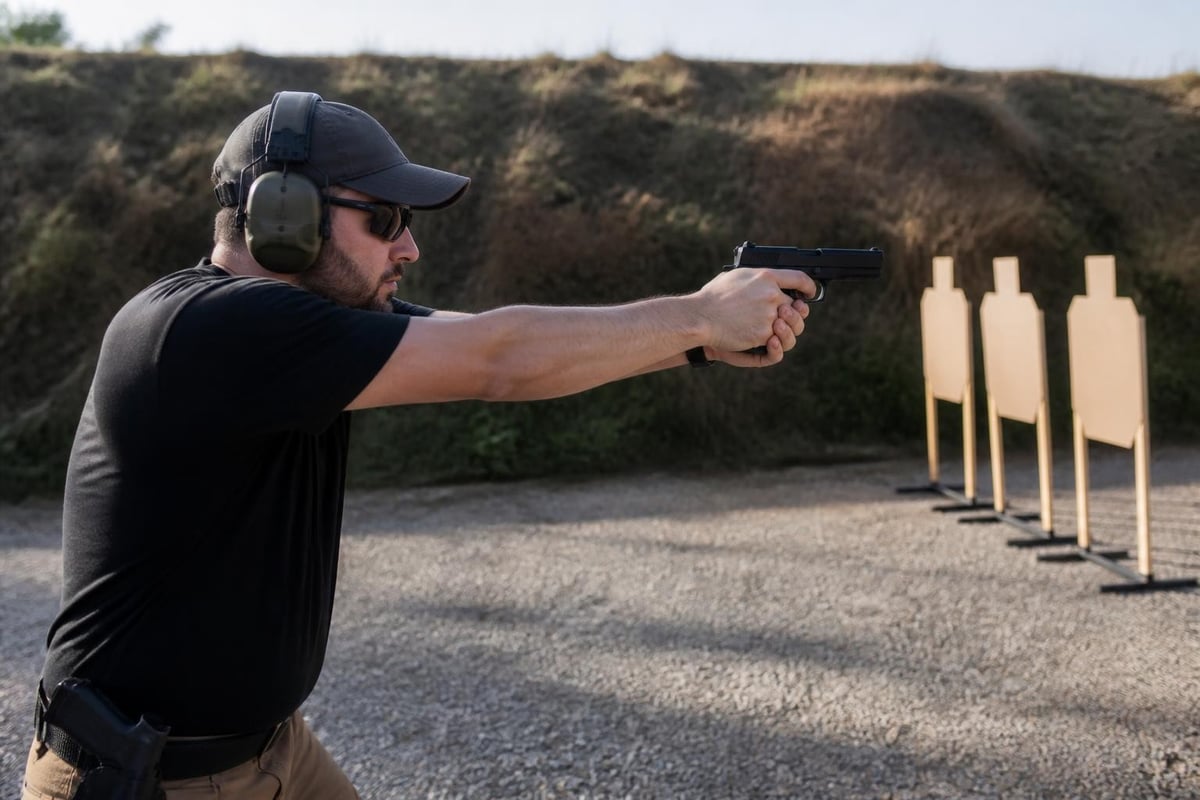
Beyond the fundamental rules, shooting environments require specific protocols. Range commands, designated firing lines, and cease-fire procedures create structure that protects everyone present. Understanding range etiquette includes respecting other shooters, maintaining awareness of your surroundings, and following range officer instructions without hesitation.
The Civilian Marksmanship Program’s safety guidelines provide detailed protocols for various shooting disciplines, highlighting the importance of structured safety systems in competitive and recreational environments.
Building Fundamental Marksmanship Skills
Once safety becomes second nature, developing accurate shooting techniques requires understanding the mechanical and mental aspects of marksmanship. These fundamentals apply across all shooting disciplines, from precision rifle work to defensive handgun training.
Stance and Body Position
Proper stance creates a stable platform for accurate shooting. Your body position affects recoil management, sight alignment, and follow-through. Different shooting disciplines require adapted stances, but the underlying principles remain consistent.
| Stance Type | Primary Use | Key Characteristics |
|---|---|---|
| Isosceles | Defensive handgun | Square to target, equal arm extension |
| Weaver | Tactical shooting | Bladed stance, push-pull tension |
| Modified Weaver | Competition | Blend of stability and mobility |
| Prone | Long-range rifle | Maximum stability, natural bone support |
| Kneeling | Field shooting | Balance of stability and adaptability |
Each stance offers specific advantages depending on your shooting context. Experimenting with different positions helps identify what works best for your body type and intended application.
Grip and Control Fundamentals
For handgun shooting, proper grip determines your ability to control recoil and maintain sight alignment through multiple shots. A firm, consistent grip should be high on the backstrap with maximum contact between your hands and the firearm. Support hand pressure should complement the firing hand without introducing lateral tension that disrupts sight alignment.
Rifle shooting requires different considerations. Stock placement against your shoulder, cheek weld consistency, and hand positioning on the forend all contribute to repeatable accuracy. The goal is creating a natural point of aim where the firearm settles on target without muscular tension forcing alignment.
Sight Alignment and Trigger Control
The marriage of perfect sight alignment with smooth trigger control represents the pinnacle of marksmanship fundamentals. These interconnected skills determine whether your rounds impact where you intend.
Mastering Sight Picture
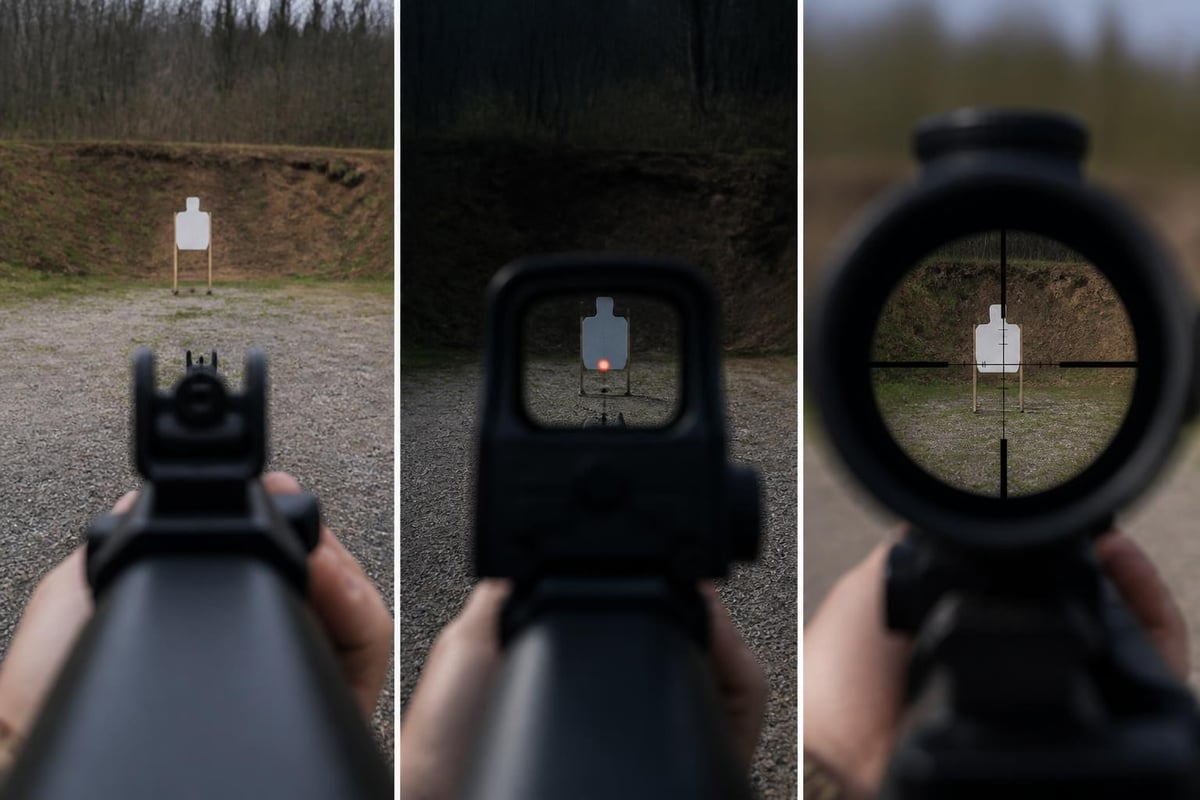
Understanding the relationship between your front sight, rear sight, and target creates the foundation for accurate shot placement. For iron sights, focus intently on the front sight while keeping the rear sight and target slightly blurred. The front sight should appear centered in the rear sight notch with equal light on both sides and even height across the top.
Modern optics have transformed sight picture concepts. Red dot sights simplify the alignment process by providing a single point of focus, while magnified optics require understanding parallax, eye relief, and reticle subtensions for precision shooting.
The Art of Trigger Press
Trigger control separates competent shooters from masters. The trigger press should be smooth, steady, and straight to the rear without disturbing sight alignment. Many shooters struggle with anticipation, flinching, or jerking the trigger in anticipation of recoil.
Developing proper trigger control requires deliberate practice. Dry fire exercises allow you to perfect your press without the distraction of recoil or noise. Focus on maintaining sight alignment throughout the trigger stroke, resetting efficiently between shots, and following through after the break.
Specialized Shooting Disciplines
Shooting encompasses numerous specialized disciplines, each requiring adapted techniques and equipment. Understanding these variations helps shooters find their passion and develop specialized skills.
Competitive Shooting Sports
Competition shooting provides measurable feedback on your skills while building camaraderie within the firearms community. Organizations like the United States Practical Shooting Association (USPSA), International Defensive Pistol Association (IDPA), and Precision Rifle Series (PRS) offer structured competition frameworks.
These disciplines emphasize different skill sets:
- USPSA/IDPA: Speed, accuracy, and tactical problem-solving with handguns
- PRS: Long-range precision with positional shooting challenges
- 3-Gun: Proficiency across rifle, shotgun, and pistol platforms
- Bullseye: Pure marksmanship emphasizing precision over speed
Hunting Applications
Hunting represents perhaps the most traditional shooting application, where marksmanship combines with woodsmanship and ethical game management. Field shooting introduces variables absent from controlled range environments including wind, elevation changes, improvised shooting positions, and the pressure of one-shot opportunities.
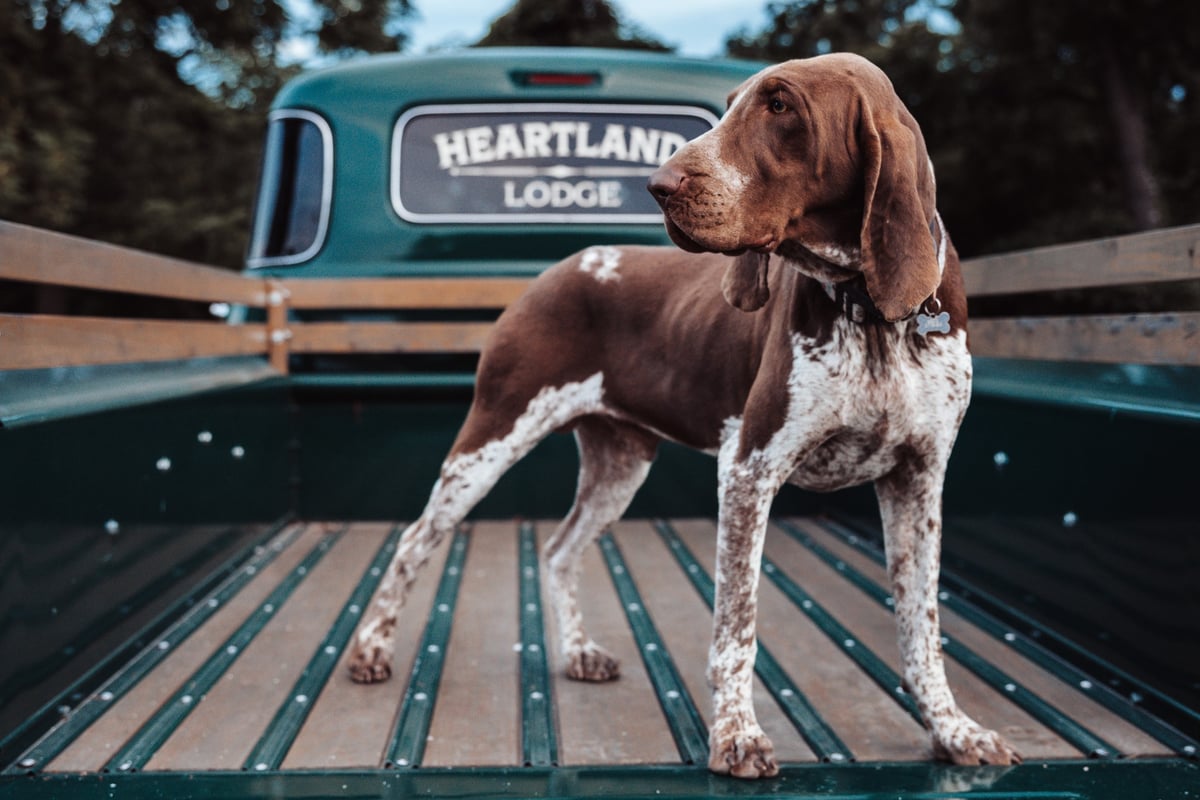
Successful hunting shooting requires understanding your effective range, practicing from field positions, and developing judgment about when conditions support ethical shots. RCS Outdoors supports hunting traditions through partnerships like The Upland Escape Giveaway with Heartland Lodge and Benelli, celebrating American upland hunting heritage while promoting responsible shooting practices.
Training Methodologies and Skill Development
Systematic training accelerates skill development and embeds proper techniques that persist under stress. Modern shooting education combines traditional fundamentals with evidence-based learning principles.
Structured Training Progression
Effective shooting development follows a logical progression from basic safety through advanced techniques. NRA training courses provide structured curricula that build skills systematically, ensuring students master fundamentals before advancing to complex techniques.
| Skill Level | Training Focus | Typical Duration |
|---|---|---|
| Beginner | Safety, basic operation, fundamental marksmanship | 8-16 hours |
| Intermediate | Consistent accuracy, multiple targets, movement | 16-40 hours |
| Advanced | Speed, precision integration, problem-solving | 40+ hours |
| Expert | Specialty skills, teaching capability, competition | Ongoing |
The Role of Deliberate Practice
Shooting proficiency requires more than casual range time. Deliberate practice involves focused repetition with immediate feedback, targeting specific weaknesses, and gradually increasing difficulty. This approach, supported by research on training methodologies, demonstrates faster skill acquisition than unstructured practice.
Quality practice sessions include defined objectives, measurement of performance, and analytical review. Recording your groups, tracking shot times, and maintaining training logs provides objective feedback that guides improvement.
Mental Aspects of Shooting Performance
Physical technique represents only part of shooting excellence. Mental discipline, emotional control, and cognitive preparation significantly impact performance, particularly under pressure or in competitive environments.
Developing Mental Discipline
Concentration forms the cornerstone of consistent shooting. The ability to focus intensely on sight alignment and trigger control while filtering distractions determines performance reliability. Experienced shooters develop pre-shot routines that create mental consistency, triggering the focused state necessary for precise execution.
Visualization techniques help reinforce proper form and build confidence. Mental rehearsal of perfect technique strengthens neural pathways, making correct execution more automatic during live fire.
Managing Performance Pressure
Competition and high-stakes shooting situations introduce psychological pressure that can degrade performance. Understanding how stress affects your physiology including increased heart rate, tunnel vision, and reduced fine motor control helps you develop coping strategies.
Controlled breathing techniques regulate physiological stress responses. Tactical breathing patterns used by military and law enforcement professionals can slow heart rate, improve oxygen delivery, and restore fine motor control under pressure.
Equipment Selection and Maintenance
Choosing appropriate firearms and maintaining them properly ensures reliable performance and safety. Understanding how different platforms serve various shooting applications helps shooters make informed decisions.
Matching Firearms to Purpose
No single firearm excels at every shooting application. Handguns, rifles, and shotguns each offer distinct capabilities suited to specific purposes. Within each category, variations in size, caliber, action type, and features create specialized tools for particular applications.
Consider these factors when selecting shooting equipment:
- Intended use: Competition, hunting, defense, or general recreation
- Physical fit: Size, weight, and ergonomics matching your build
- Skill level: Some platforms reward experience while others suit beginners
- Budget: Quality equipment exists at various price points
Maintenance and Reliability
Reliable firearms require regular maintenance and proper storage. Cleaning removes fouling that affects accuracy and prevents corrosion. Lubrication ensures smooth operation while protecting against wear. Inspection identifies worn components before they cause malfunctions.
Advanced Shooting Techniques
As fundamental skills become automatic, advanced techniques expand your capabilities in challenging conditions and complex scenarios.
Low-Light and Night Shooting
Reduced visibility dramatically changes shooting dynamics, requiring adapted techniques and often specialized equipment. Research on night shooting training demonstrates that dedicated instruction significantly improves performance in low-light conditions.
Night shooting considerations include identifying targets with certainty, managing weapon-mounted or handheld lights, understanding how darkness affects depth perception, and adapting sight systems for reduced visibility.
Positional Shooting Adaptability
Real-world shooting rarely occurs from ideal bench rest positions. Developing proficiency from standing, kneeling, sitting, and prone positions, plus improvised support positions using available environmental features, creates versatile capability.
Practice transitioning smoothly between positions while maintaining muzzle awareness and safety protocols. Competitive disciplines like PRS emphasize positional adaptability, requiring shooters to engage targets from awkward positions under time pressure.
The Importance of Continuing Education
Shooting skills require ongoing maintenance and development. Even experienced shooters benefit from formal instruction, exposure to new techniques, and regular practice that reinforces fundamentals.
Instructor-Led Training Value
Professional instruction accelerates learning by providing expert feedback, correcting errors before they become habits, and introducing proven techniques. Organizations advocating for comprehensive safety training emphasize the value of qualified instruction in developing responsible shooters.
Instructors observe your technique from external perspectives, identifying issues you might not recognize. They also provide accountability and structure that keeps training focused and productive.
Community and Peer Learning
The shooting community offers valuable learning opportunities through shared experience and collective knowledge. Range conversations, online forums, and local shooting clubs connect you with experienced shooters willing to share insights.
Peer learning works both ways: teaching others reinforces your own understanding while helping develop the next generation of responsible shooters. Interactive platforms teaching firearms safety demonstrate how collaborative learning enhances safety education.
Building a Sustainable Practice Routine
Long-term shooting excellence requires establishing sustainable practice habits that fit your schedule, budget, and goals. Sporadic, intensive training sessions produce less durable skill development than consistent, moderate practice.
Designing Effective Practice Sessions
Quality matters more than quantity in shooting practice. Focused 30-minute sessions with specific objectives often produce better results than unfocused hours of shooting. Structure your practice around skill-specific drills, measurement of performance, and progressive difficulty.
Incorporate dry fire practice between live fire sessions. Dry fire allows high-repetition practice of fundamental techniques without ammunition costs or range time requirements. Modern training aids like laser systems provide immediate feedback during dry fire.
Budget-Conscious Skill Development
Shooting proficiency doesn't require unlimited resources. Selecting cost-effective calibers for practice, reloading ammunition, and maximizing dry fire training all reduce expenses while maintaining skill development. Many facilities offer membership programs that lower per-visit costs for regular shooters.
Developing comprehensive shooting skills requires commitment to safety, systematic skill development, and ongoing practice that reinforces fundamentals while expanding capabilities. Whether you're beginning your shooting journey or refining advanced techniques, the principles outlined here provide a roadmap for responsible, capable marksmanship. RCS Outdoors supports your shooting endeavors with quality firearms, ammunition, and accessories backed by expertise to help you select the right equipment for your needs. Explore our selection and discover how the right tools combined with proper training create the foundation for shooting excellence.


