
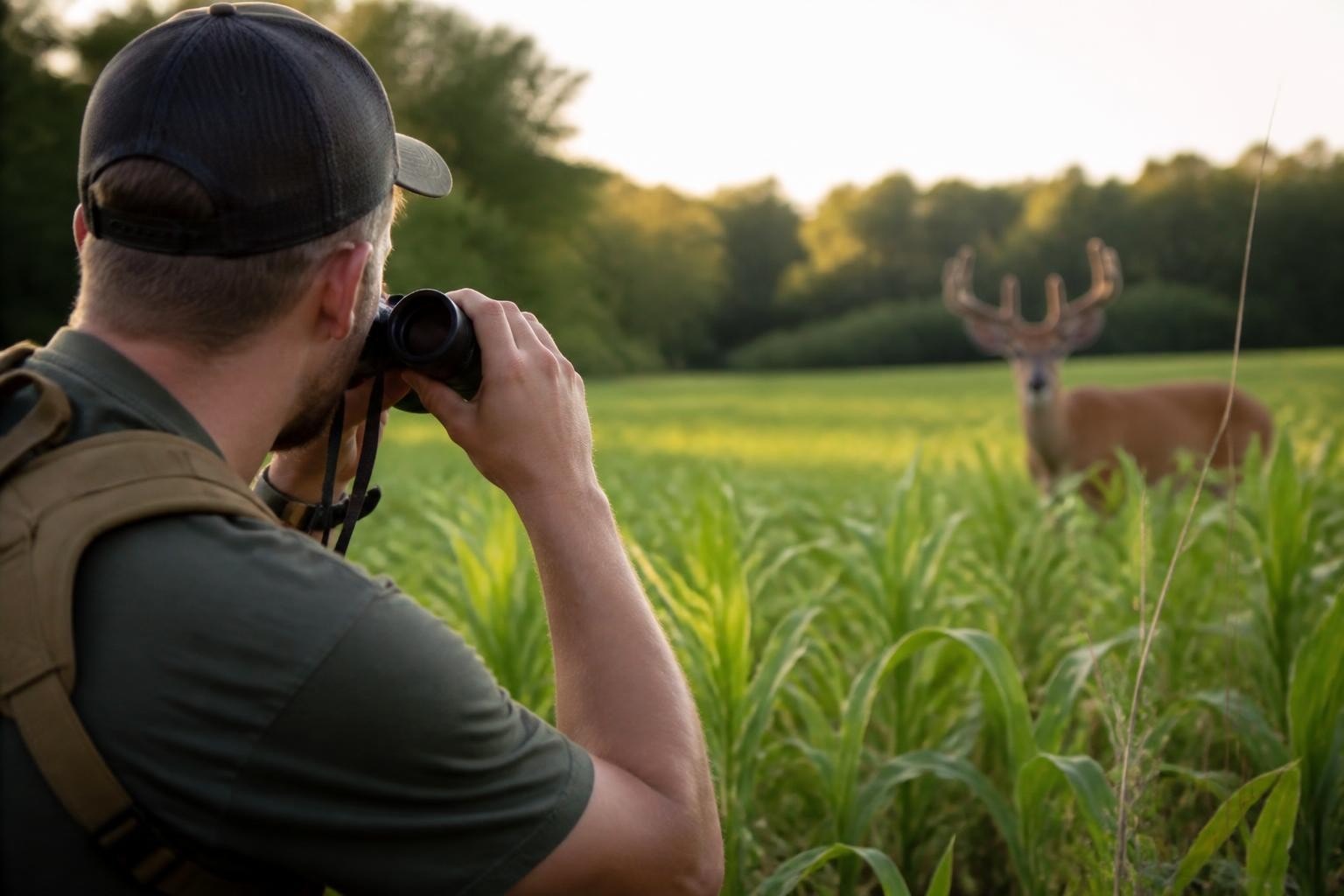
Velvet Buck Scouting: Summer Strategies for Fall Success
Summer presents a unique opportunity for dedicated whitetail hunters to gain critical intelligence about the deer herd before the season opens. Velvet buck scouting during the warmer months allows hunters to observe bucks in their most predictable patterns, identify trophy animals, and establish baseline data that will prove invaluable once opening day arrives. Unlike the unpredictable movements of the rut or post-season stress periods, summer bucks follow consistent routines centered around food sources, making this the ideal time to gather actionable information about the deer population on your hunting property.
Understanding Summer Buck Behavior
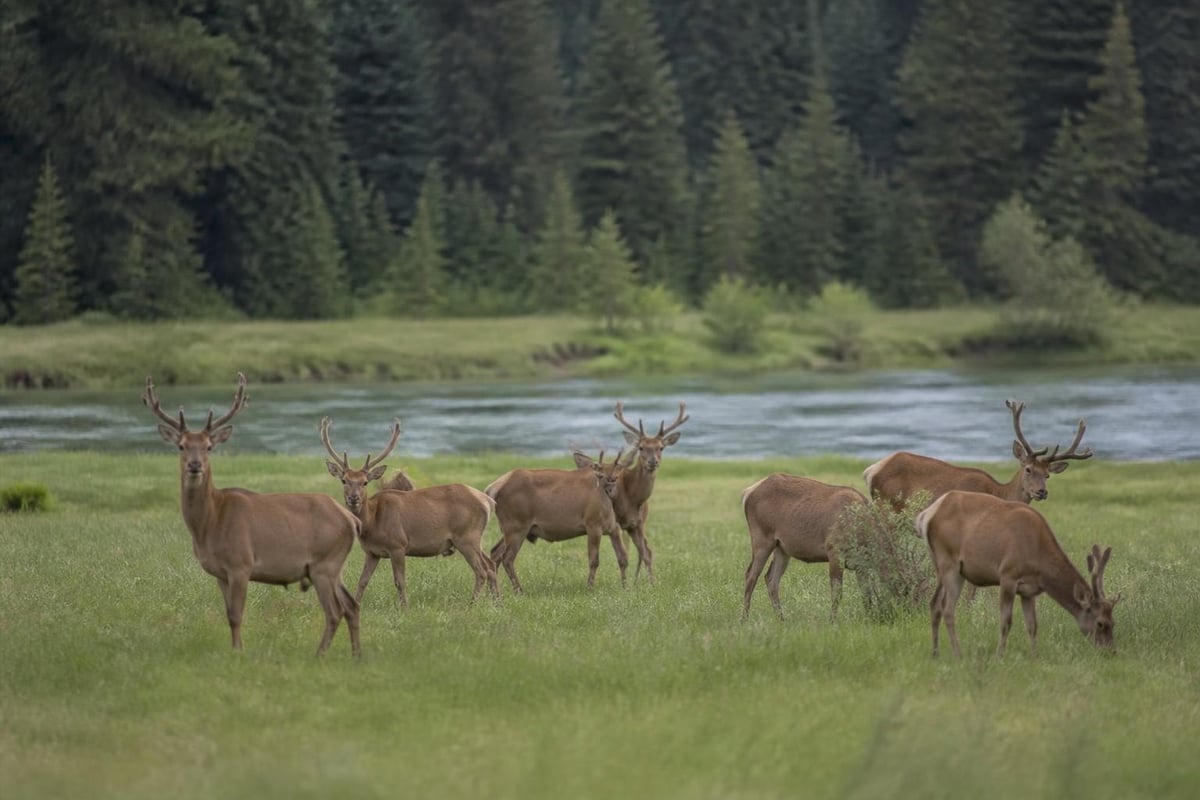
Bachelor groups define the summer landscape for mature whitetails. These temporary associations of male deer form after bucks shed their territorial aggression from the previous breeding season. The social structure provides safety in numbers and reduces individual vigilance requirements, allowing bucks to feed more efficiently while multiple sets of eyes watch for predators.
Understanding bachelor group dynamics becomes essential for successful velvet buck scouting. These groups typically consist of two to six bucks, though larger aggregations occasionally form in areas with abundant food sources. The hierarchy within bachelor groups remains fluid, with minimal aggression compared to fall interactions.
Velvet Antler Development Timeline
Antler growth reaches peak velocity during June and July. Bucks require massive nutritional inputs during this period, driving them to high-quality food sources with religious consistency. The velvet covering provides blood flow and nutrients to the developing bone structure beneath.
Key developmental milestones include:
- Late April to May: Initial antler growth begins
- June: Rapid bone development and beam extension
- July: Tine formation and mass accumulation peak
- August: Growth slows as hardening begins
- Early September: Velvet shedding occurs
This biological timeline directly impacts scouting strategies. Maximum antler growth occurs when bucks are most visible and predictable, creating a narrow window of optimal observation opportunity.
Prime Locations for Velvet Buck Scouting
Agricultural fields dominate the summer scouting landscape. Soybeans, alfalfa, and clover provide the protein-rich forage that bucks need to support antler development. Identifying these nutritional hotspots allows scouts to concentrate their efforts where deer activity naturally concentrates.
Standing crops offer the best observation opportunities. Waist-high soybeans in late June provide enough cover for deer security while remaining open enough for quality glassing. Alfalfa fields cut on rotation create fresh, tender growth that attracts deer like magnets.
Food Source Hierarchy
Different crops attract deer at varying intensities throughout summer:
| Food Source | Peak Attraction Period | Protein Content | Scouting Value |
|---|---|---|---|
| Alfalfa | June-August | 18-22% | Excellent |
| Soybeans | July-September | 15-20% | Excellent |
| Clover | May-July | 12-18% | Very Good |
| Corn | August-September | 8-10% | Good |
Water sources become increasingly important as summer temperatures rise. Ponds, creeks, and stock tanks concentrate deer movement, particularly during drought conditions. Bucks will visit water daily, often using travel corridors that connect bedding areas to both food and water.
Edge habitat where timber meets agriculture creates natural transition zones. Bucks stage in these areas before entering open fields, providing scouts with predictable observation points during the final hours of daylight.
Trail Camera Strategies for Pattern Development
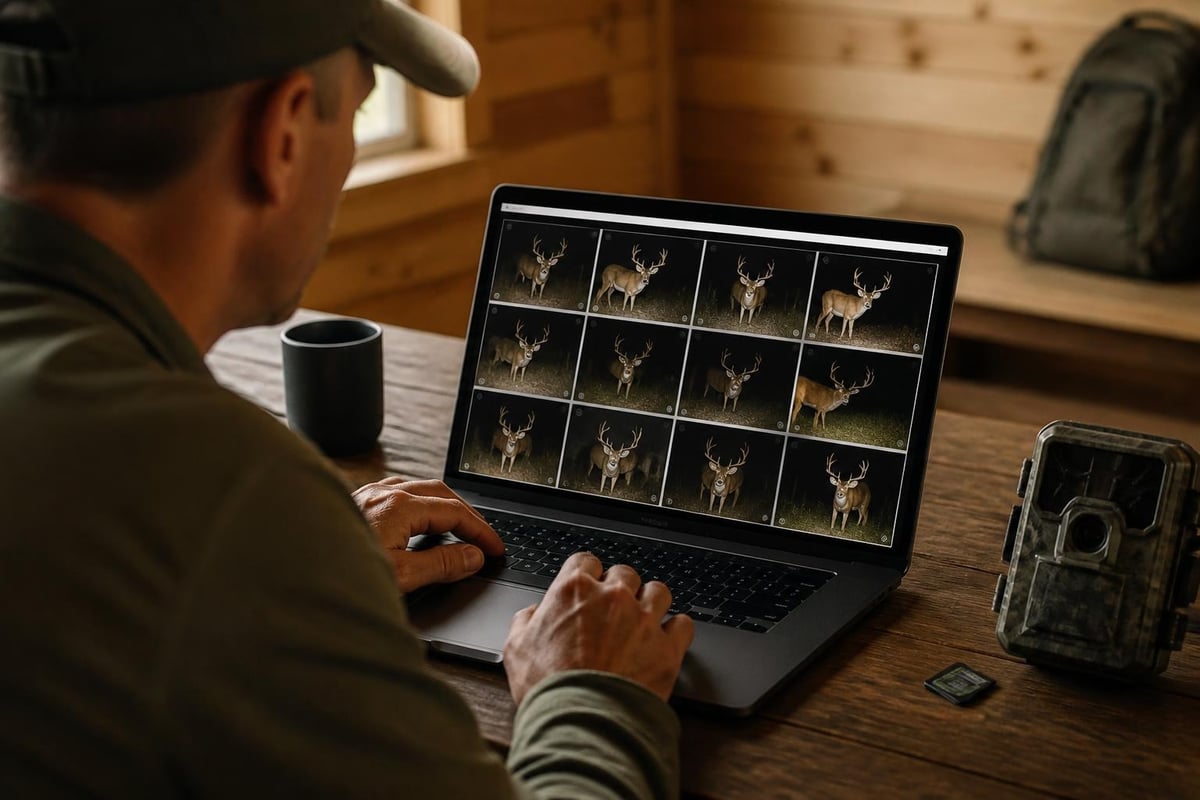
Strategic camera placement transforms casual observation into systematic data collection. Trail cameras allow hunters to pattern summer bucks with precision that visual scouting alone cannot achieve. The goal centers on documenting individual bucks, their associates, and their temporal patterns across multiple weeks.
Field edge cameras should face feeding areas with southeast to southwest orientations when possible. This positioning minimizes sun glare during prime evening movement periods. Place cameras 15 to 20 yards from expected deer trails to capture full-body images suitable for antler scoring and individual identification.
Camera Settings and Timing
Time-lapse mode deserves consideration for open field applications. Setting cameras to capture images every 5 to 10 minutes during afternoon hours documents bachelor group arrivals and feeding patterns without relying solely on motion triggers. This approach also reveals weather impacts on movement timing.
Motion-activated settings work best for:
- Trail intersections between bedding and feeding areas
- Water source approaches
- Mineral sites established for herd health
- Staging area funnels along field edges
Camera density matters less than camera positioning. Three well-placed cameras on a 100-acre property will yield better intelligence than 10 randomly distributed units. Focus coverage on confirmed travel routes and high-value food sources rather than attempting blanket property coverage.
Observation Techniques and Equipment
Quality optics separate successful velvet buck scouting from wasted evenings in the field. Binoculars in the 10×42 or 12×50 range provide the magnification needed to evaluate antler characteristics from safe distances. Spotting scopes mounted on sturdy tripods enable detailed scoring assessments without disturbing deer.
Distance observation maintains natural behavior patterns, a critical consideration for long-term property management. Bucks that associate human presence with feeding areas will alter their patterns, shifting to nocturnal movement that renders fall hunting far more challenging. Maintain minimum observation distances of 200 to 300 yards in open country.
Vehicle-based scouting offers advantages in agricultural regions. Deer tolerate vehicles on field roads far better than human foot traffic. Glass from truck windows or utilize the vehicle as a mobile blind. This approach works particularly well for spring and summer activity documentation across multiple properties.
Evening vs. Morning Observation
Evening sessions produce superior results for velvet buck scouting. Bucks enter feeding areas earlier in summer than during hunting season, often appearing 90 minutes to two hours before sunset. Bachelor groups feed actively during the final hours of daylight, providing excellent observation windows.
Morning observation presents challenges:
- Deer often bed in standing crops rather than returning to timber
- Pre-dawn darkness limits antler evaluation
- Morning disturbance impacts evening movement patterns
- Dew and ground moisture reduce scent control advantages
Dedicate evening efforts to systematic property coverage, rotating between known feeding areas on a schedule that allows each location to rest between observation sessions.
Data Collection and Record Keeping
Systematic documentation transforms random sightings into actionable intelligence. Create individual buck profiles that include photographs, antler descriptions, body characteristics, and location data. Digital tools simplify this process, but simple notebooks remain effective for field documentation.
Essential data points for each observation:
- Date and exact time
- Specific location (GPS coordinates or landmark references)
- Buck identification (unique antler features, body scars, coat patterns)
- Associated deer (other bucks in bachelor group, does, fawns)
- Weather conditions
- Activity (feeding, traveling, bedding direction)
Pattern recognition emerges after consistent documentation. A buck that appears in the same soybean field three evenings per week at 7:30 PM demonstrates predictable behavior worth remembering. These patterns persist into early season, particularly if environmental conditions remain similar.
Compare observations against trail camera data to verify patterns and identify gaps in coverage. A buck photographed regularly at a water source but never observed in adjacent fields suggests nocturnal field entry, valuable information for stand placement decisions.
Property Improvements Based on Scouting Data
Velvet buck scouting reveals habitat deficiencies and improvement opportunities. A property lacking observation activity despite quality habitat might need better food sources. Conversely, heavy deer use with poor buck presence suggests doe-focused management adjustments.
Consider supplemental nutrition where natural food sources prove limiting. High-quality mineral blends support antler development while concentrating deer movement at predictable locations. Establish mineral sites in late March or early April to allow deer acclimation before prime scouting periods begin.
Food plot establishment addresses nutritional gaps identified through summer observation. Small plots of 0.5 to 2 acres positioned near bedding areas create low-pressure feeding opportunities that keep deer on the property throughout summer and into fall. Clover and chicory blends excel in this application, providing consistent attraction without the maintenance demands of larger agricultural operations.
| Improvement Type | Implementation Timeline | Scouting Benefit | Fall Hunting Impact |
|---|---|---|---|
| Mineral Sites | March-April | High – Creates observation points | Medium – Establishes patterns |
| Food Plots | April-May (warm season) | Very High – Concentrates movement | Very High – Holds deer locally |
| Water Development | Any time | Medium – Adds observation points | Medium – Increases property use |
| Bedding Enhancement | Winter (dormant season) | Low – Indirect benefit | High – Reduces pressure points |
Bedding area improvements should wait until post-season to avoid disrupting established patterns. However, identifying bedding locations during summer scouting enables strategic planning for winter habitat work.
Transitioning Summer Patterns to Fall Success
Summer patterns dissolve as daylight shortens and temperatures drop. Early-season whitetail tactics must account for gradual behavioral shifts that begin in late August. Bachelor groups start fragmenting as testosterone levels rise and territorial instincts resurface.
The velvet shedding period offers the final window of predictable summer behavior. Most bucks shed velvet in the first two weeks of September, with mature bucks typically shedding earlier than younger animals. This biological event coincides with many early archery seasons, creating prime hunting opportunities for prepared scouts.
Stand locations selected during summer observation require refinement as season approaches. A buck feeding in soybeans during July may shift to acorns in September or transition to different field sections as crops mature. Return to the property one to two weeks before season opener to verify continued pattern validity.
Environmental Variables That Shift Patterns
Temperature fluctuations impact movement timing more dramatically than any other factor. A cool front in early September can maintain summer-like afternoon field entries, while sustained heat pushes activity increasingly nocturnal. Monitor weather forecasts and adjust hunting pressure accordingly.
Hunting pressure on neighboring properties forces immediate pattern changes. Coordinate with adjacent landowners when possible to manage collective hunting pressure. Even properties with excellent habitat cannot hold deer under siege conditions.
Crop harvest represents the most dramatic environmental change affecting early-season patterns. Standing soybeans provide security cover that disappears overnight when combines arrive. Scout post-harvest conditions before committing to stand locations based on pre-harvest observations.
Advanced Velvet Buck Scouting Tactics
Aerial imagery and mapping software enhance ground-level scouting efforts. Satellite photos reveal field configurations, timber edges, and terrain features that funnel deer movement. Overlay multiple years of imagery to identify consistent patterns in agricultural use that impact long-term deer behavior.
Thermal imaging devices extend observation capabilities into darkness. While primarily hunting tools, thermal units allow scouts to confirm late-evening movement patterns without visible light that alerts deer to human presence. This technology proves particularly valuable for documenting nocturnal travel routes.
Coordinate scouting efforts with property-wide wildlife management objectives. Velvet buck scouting provides data that informs harvest decisions, habitat improvements, and population management strategies. A property showing low buck numbers during summer observation may need doe harvest reductions to improve sex ratios.
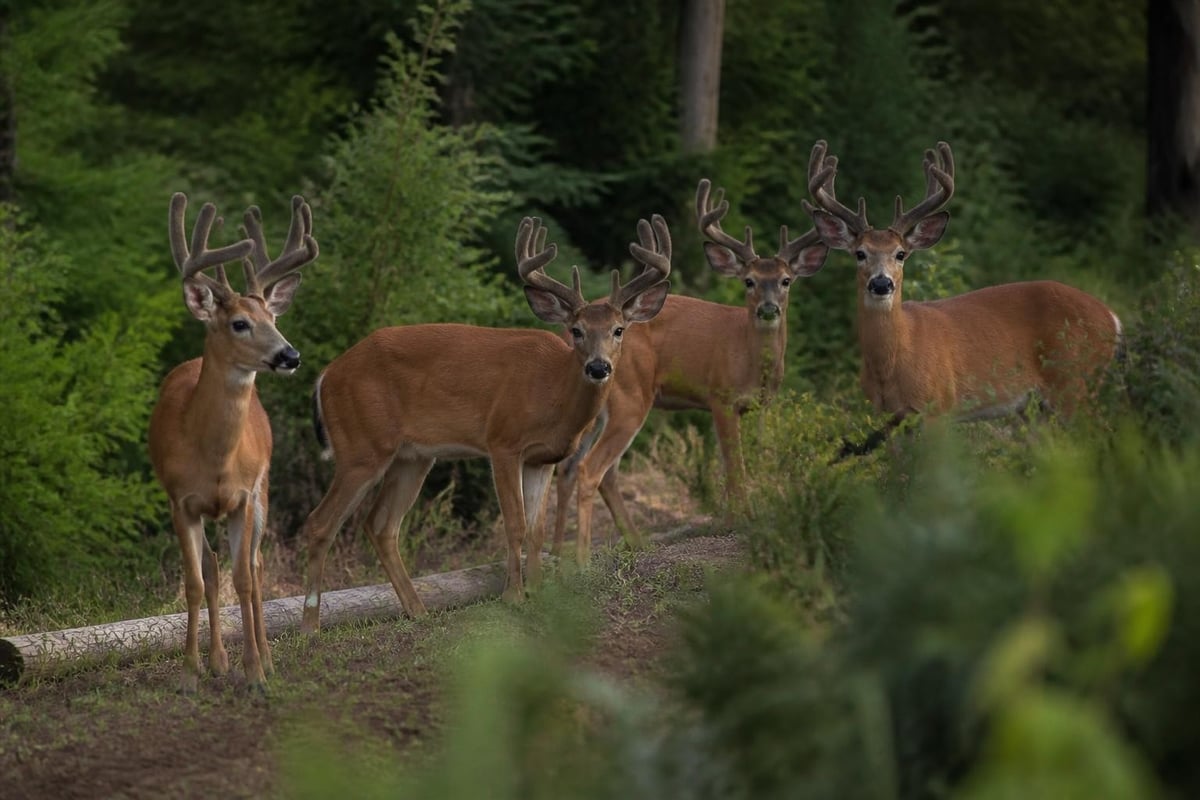
For hunters pursuing trophy-class animals, velvet buck scouting represents the foundation of targeting strategies. Identifying mature bucks during summer allows hunters to age deer, estimate scores, and make informed harvest decisions when those specific animals appear during season. Many hunters photograph every buck observed, creating reference libraries that prevent mistaken identity in the heat of hunting moments.
Equipment Considerations for Extended Observation
Comfort equipment extends productive observation time. Quality folding chairs, insect repellent, and hydration systems allow scouts to remain in position through long summer evenings. Mosquitoes and biting flies can cut observation sessions short without proper protection.
Rangefinders provide distance references that improve stand placement decisions. Note exact yardages to feeding zones, staging areas, and trail intersections observed during summer. This data translates directly to effective bow range calculations when selecting tree stand locations.
Essential velvet buck scouting gear:
- Quality binoculars (10×42 minimum)
- Spotting scope with tripod for distant observation
- Trail cameras with fresh batteries and adequate memory cards
- Notebook or mobile app for data recording
- Rangefinder for distance documentation
- Insect protection and sun protection
- Field chairs or lightweight seats
- Hydration systems for extended sessions
Weather-resistant gear bags protect electronics and optics during sudden summer storms. Afternoon thunderstorms develop rapidly during peak scouting hours, and quality equipment deserves protection from the elements.
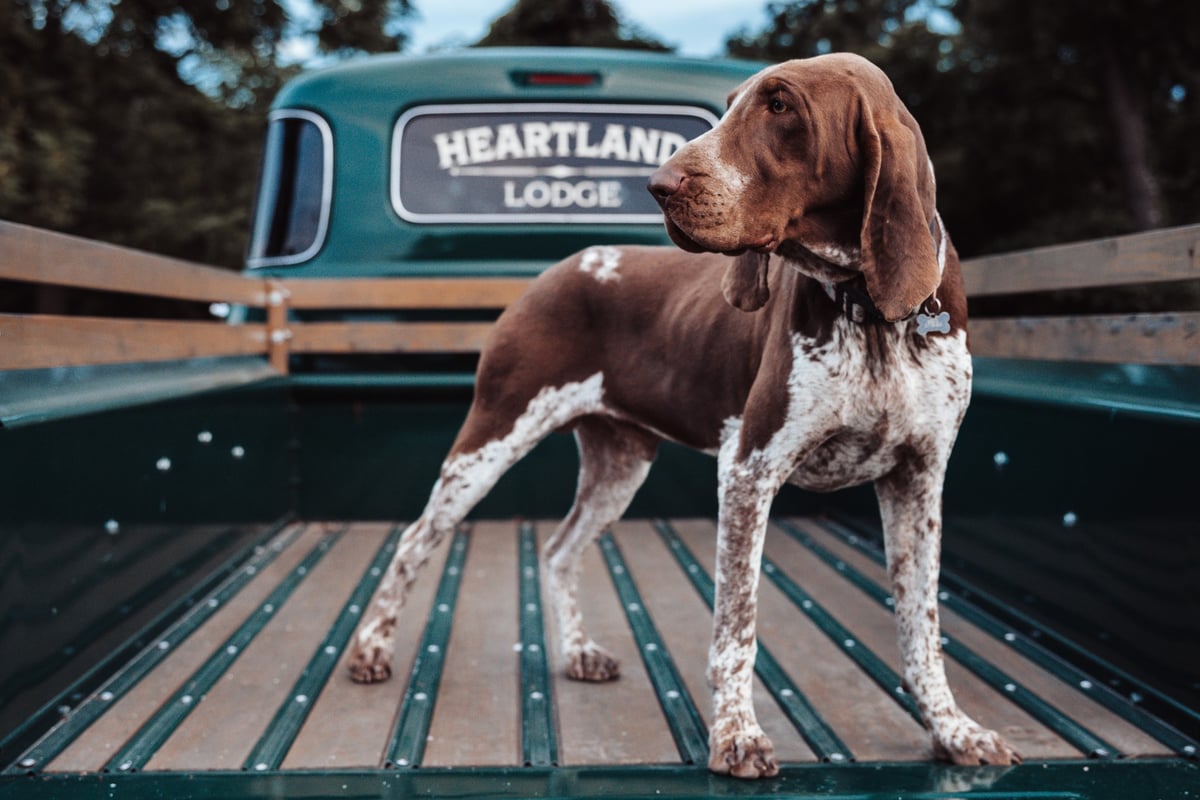
Hunters looking to elevate their upland bird hunting while applying similar scouting principles to gamebird populations should explore opportunities like The Upland Escape Giveaway, which combines traditional hunting heritage with premium wingshooting experiences at celebrated destinations.
Integration with Fall Hunting Strategies
Convert summer observations into fall hunting plans through systematic stand placement. Identify multiple stand locations for each mature buck documented during velvet scouting. Bucks rarely use identical routes every day, so coverage of multiple approach angles increases encounter probability.
Wind direction determines which stands remain viable during specific conditions. Never hunt a stand with unfavorable wind, regardless of how productive summer scouting suggested that location might be. One scent-related encounter educates a mature buck for the entire season.
Create entry and exit routes that minimize disturbance to deer patterns. Summer scouting reveals bedding area locations and primary feeding zones; fall stand access must avoid both. Pre-cut shooting lanes and prepare stand sites during mid-day hours when deer activity remains minimal.
Mock scrapes and deer attractant strategies build upon summer intelligence. Place mock scrapes along trails identified during observation periods, positioning them where trail camera data confirms regular travel. These manipulated sign features attract buck attention as pre-rut behavior intensifies.
The data collected through comprehensive velvet buck scouting provides confidence during hunting season. Rather than gambling on stand locations or hoping deer appear, informed hunters position themselves based on documented patterns. This strategic advantage directly correlates with increased success rates and more efficient use of limited hunting time.
Summer velvet buck scouting establishes the foundation for fall hunting success through systematic observation, data collection, and pattern recognition. The predictable behavior of bachelor groups during antler development creates a narrow window for gathering intelligence that translates directly to strategic advantages when archery and firearm seasons open. Whether you're preparing for early-season opportunities or planning long-term property management strategies, RCS Outdoors provides the firearms, ammunition, and accessories you need to capitalize on the patterns you've worked all summer to identify.


